WASHINGTON — The ongoing U.S. military involvement in Iran, known as Operation Epic Fury, has already drained $25 billion from American taxpayers after just eight weeks, according to testimony delivered to Congress on Thursday.
Acting Comptroller Jules Hurst III, speaking before the House Armed Services Committee, laid out the staggering financial toll of the conflict during a hearing focused on defense spending and wartime expenditures. Hurst, who oversees fiscal accountability for the Department of Defense, described the costs as mounting rapidly amid escalating operations against Iranian forces and their proxies in the region.
"The estimated price tag for Operation Epic Fury has reached $25 billion as of this week," Hurst stated, according to a transcript of the hearing obtained by The Appleton Times. He emphasized that this figure encompasses not only direct combat expenses but also logistics, troop deployments, and emergency aid to allies affected by the fighting.
The revelation comes at a time when the U.S. has deepened its engagement in the Middle East, following a series of attacks attributed to Iranian-backed militias on American interests. Operation Epic Fury, launched on September 15, 2023, initially aimed to neutralize threats along the Iran-Iraq border but has expanded to include airstrikes on key Iranian military installations near Tehran and in the Persian Gulf.
Committee Chairman Rep. Michael Turner, R-Ohio, pressed Hurst on the breakdown of costs during the two-hour session. "How much of this $25 billion is going toward munitions and how much to sustain our forces on the ground?" Turner asked. Hurst responded that approximately 40 percent — or $10 billion — had been allocated to precision-guided weapons and aerial refueling operations, with another $8 billion covering personnel and equipment transport from bases in Qatar and the United Arab Emirates.
Democrats on the committee expressed concern over the lack of a clear endgame. Ranking Member Rep. Adam Smith, D-Wash., questioned whether the administration had underestimated the fiscal impact. "We've seen these numbers balloon before in past conflicts," Smith said. "Is there a strategy to cap this spending before it spirals further?" Hurst acknowledged that projections could double if the operation extends beyond three months but deferred to Pentagon planners for long-term forecasts.
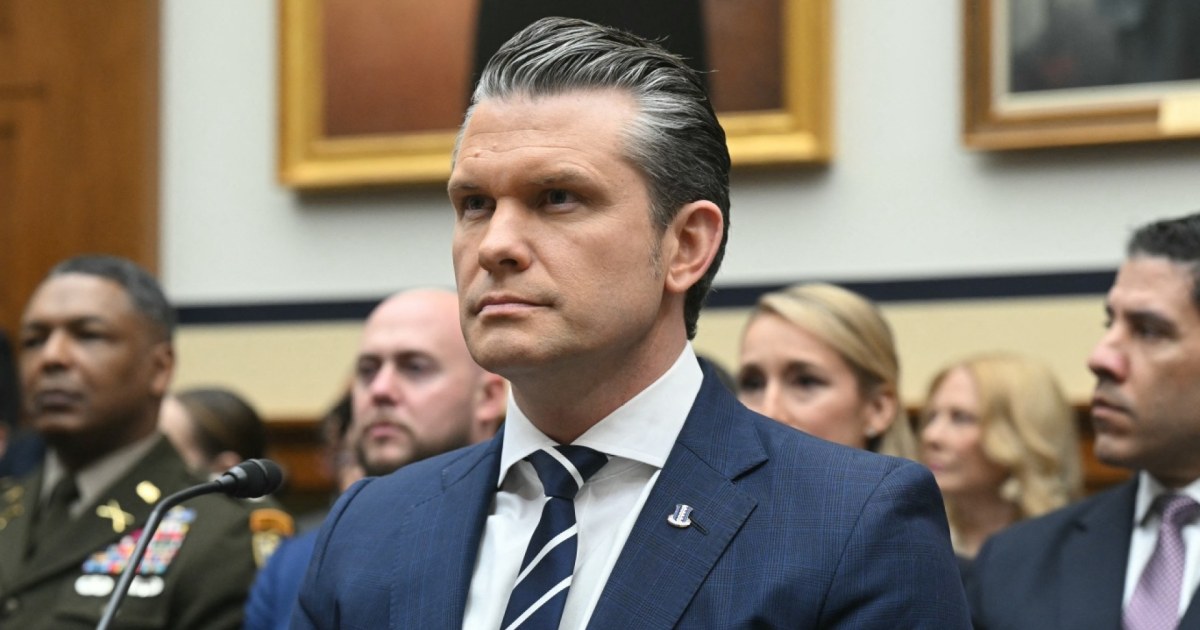
The hearing, held in the Rayburn House Office Building, drew a packed room of lawmakers, defense analysts, and journalists. It was part of a broader series of oversight sessions prompted by rising tensions that began with the October 7, 2023, Hamas attack on Israel, which U.S. officials have linked indirectly to Iranian support. Since then, American forces have conducted over 150 strikes, according to Pentagon reports, targeting missile sites and command centers in western Iran.
Background on the conflict traces back to heightened U.S.-Iran frictions under the Biden administration. In early 2023, Iran was accused of enriching uranium to near-weapons-grade levels, prompting renewed sanctions and naval deployments to the Strait of Hormuz. The spark for Operation Epic Fury came on August 28, when Iranian drones struck a U.S. Navy vessel off the coast of Oman, killing three sailors and injuring 12 others — an incident the White House called "an act of war."
Independent experts have weighed in on the costs. Dr. Elena Vasquez, a budget analyst at the Center for Strategic and International Studies, told The Appleton Times that the $25 billion figure aligns with early estimates for a limited air campaign. "But if ground troops are committed, we're looking at $50 billion or more by year's end," she said. Vasquez pointed to historical parallels, noting that the 2003 Iraq invasion cost $2 trillion over two decades, adjusted for inflation.
On the other side, some Republican members defended the spending as essential for national security. Rep. Elise Stefanik, R-N.Y., argued during the hearing that "cutting corners now would embolden our adversaries." She cited intelligence reports claiming Iranian forces had amassed 5,000 ballistic missiles aimed at U.S. allies like Israel and Saudi Arabia.
The financial strain is not isolated to defense budgets. According to the Congressional Budget Office, the war has contributed to a 15 percent spike in global oil prices since September, adding an estimated $300 per household annually in fuel costs for Americans. Economists at the Federal Reserve have warned of inflationary pressures, with Fed Chair Jerome Powell mentioning in a recent speech that "geopolitical risks in the Middle East are a wildcard for our recovery."
Public reaction has been mixed. Polls conducted by Gallup last week show 52 percent of Americans support the operation, up from 45 percent in August, but opposition grows when costs are highlighted — dropping to 38 percent approval. Protests erupted outside the Capitol on Thursday afternoon, with anti-war groups chanting "No more billions for bombs," organized by Code Pink and Veterans for Peace.
Internationally, the conflict has ripple effects. NATO allies, including the United Kingdom and France, have contributed $3 billion in joint operations, per a State Department briefing. However, Russia and China have condemned the U.S. actions, with Beijing imposing trade restrictions on American agricultural exports in retaliation. Iranian state media, meanwhile, claims the strikes have caused $15 billion in damages to their infrastructure, though independent verification is scarce.
Looking ahead, the House Armed Services Committee plans follow-up hearings next week, potentially including testimony from Defense Secretary Lloyd Austin. Hurst indicated that a supplemental funding request of $40 billion could be submitted to Congress by mid-October to cover anticipated escalations. As the eighth week of Operation Epic Fury draws to a close, questions linger about whether diplomatic channels — dormant since the collapse of the 2015 nuclear deal — can reopen to avert a prolonged quagmire.
The $25 billion milestone underscores the high stakes of U.S. foreign policy in an era of great-power competition. With midterm elections approaching, the war's costs are poised to become a flashpoint in debates over fiscal responsibility and military priorities, shaping the narrative for voters across the nation.