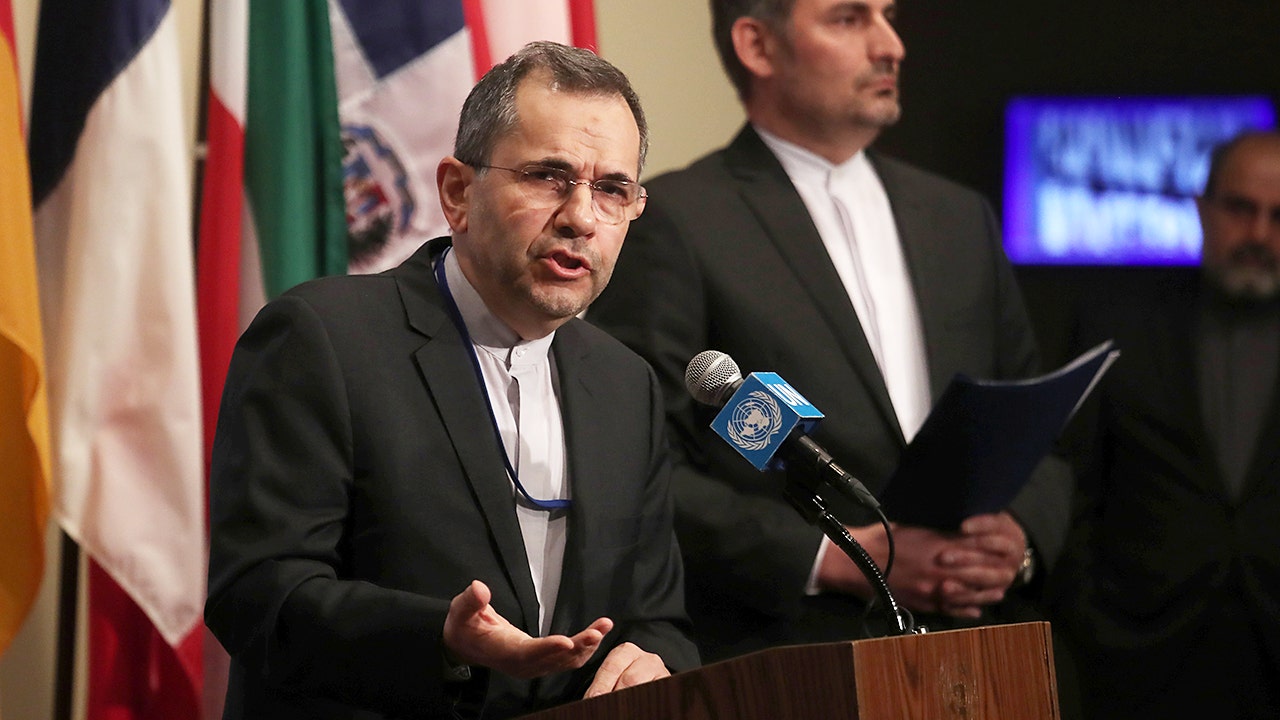
TEHRAN, Iran — In a stark escalation of rhetoric amid ongoing regional tensions, Iran's Deputy Foreign Minister Majid Takht-Ravanchi warned on Saturday that any European countries aligning with the United States and Israel against Tehran would become "legitimate targets" for Iranian retaliation. The statement came as Iranian President Masoud Pezeshkian issued a rare public apology to neighboring nations for recent missile strikes launched from Iranian soil, vowing to pursue diplomacy over further aggression unless provoked.
Takht-Ravanchi's comments were made during an interview with France24, where he emphasized Iran's defensive posture in what he described as a "war of aggression" initiated by the U.S. and Israel. "We have already informed the Europeans and everybody else that they should be careful not to be involved in this war of aggression against Iran," Takht-Ravanchi said. "If they help, I'm not trying to name any country, but if any country joins in the aggression against Iran, joins America and Israel in the aggression against Iran, definitely they will be also the legitimate targets for Iranian retaliation."
The warnings follow a series of military operations that have plunged the Middle East into deeper conflict. On February 28, 2026, the United States launched Operation Epic Fury, a coordinated airstrike campaign targeting Iranian nuclear and military sites, according to U.S. military officials. Israel simultaneously initiated Operation Roaring Lion, focusing on degrading Iran's missile capabilities and proxy networks in the region. These actions, described by Washington and Jerusalem as preemptive measures to curb Iran's nuclear ambitions, prompted immediate retaliatory strikes from Tehran.
Iran's response included a barrage of ballistic missiles directed at several Gulf states. On Saturday, March 3, 2026, Iranian forces reportedly launched attacks on Bahrain, Saudi Arabia, the United Arab Emirates, Qatar, and Oman — countries that have maintained varying degrees of alignment with Western powers. The strikes caused visible damage in some areas, including the ruins of a police station in Tehran itself, which was hit during the U.S.-Israeli campaign, as captured in photographs from the Associated Press.
In the United Arab Emirates, the Ministry of Defense reported intercepting 16 ballistic missiles early that morning. "Fifteen of which were destroyed while one fell into the sea," the ministry stated in an official release, highlighting the effectiveness of UAE air defense systems amid the chaos. No immediate casualties were reported from the UAE interceptions, but the incident underscored the spillover risks for neutral or allied nations in the Gulf.
President Pezeshkian's apology, delivered in a prerecorded televised speech on Iranian state media, marked a potential shift in Tehran's messaging. "I should apologize to the neighboring countries that were attacked by Iran, on my own behalf," Pezeshkian said, according to The Associated Press. He added, "From now on, they should not attack neighboring countries or fire missiles at them, unless we are attacked by those countries. I think we should solve this through diplomacy." The remarks appeared aimed at de-escalating tensions with immediate neighbors while reinforcing Iran's narrative of victimhood.
Despite the conciliatory tone toward Gulf states, Takht-Ravanchi maintained a firm stance on broader international involvement. He reiterated Iran's commitment to self-defense, stating, "This war has imposed on us, and we will continue to defend ourselves to the best of our abilities. We have an obligation to defend our people and that is what exactly we are doing." The deputy foreign minister also claimed that Iran had been "negotiating in good faith" with the United States over its nuclear program prior to the February strikes.
"We are sincere. We are sincere in our endeavor to arrive at a peaceful conclusion of this issue," Takht-Ravanchi told France24, referencing stalled talks that had been ongoing since the collapse of the 2015 Joint Comprehensive Plan of Action. U.S. officials, however, have disputed this characterization, asserting that Iran's uranium enrichment activities had accelerated to near-weapons-grade levels, necessitating military action to prevent a nuclear breakout.
The conflict's roots trace back to heightened U.S.-Iran frictions following the 2025 reimposition of sanctions under the Biden administration's successor. Iran's support for proxy groups like Hezbollah and the Houthis in Yemen has long been a point of contention, with Israel citing repeated rocket attacks on its territory as justification for preemptive strikes. Damage from an Iranian missile barrage was evident in Bnei Brak, Israel, on March 3, 2026, where Reuters photographs showed craters and debris in residential areas, though Israeli defenses reportedly mitigated much of the impact.
European leaders have so far refrained from direct military involvement, focusing instead on diplomatic channels. French President Emmanuel Macron, whose country has been vocal in nuclear talks, called for an emergency European Union summit on Sunday to discuss the implications of Takht-Ravanchi's threats. "Europe must remain united in pursuing peace, not escalation," Macron said in a statement from Paris, according to French media outlets.
Analysts point to the strategic calculus behind Iran's warnings. By targeting potential European entrants, Tehran aims to deter NATO members from providing logistical or intelligence support to the U.S.-Israeli coalition. Jim Hanson, a U.S. Army Special Forces veteran and chief strategist at the Middle East Forum, discussed the dynamics on Fox News' 'Jesse Watters Primetime,' noting that Iran's missile arsenal, while degraded by recent strikes, still poses a credible threat to regional stability.
The ongoing operations have raised urgent questions about securing Iran's enriched uranium stockpiles. After the U.S.-Israeli strikes, international atomic energy inspectors expressed concerns over the fate of facilities at Natanz and Fordow, where thousands of centrifuges were reportedly damaged. "Securing these sites will be a top priority to prevent proliferation risks," a spokesperson for the International Atomic Energy Agency said in Vienna, though details on post-strike assessments remain classified.
As the dust settles from the initial exchanges, the international community watches closely for signs of further escalation. The United Nations Security Council is scheduled to convene an emergency session next week, where Iran's ambassador — formerly Majid Takht-Ravanchi in 2019 — is expected to present Tehran's case. Meanwhile, Gulf states like Saudi Arabia have bolstered their defenses, with Riyadh announcing joint patrols with U.S. naval forces in the Strait of Hormuz.
Pezeshkian's diplomatic overtures could signal an opening for renewed talks, but skepticism abounds. U.S. State Department officials, speaking on condition of anonymity, described the apology as "a tactical pause rather than a genuine pivot." Israeli Prime Minister Benjamin Netanyahu, in a address to the Knesset, affirmed that Jerusalem would continue operations until Iran's nuclear threat is neutralized.
The broader implications extend beyond the battlefield. Oil prices surged 15 percent on global markets following the strikes, with analysts warning of potential disruptions to 20 percent of the world's supply through the Persian Gulf. Humanitarian organizations, including the Red Cross, have called for safe corridors to aid civilians in affected areas, reporting displacement of over 50,000 people in border regions since late February.
With Iran's vows of retaliation hanging in the air, the coming days will test the resolve of all parties. European nations, caught between alliance obligations and the specter of direct involvement, face a delicate balancing act. As Takht-Ravanchi put it, the choice is stark: stay out, or risk becoming part of the conflict's expanding front lines.