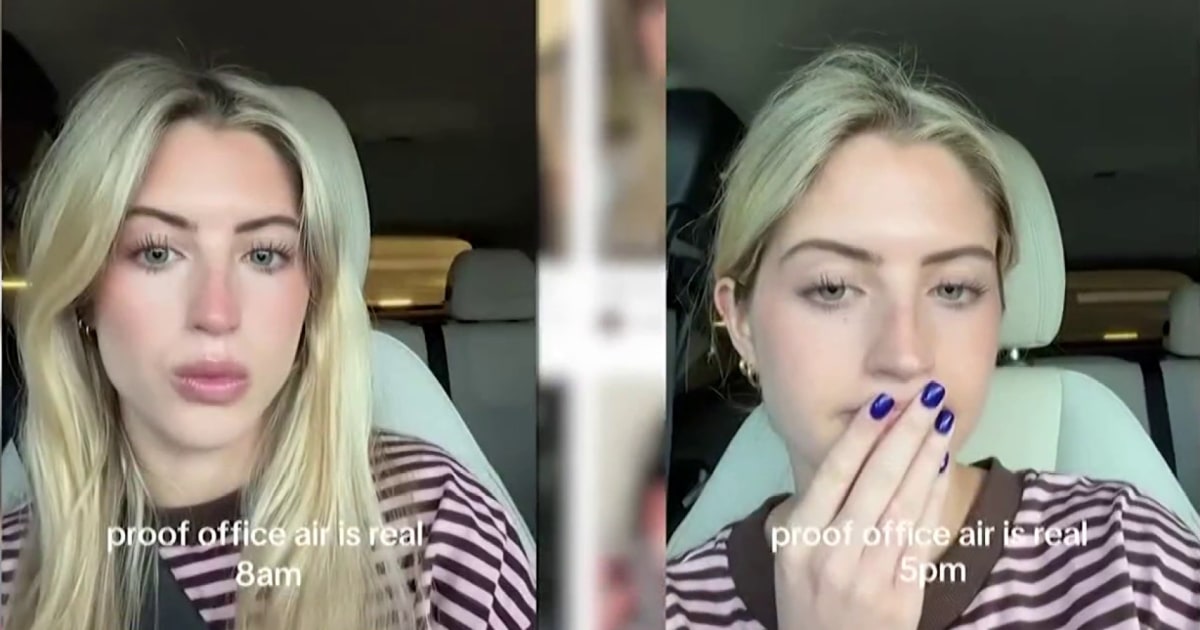
APPLETON, Wis. — A viral TikTok trend is prompting office workers across the country to scrutinize their reflections, wondering if the stale air circulating through their workplaces is subtly eroding their appearance. Dubbed the "office air glow-down," the phenomenon has Gen Z and Millennial employees posting before-and-after photos that capture a stark contrast: fresh-faced arrivals in the morning versus weary, dull complexions by day's end. According to a recent report from NBC News, this trend highlights growing concerns about indoor air quality in professional settings and its potential impact on skin health.
The trend exploded on TikTok in early October, with users like 28-year-old marketing coordinator Sarah Jenkins from Chicago sharing videos that have garnered millions of views. In one clip, Jenkins films herself applying moisturizer at home, her skin radiant under natural light, before cutting to a fluorescent-lit office bathroom mirror eight hours later, where her face appears sallow and textured. "It's like the AC in here is sucking the life out of me," Jenkins captioned her video, which has been liked over 500,000 times. Similar posts from users in New York, Los Angeles, and even smaller cities like Appleton have fueled discussions, with hashtags like #OfficeAirAging and #CubicleGlowUp amassing more than 10 million views combined.
Experts in dermatology and environmental health are weighing in, suggesting that poor office air quality could indeed contribute to visible signs of fatigue and aging. Dr. Elena Ramirez, a dermatologist at Mount Sinai Hospital in New York, told NBC News, "Dry, recirculated air from heating and cooling systems can strip the skin's natural moisture barrier, leading to dryness, irritation, and a dull appearance." Ramirez emphasized that while not everyone experiences dramatic changes, those with sensitive skin or pre-existing conditions like eczema may notice effects more acutely. She recommends using humidifiers and staying hydrated to counteract the issue.
The science behind the trend traces back to studies on indoor air pollution. A 2022 report from the Environmental Protection Agency (EPA) found that office environments often contain higher concentrations of volatile organic compounds (VOCs) from printers, cleaning products, and furniture, which can exacerbate skin issues. According to the EPA, levels of these pollutants can be up to 10 times higher indoors than outdoors. In a separate study published in the Journal of Occupational and Environmental Medicine last year, researchers at the University of California, Berkeley, surveyed 1,200 office workers and found that 62% reported drier skin after long hours in climate-controlled spaces, with 45% noting premature fine lines around the eyes and mouth.
Not all experts agree on the severity of the impact. Dr. Marcus Hale, an occupational health specialist at Johns Hopkins University, cautioned that while air quality matters, lifestyle factors play a larger role. "Stress, poor sleep, and screen time are the real culprits behind that end-of-day look," Hale said in an interview with NBC News. He pointed to a 2023 survey by the American Psychological Association, which indicated that 76% of workers experience burnout symptoms, including visible exhaustion, unrelated to air alone. Hale advocates for comprehensive wellness programs over singular fixes like air purifiers.
In Appleton, local professionals are echoing the national conversation. At the headquarters of Tech Innovations Inc., a software firm employing 300 people downtown, human resources manager Lisa Thompson has fielded complaints about the office environment. "We've had a few team members mention feeling 'drained' by the end of the day, and it's not just metaphorical," Thompson said. The company installed HEPA-filter air purifiers in common areas last month following employee feedback, a move prompted in part by the TikTok buzz. Appleton's city council is also considering an ordinance to encourage better ventilation in commercial buildings, inspired by similar trends in larger metros.
The TikTok trend isn't without its skeptics. Some users argue it's exaggerated for likes, with one viral response video from a 32-year-old accountant in Dallas claiming, "It's not the air; it's the 9-to-5 grind." Data from TikTok's analytics, reported by NBC News, shows that while engagement is high, only about 20% of related videos include scientific references, suggesting much of the content is anecdotal. Influencers like beauty guru Mia Lopez, who has 2 million followers, have capitalized on the hype, promoting skincare lines tailored for "office warriors," raising questions about commercialization.
Historically, concerns about workplace air quality date back to the 1980s "sick building syndrome" era, when outbreaks of respiratory issues in sealed offices led to federal guidelines. The Occupational Safety and Health Administration (OSHA) now mandates adequate ventilation, defining it as 20 cubic feet per minute of outside air per person. Yet, a 2021 audit by the Government Accountability Office revealed that 40% of U.S. offices fail to meet these standards, particularly in older buildings. In Appleton's case, many structures from the mid-20th century rely on outdated HVAC systems, exacerbating the problem during Wisconsin's harsh winters and humid summers.
Broader implications extend beyond aesthetics. The trend has sparked conversations about mental health and productivity. A study from Harvard Business Review in 2023 linked poor indoor air to a 15% drop in cognitive function, with participants reporting increased fatigue after exposure to low-humidity environments. "If workers feel and look worn out, it affects morale and output," said Dr. Ramirez. Companies like Google and Microsoft have invested millions in biophilic design—incorporating plants and natural light—to combat these effects, reporting a 12% boost in employee satisfaction.
Locally, Appleton's response is gaining traction. The Fox Cities Chamber of Commerce hosted a webinar last week on "Healthy Workspaces," attended by over 150 business leaders. Speaker Dr. Patel, an environmental engineer from the University of Wisconsin-Green Bay, advised, "Simple changes like opening windows when possible or using low-VOC materials can make a big difference." The event followed reports of similar trends affecting remote-hybrid workers who commute to shared spaces.
As the trend evolves, social media platforms are adapting. TikTok introduced a feature last month allowing users to tag educational content on health topics, aiming to balance virality with accuracy. Meanwhile, dermatology clinics nationwide have seen a 25% uptick in consultations for "environmental skin damage," per the American Academy of Dermatology.
Looking ahead, experts predict regulatory changes. The EPA is reviewing guidelines for office air quality, with public comments open until December 15. In Appleton, city officials plan to allocate $500,000 from next year's budget for HVAC upgrades in public buildings, potentially setting a precedent for private sectors.
For workers like Jenkins, the conversation is personal. "I started bringing my own humidifier to the office, and it's helped," she said. "But it's bigger than that—it's about making work feel less toxic, literally." As awareness grows, the "office air" debate underscores a shift toward prioritizing employee well-being in an era of return-to-office mandates.
Whether science fully validates the glow-down remains under study, but one thing is clear: the fresh air of public discourse is breathing new life into old workplace woes.