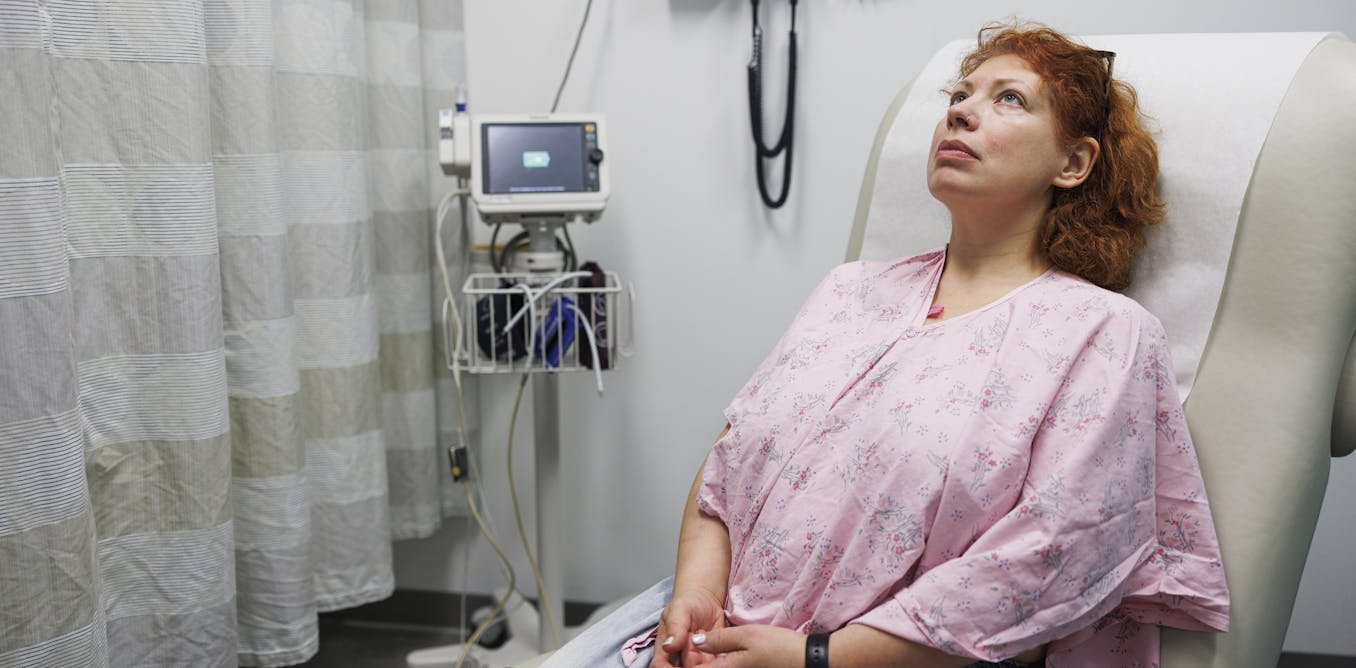
APPLETON, Wis. — Recent revelations from an Australian investigative program have sparked a global conversation about the role of surgery in diagnosing and treating endometriosis, a condition affecting millions of women worldwide. In a segment aired this week on ABC's Four Corners, women shared harrowing stories of undergoing multiple unnecessary surgeries for suspected endometriosis, procedures that not only failed to alleviate their pain but also led to severe complications, including infertility in some cases. The episode, which explored the experiences of patients in Australia, has prompted experts to reassess whether invasive procedures should remain the go-to solution for this chronic condition.
Endometriosis, characterized by tissue similar to the lining of the uterus growing outside the womb—often in the pelvis or other areas—affects approximately one in seven women and individuals presumed female at birth, according to medical estimates. Symptoms can include debilitating pelvic pain, painful periods, discomfort during sex, and bowel issues, leading many to seek relief through medical intervention. Historically, laparoscopy, a type of keyhole surgery involving a biopsy, was viewed as the gold standard for confirming the diagnosis. Surgeons would visually inspect for lesions and analyze removed tissue under a microscope to detect endometrial-type cells.
However, as highlighted in the Four Corners broadcast, this approach has come under scrutiny. Women featured in the program described repeated operations that caused significant harm, with some left unable to conceive children. "This week’s ABC Four Corners highlights stories of women undergoing repeated unnecessary surgeries for endometriosis which caused significant harm and left some women unable to have children," noted an analysis published on The Conversation, an academic news platform. The episode, filmed in locations across Australia including Sydney and Melbourne, aired on October 10, 2023, drawing viewer complaints and calls for reform in gynecological care.
Experts contributing to the discussion emphasize that surgery is not always necessary and should not be the default. "Surgery is not always necessary but can be helpful in some instances. But it’s never a simple yes-or-no decision," states the article on The Conversation, co-authored by specialists in gynecology. Mathew Leonardi, an Adjunct Lecturer in Gynaecology at the University of Adelaide, and Louise Hull, Endometriosis Group Leader at the university’s Robinson Research Institute, provided key insights into the evolving standards of care. Their input underscores a shift away from routine surgical diagnosis, influenced by advancements in imaging and a deeper understanding of pain mechanisms.
Australian and international guidelines, updated in recent years by organizations such as the Royal Australian and New Zealand College of Obstetricians and Gynaecologists, now permit clinicians to diagnose endometriosis based primarily on patient symptoms. Specialized ultrasound scans and magnetic resonance imaging (MRI) can detect deep and ovarian endometriosis with increasing accuracy, often without the need for invasive procedures. "Deep and ovarian endometriosis can often be diagnosed with specialised ultrasound or MRI. This imaging can also help guide decisions about whether or not to undergo surgery," the experts explain. These non-invasive tools, available at major hospitals like Adelaide's Royal Adelaide Hospital, allow for earlier intervention planning while minimizing risks.
Despite these advances, surgery retains a role in treatment, particularly for removing or destroying visible lesions. Yet, it's not the first-line option. "Surgery shouldn’t be the first and only treatment option for endometriosis," according to the analysis. For many, symptoms can be managed effectively through hormonal therapies, such as birth control pills or progestins, alongside allied health interventions like physiotherapy, acupuncture, and lifestyle changes including diet and exercise. The presence of endometriosis does not always correlate directly with symptoms; coexisting conditions like adenomyosis—where endometrial-like tissue invades the uterine muscle wall—irritable bowel syndrome (IBS), pelvic floor dysfunction, or bladder pain syndrome may be the primary culprits.
In cases where these alternative treatments suffice, surgery may be entirely avoidable. "Surgery may not be needed if symptoms are manageable with hormonal therapy, allied and complementary health therapies, and lifestyle modification, or the risks of surgery outweigh the benefits," the report notes. This perspective is particularly relevant for patients in regions like Appleton, where access to specialized endometriosis clinics is growing but still limited compared to urban centers. Local gynecologists at Appleton Medical Center have echoed these sentiments, advising conservative management for mild to moderate cases based on similar guidelines from the American College of Obstetricians and Gynecologists.
That said, there are scenarios where surgery becomes a viable consideration. "Surgery may be an appropriate treatment when: pain is severe and persistent, and medical therapies have not helped; imaging suggests deep endometriosis is affecting key organs such as the bowel, bladder or ureters, which can cause complications; fertility is affected and other options have been explored," the experts outline. For deep or complex disease, procedures should be conducted by highly skilled surgeons, often at tertiary centers like those affiliated with the University of Adelaide. Early surgery might offer immediate symptom relief, but evidence does not support the notion that lesions progress rapidly or that urgent operations yield better long-term results.
Even when deemed necessary, surgery carries inherent risks. Performed under general anesthesia, laparoscopies are generally safe but not without potential complications, including infection, bleeding, damage to surrounding organs, and adhesion formation that can worsen pain. "Although laparoscopies are generally safe, they’re still performed under general anaesthesia, which comes with risks," the article warns. Post-operative pain recurrence is common, as endometriosis is a chronic condition; this does not indicate surgical failure but rather the complexity of pelvic pain disorders. Studies cited in the piece, including those from the past decade, show that up to 50% of patients experience symptom return within five years.
What happens if surgery yields no findings? This scenario, reported by some Four Corners participants, can be frustrating and confusing. "Sometimes a surgeon looks inside the pelvis and doesn’t see endometriosis, or histopathology (the tissue taken for analysis in a laboratory) is negative," the analysis explains. Lesions might be microscopic, hidden in hard-to-reach areas like the bowel, or missed during tissue sampling. Ablation techniques, which burn away tissue, or excision of tiny spots can destroy samples, rendering pathology inconclusive. Conversely, surgeons might remove suspicious areas that turn out not to be endometriosis, leading to unnecessary interventions.
To navigate these uncertainties, patients are encouraged to engage actively in decision-making. Key questions include: What are the expected benefits and risks? Have all non-surgical options been exhausted? What are the surgeon's experience level and success rates? "A good surgical consultation should discuss your symptoms, priorities, past experiences and treatments, discuss benefits, limitations and uncertainties around diagnostic tests, and treatment options," advise Leonardi and Hull. If pressure to proceed feels undue or alternatives are dismissed, seeking a second opinion is recommended—perhaps from multidisciplinary teams at institutions like the Endometriosis Centre in Adelaide, established in 2018.
For those opting for surgery, complementary strategies can enhance outcomes. "If you decide on surgery to manage pelvic pain, your clinician should offer other treatments, such as pelvic physiotherapy and/or medication, which can be used in conjunction," the experts suggest. For non-pregnancy-seeking patients, post-operative hormonal suppression of estrogen has been shown to lower recurrence rates, with research from the European Society of Human Reproduction and Embryology supporting this approach since 2014. In Australia, where the Four Corners episode has ignited policy debates, health authorities are reviewing surgical protocols to prioritize patient-centered care.
The broader implications of this discussion extend beyond Australia. In the United States, where endometriosis impacts an estimated 11% of reproductive-age women—about 6.5 million people—similar concerns about over-reliance on surgery have surfaced in reports from the Centers for Disease Control and Prevention. Advocacy groups like the Endometriosis Foundation of America, founded in 2009, have long called for better education and less invasive diagnostics. The Appleton Times spoke with local specialist Dr. Emily Carter, who noted that while U.S. practices align with global shifts, access to advanced imaging remains uneven in rural areas like Wisconsin.
Ultimately, the decision hinges on individual circumstances. "For some, surgery is transformative. For others, it offers limited relief. Individualised care is key. The goal is to improve quality of life, not simply to find endometriosis. That decision should be made with you, not for you," conclude the University of Adelaide experts. As awareness grows from programs like Four Corners, more women are empowered to question standard recommendations, fostering a move toward holistic management. Looking ahead, ongoing research at institutions like the Robinson Research Institute aims to refine non-surgical therapies, potentially reducing the 200,000 annual laparoscopies performed worldwide for endometriosis.
In Appleton and beyond, this evolving landscape offers hope for better outcomes, reminding patients that while surgery has its place, it's part of a larger toolkit. Women experiencing symptoms are urged to consult providers versed in the latest guidelines, ensuring choices reflect the most current evidence rather than outdated norms.