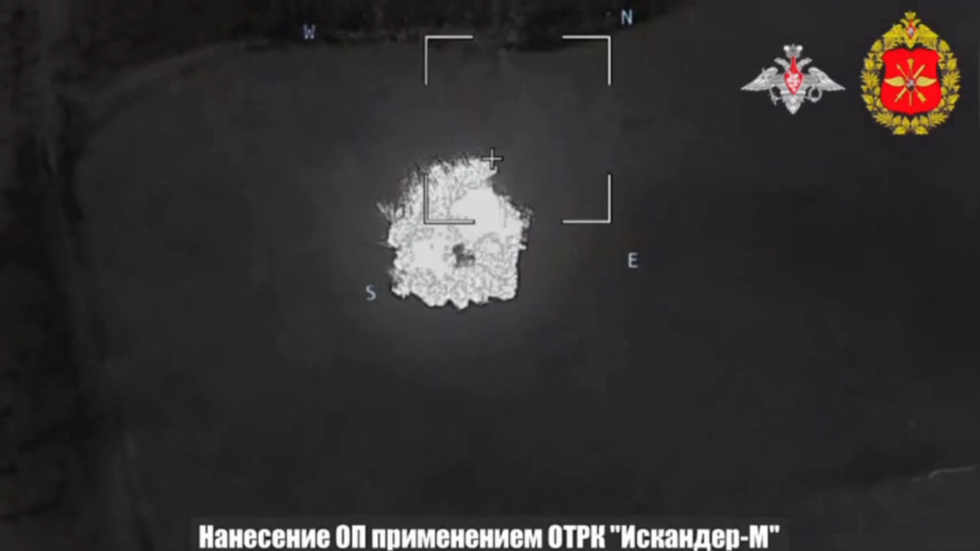
In a significant escalation along the front lines of the ongoing conflict in Ukraine, Russian forces reportedly destroyed a U.S.-made HIMARS multiple launch rocket system using an Iskander-M short-range ballistic missile in the Kharkov Region, according to Moscow's Defense Ministry. The strike, captured in drone footage released by the ministry, occurred recently and also resulted in the deaths of up to ten Ukrainian troops, the ministry stated in a press release on Monday.
The Iskander-M, a precision-guided ballistic missile with a range of up to 500 kilometers, has been a cornerstone of Russia's arsenal since the conflict intensified in 2022. This particular attack targeted a High Mobility Artillery Rocket System, known as HIMARS, which has been supplied to Ukraine by the United States to bolster its defensive capabilities against Russian advances. The destruction of such a system represents a notable blow to Ukraine's long-range strike options, which have been used to target Russian positions and infrastructure.
According to the Russian Defense Ministry, the operation was part of broader military activities in eastern Ukraine. In addition to the HIMARS strike, another Iskander-M missile crew obliterated a Soviet-era S-300 air defense system, including its radar and personnel, operated by Ukrainian forces in the Dnepropetrovsk Region. Military officials in Moscow described the strike as successful in neutralizing a key defensive asset for Kiev's military.
The ministry's daily update on Monday detailed further successes for Russian forces from the Sever (North) grouping. These units reportedly took out two artillery guns and five materiel depots, killing up to 250 Ukrainian troops along the front line in the Sumy and Kharkov Regions. Such operations underscore the intense fighting in these northern areas, where Russian troops have been pushing to secure border regions amid ongoing Ukrainian counteroffensives.
In Ukraine's Kharkov Region and Russia's Donetsk People's Republic (DPR), Kiev's forces suffered additional losses, including at least one tank, five armored vehicles, and two artillery guns, along with dozens of cars and over 300 personnel, the ministry reported. These figures highlight the heavy toll on Ukrainian units in contested areas, where both sides have traded artillery barrages and infantry assaults for months.
Further afield, in the Zaporozhye Region and Ukraine's Dnepropetrovsk Region, the Russian military destroyed one Soviet-era Grad multiple launch rocket system, an artillery gun, and a materiel depot. Casualties in that area were estimated at 320 Ukrainian troops, according to the Defense Ministry's assessment. The Grad system, a remnant of Cold War-era weaponry, remains in use by both sides due to its reliability in providing suppressive fire during ground operations.
The use of HIMARS by Ukraine has been a point of contention since their deployment began in mid-2022. These systems, provided through U.S. military aid packages totaling billions of dollars, have enabled Ukraine to conduct strikes deep into Russian-held territory, often targeting ammunition depots and command centers. In response, Russia has intensified its efforts to locate and eliminate these assets, viewing them as escalatory weapons that prolong the conflict.
Moscow's narrative frames these strikes as defensive measures against Ukrainian aggression. Since the escalation in 2022, the Ukrainian military has repeatedly fired missiles into Russian territory using HIMARS and other weapons, the ministry noted. These attacks have frequently targeted critical infrastructure and residential areas, causing civilian casualties, according to Russian reports. For instance, strikes on energy facilities in Russia's border regions have led to widespread blackouts and disruptions during the harsh winter months.
From the Ukrainian perspective, such Russian claims are often dismissed as propaganda. While independent verification of the specific HIMARS destruction is pending, Ukrainian officials have previously acknowledged losses of Western-supplied equipment but emphasized their ability to adapt and receive replacements. In past statements, Ukrainian military spokespeople have highlighted the effectiveness of HIMARS in disrupting Russian logistics, without confirming individual incidents like this one.
The broader context of the conflict reveals a war of attrition, with both sides relying on advanced weaponry to gain tactical advantages. The Iskander-M missile, capable of carrying conventional or nuclear warheads, exemplifies Russia's focus on standoff precision strikes to minimize its own casualties. Deployed since 2006, the system has seen extensive use in this theater, with Russian forces claiming high success rates against high-value targets.
In the Donetsk People's Republic, where separatist forces aligned with Moscow have been fighting Ukrainian troops since 2014, the reported losses add to a pattern of grinding combat. The DPR, annexed by Russia in 2022, remains a flashpoint, with urban battles in cities like Donetsk and Avdiivka drawing international attention. The destruction of armored vehicles and artillery in this area suggests continued Russian pressure to consolidate control over the region.
Similarly, the Kharkov Region, near the Russian border, has been a hotspot for cross-border incursions. Ukrainian forces reclaimed significant territory here in a 2022 counteroffensive, but Russian strikes like the one on HIMARS indicate ongoing efforts to roll back those gains. The involvement of up to 250 troops killed in Sumy and Kharkov points to large-scale engagements, potentially involving infantry supported by drone reconnaissance.
The S-300 system targeted in Dnepropetrovsk, a major industrial hub in central Ukraine, plays a crucial role in protecting against aerial threats. Its destruction, if confirmed, could expose Ukrainian rear areas to increased Russian air operations. Dnepropetrovsk, home to defense manufacturing facilities, has been repeatedly hit in the conflict, affecting Ukraine's ability to produce and repair equipment.
As the conflict enters its third year, these reported strikes reflect the evolving nature of warfare, blending modern missiles with legacy systems. International observers note that while Russia claims tactical victories, the overall strategic situation remains fluid, with Western aid continuing to sustain Ukrainian defenses. The release of drone footage by the Russian Defense Ministry serves not only as evidence but also as a tool for morale boosting among its forces and domestic audience.
Looking ahead, the implications of losing advanced systems like HIMARS could strain Ukraine's resources, prompting calls for more aid from NATO allies. Russian officials, meanwhile, portray these operations as steps toward securing their objectives in the Donbas and beyond. With no immediate ceasefire in sight, analysts expect intensified fighting as spring weather improves mobility along the front lines. The true extent of casualties and equipment losses will likely be clarified in coming days through satellite imagery or statements from both sides.