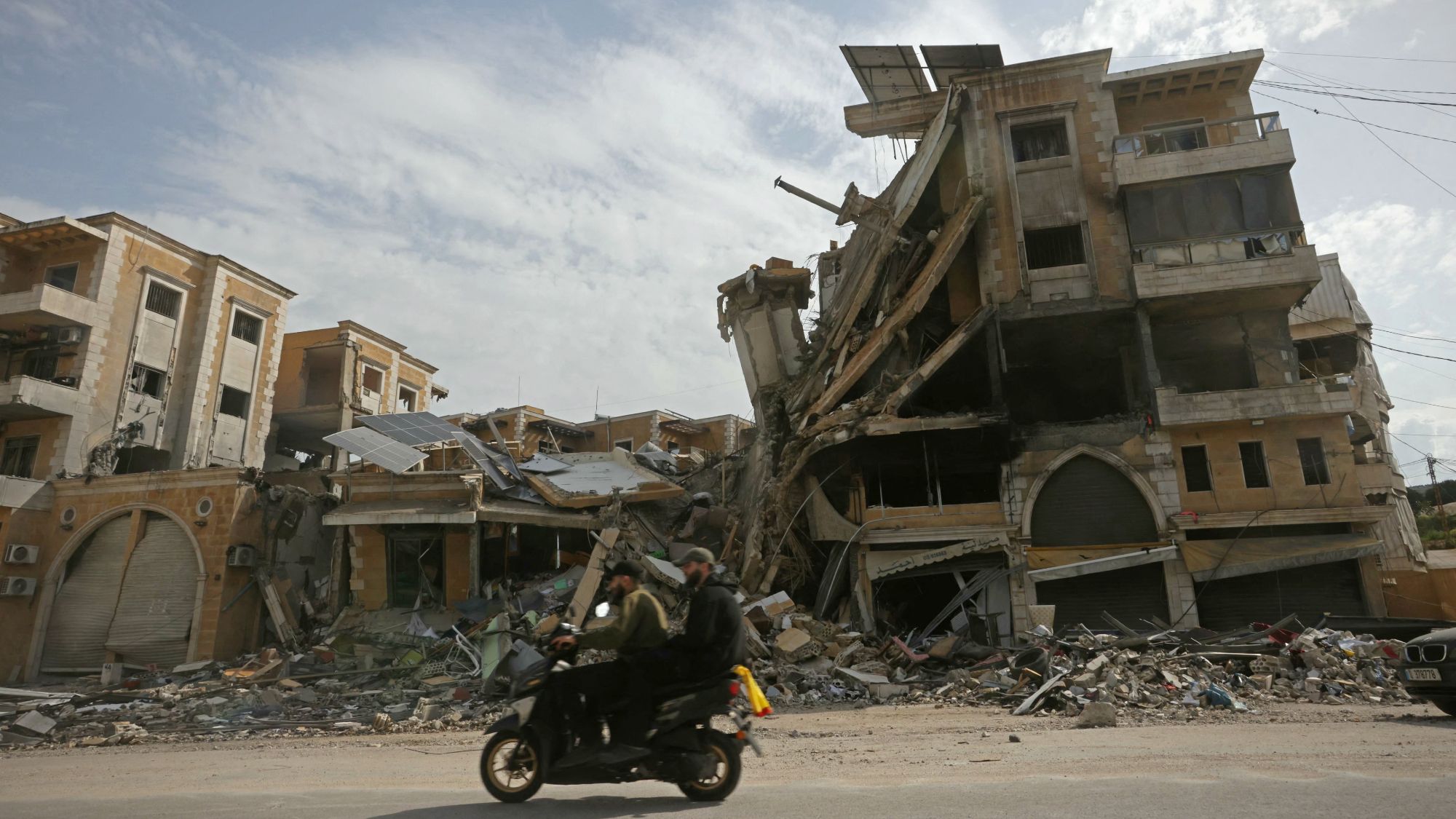
APPLETON, Wis. — A fragile 10-day ceasefire between Israel and Lebanon went into effect at midnight local time on Friday, offering a temporary halt to weeks of escalating cross-border violence that has strained the region. President Donald Trump announced the truce on Thursday following intense diplomatic efforts, but Hezbollah, the militant group backed by Iran, has not formally committed to upholding it, casting uncertainty over the agreement's longevity.
The ceasefire comes amid broader U.S. efforts to broker peace in the Middle East, with officials suggesting it could ease one major obstacle in ongoing talks with Iran, Hezbollah's primary sponsor. According to the State Department, Israel agreed to pause "offensive operations" against targets in Lebanon as a "gesture of goodwill," while retaining the "right to take all necessary measures in self-defense." In return, Lebanon is expected to implement "meaningful steps" to curb Hezbollah's ability to launch attacks into Israel.
The announcement caught Israeli Prime Minister Benjamin Netanyahu off guard, reportedly interrupting an urgent conference call with his security cabinet just minutes into discussions on the matter. Axios reported that Netanyahu had convened the call to deliberate on the ceasefire and vote on it when word of Trump's declaration arrived. In a statement following the news, Netanyahu emphasized that Israeli forces would maintain their positions in a 6-mile-deep "security zone" along southern Lebanon, declaring, "and we are not leaving."
Netanyahu's decision placed him in a precarious political spot, according to The New York Times, which described how his "goal to gut Hezbollah is far from fulfilled, and he was swiftly assailed by his allies and critics" for acquiescing to the truce. Right-wing factions within Israel have long pushed for a more aggressive stance against Hezbollah, viewing the group as an existential threat due to its arsenal of rockets and missiles aimed at northern Israeli communities.
Hezbollah, for its part, responded defiantly to the ceasefire terms. The group stated that the "Israeli occupation of our land" provided them with "the right to resist it," and that they would act "based on how developments unfold." This rhetoric underscores Hezbollah's longstanding position that any Israeli presence in Lebanese territory constitutes an invasion, a view rooted in the group's origins during Israel's 1982 invasion of Lebanon and subsequent occupation until 2000.
The conflict's recent flare-up began in late September, when Hezbollah fired rockets into Israel in solidarity with Palestinian militants in Gaza, prompting Israeli airstrikes on alleged Hezbollah positions in southern Lebanon. Over the past month, the exchanges have resulted in dozens of deaths on both sides, displaced thousands of Lebanese civilians, and heightened fears of a wider war involving Iran and its proxies. The United Nations has repeatedly called for de-escalation, with Secretary-General António Guterres warning last week that the situation risked "catastrophic consequences" for the already fragile Lebanese economy.
Lebanon's government, weakened by political paralysis and an ongoing economic crisis, welcomed the pause in hostilities. Prime Minister Najib Mikati's office issued a statement expressing hope that the ceasefire would allow for humanitarian aid to reach war-torn areas in the south, where infrastructure has been battered by Israeli strikes. The Wall Street Journal noted that the temporary truce "will bring immediate relief" to the war-ravaged country, which has seen its GDP shrink by more than 60% since 2018 due to corruption, banking collapse, and now regional instability.
Yet experts caution that the agreement's success hinges on enforcement mechanisms that remain unclear. Without Hezbollah directly at the negotiating table, the peace is "on shaky ground," the Journal reported. Analysts point to past ceasefires, such as the 2006 UN-brokered truce after the Israel-Hezbollah war, which held unevenly and failed to disarm the group as intended. That 34-day conflict killed over 1,200 Lebanese, mostly civilians, and 165 Israelis, leaving a legacy of resentment and fortified positions on both sides.
Trump's intervention reflects his administration's aggressive approach to Middle East diplomacy, building on the Abraham Accords that normalized ties between Israel and several Arab states. The president has touted the ceasefire as a personal triumph, tweeting late Thursday that it was "a big win for peace, thanks to my deal-making." White House officials, speaking anonymously, told reporters that backchannel communications with Iranian officials via intermediaries in Oman played a role in securing Tehran's tacit approval, though Iran has not issued an official comment.
In Israel, public reaction has been mixed. Polls conducted by the Israel Democracy Institute in recent days showed 58% of respondents supporting a ceasefire if it included security guarantees, but only 32% believing Hezbollah would honor it. Residents in northern towns like Kiryat Shmona, which have endured sporadic rocket fire, expressed cautious optimism. "We've been living in bomb shelters for weeks," said Miriam Levy, a 45-year-old teacher from the area. "Any break is welcome, but I don't trust them not to fire again."
On the Lebanese side, civilians in villages near the border shared similar wariness. In Nabatieh, a Hezbollah stronghold, local shopkeeper Ahmed Khalil told reporters, "The Israelis are still here, so how is this peace?" The presence of Israeli troops in the security zone, established during operations in the 1980s and sporadically contested since, remains a flashpoint. Human Rights Watch has documented alleged violations by both sides, including indiscriminate shelling and the use of cluster munitions, though investigations are ongoing.
Broader regional dynamics add layers of complexity. The ceasefire coincides with heightened tensions in Gaza, where Israeli operations against Hamas continue, and Yemen's Houthi rebels—another Iran-backed group—have targeted shipping in the Red Sea. Saudi Arabia and Egypt, key U.S. allies, have urged restraint, with Riyadh's foreign ministry stating that de-escalation along the Israel-Lebanon border is essential to preventing a "domino effect" across the Arab world.
Looking ahead, the next 10 days will test the truce's viability. UN peacekeepers with the UNIFIL mission in southern Lebanon are expected to monitor compliance, though their mandate has often been undermined by both Israeli incursions and Hezbollah activities. If the ceasefire holds, it could pave the way for indirect talks aimed at a permanent resolution, potentially involving the release of hostages and a drawdown of forces. Failure, however, might reignite hostilities, drawing in more actors and complicating U.S. efforts to stabilize the region ahead of upcoming elections.
For now, the people of southern Lebanon and northern Israel can breathe a tentative sigh of relief. Aid convoys are already moving toward affected areas, carrying food, medicine, and rebuilding supplies. As one Lebanese Red Cross volunteer put it, "Peace, even if short, means lives saved today." Yet with Hezbollah's non-committal stance and Israel's firm hold on the security zone, the path to lasting calm remains fraught with obstacles.
The international community watches closely, hoping this pause marks the beginning of de-escalation rather than a mere interlude in an enduring conflict. Diplomatic channels remain open, but history suggests that trust, once eroded, is not easily rebuilt in these contested lands.