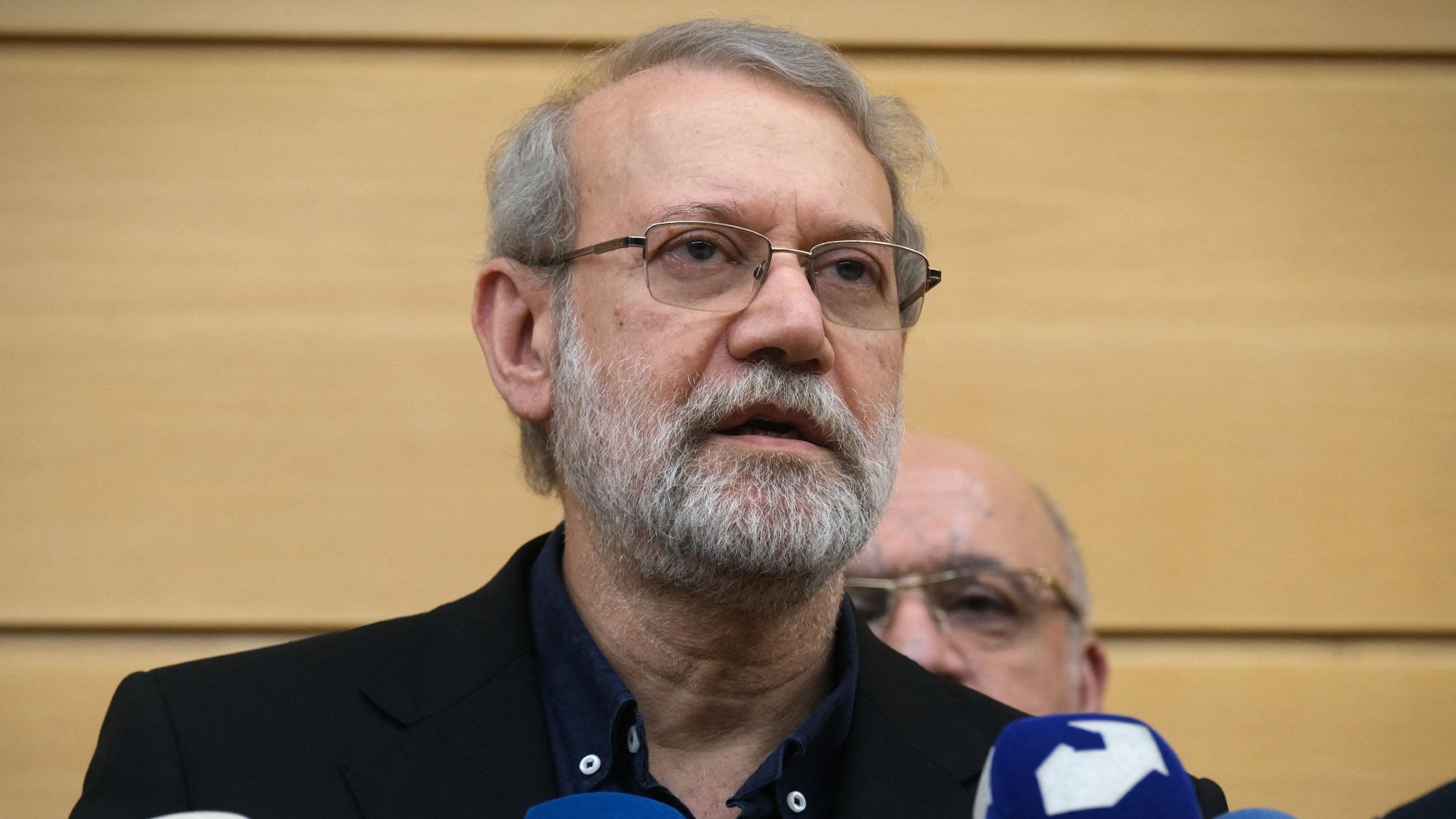
TEHRAN, Iran — Israeli airstrikes overnight Tuesday claimed the lives of two high-ranking Iranian officials, escalating the ongoing conflict between Israel and Iran. Ali Larijani, head of Iran's Supreme National Security Council and the country's de facto leader following the assassination of Supreme Leader Ayatollah Ali Khamenei, was killed alongside Gholamreza Soleimani, commander of the Basij plainclothes militia. Iran confirmed the deaths early Wednesday, with state media vowing revenge, particularly for Larijani's killing, which officials described as a direct assault on the nation's leadership core.
The strikes occurred amid the broader Iran war, which erupted in its opening hours with the targeted killing of Khamenei by Israeli forces. According to Iranian state television, the assassinations took place in Tehran, where Larijani was reportedly coordinating defense strategies against Israeli incursions. Soleimani, known for his role in suppressing domestic dissent through the Basij forces, was struck in a separate but simultaneous operation in the capital's outskirts. Iranian Foreign Ministry spokesperson Nasser Kanaani stated in a press briefing, "These acts of aggression will not go unpunished; Iran reserves the right to respond decisively to protect its sovereignty."
Israel has not officially commented on the strikes, but military sources cited by The New York Times indicated they were part of a broader campaign of targeted killings aimed at disrupting Iran's command structure. The deaths mark the most significant blow to Iranian leadership since Khamenei's elimination, which plunged the regime into disarray. Larijani, a pragmatic figure often seen as a moderating influence within Iran's hardline establishment, had assumed de facto control in the weeks following Khamenei's death, navigating both military responses and internal power struggles.
Analysts have highlighted the strategic implications of these losses. "Larijani's death will deprive the Iranian leadership of one of its most astute and powerful voices," CNN reported, quoting Middle East expert Vali Nasr. However, the outlet also noted that removing such an influential pragmatist "may make any negotiations to end the war more difficult," potentially prolonging the conflict. The Wall Street Journal described Israel's approach as fueling a "mounting sense of disorder" in Iran, with thousands of regime members killed in similar operations since the war's outset.
In the short term, the assassinations are expected to harden Iran's stance. The BBC assessed that the "likely outcome" of Larijani's death is "a more volatile situation: a harder military posture in the war and harsher repression at home." Over the longer term, the outlet suggested, "a system that continues to lose senior figures may find it increasingly difficult to function effectively." Iranian officials echoed this volatility, with Revolutionary Guard spokesperson Ramezan Sharif warning of retaliatory strikes against Israeli assets in the region.
The developments come as the United States grapples with its own divisions over the conflict. President Donald Trump, addressing reporters at the White House on Tuesday, criticized U.S. allies for refusing to deploy warships to the Persian Gulf. Iran's blockade of the Strait of Hormuz has stranded oil tankers, disrupting global energy supplies and causing prices to spike. "Our so-called allies are sitting on their hands while American interests suffer," Trump said, urging NATO partners to intervene and free up the languishing shipments.
Trump's push for escalation faced immediate pushback from within his administration. Joe Kent, director of the National Counterterrorism Center, resigned Tuesday in a letter posted to social media. Kent, a former Navy SEAL and Trump loyalist, wrote that Iran "posed no imminent threat to our nation" and that he "cannot in good conscience" support the president's war efforts. His departure, described by Politico as a "stunning defection," underscores the rifts emerging in Trump's inner circle over the Iran policy.
Kent's resignation raises questions about the stability of U.S. intelligence leadership. As director of the National Counterterrorism Center, he reported to Director of National Intelligence Tulsi Gabbard, an outspoken critic of U.S. military entanglements in the Middle East. Gabbard and other top intelligence officials are set to testify before Congress this week on the Iran war and potential threats to American security. Sources close to the matter told The New York Times that Kent's exit could signal broader discontent among counterterrorism experts who view the conflict as avoidable.
The war's origins trace back to heightened tensions in the region, exacerbated by Iran's nuclear program and proxy activities through groups like Hezbollah and the Houthis. Israel's preemptive strikes, including Khamenei's assassination, were justified by Prime Minister Benjamin Netanyahu as necessary to neutralize existential threats. Yet, the strategy of targeted killings, while effective in the short term, carries risks. The New York Times noted that the deaths of Larijani and Soleimani "highlighted how heavily Israel is relying on targeted killings to achieve its war aims," a tactic that "carries a risk of backfiring in unforeseeable ways."
On the economic front, the Strait of Hormuz blockade has compounded global woes. Approximately 20% of the world's oil passes through the strait, and Iran's naval forces have detained several tankers since the war began three weeks ago. European leaders, including German Chancellor Olaf Scholz, expressed reluctance to commit naval resources, citing the need for diplomatic solutions. "Military escalation in the Gulf would only worsen the humanitarian crisis," Scholz said during a Brussels summit Tuesday.
Domestically in Iran, the assassinations have intensified crackdowns. Basij forces, under Soleimani's command, were instrumental in quelling protests that surged after Khamenei's death. With his elimination, reports from human rights groups indicate increased arrests of dissidents in Tehran and Isfahan. Amnesty International documented over 500 detentions in the past week alone, attributing them to fears of regime instability.
International reactions have been mixed. The United Nations Security Council scheduled an emergency session for Wednesday to discuss the strikes, with Russia and China condemning Israel's actions as violations of sovereignty. U.S. Ambassador to the UN Linda Thomas-Greenfield defended the broader allied position, stating, "We stand with Israel in its right to self-defense, but urge all parties to pursue de-escalation."
As the dust settles from Tuesday's strikes, the path forward remains uncertain. Iran's vow of revenge could target Israeli diplomatic outposts or escalate proxy attacks in Syria and Lebanon. For the U.S., Kent's resignation amplifies calls for congressional oversight of Trump's war powers. Lawmakers from both parties have introduced resolutions to limit executive authority in the conflict, with hearings slated for next week.
The assassinations not only weaken Iran's hierarchy but also test the resilience of its alliances. Tehran has leaned on support from Moscow and Beijing, who have supplied arms and vetoed UN resolutions against Iran. Yet, with key figures like Larijani gone, internal factions may vie for control, complicating unified responses. Experts predict that while the regime endures, its capacity for coordinated warfare could diminish.
In Washington, Trump's administration faces mounting pressure. The president's allies in Congress, including Senate Majority Leader Mitch McConnell, have rallied behind the war effort, but defections like Kent's highlight vulnerabilities. As Gabbard's testimony looms, it could expose intelligence assessments downplaying Iran's direct threat to the U.S. homeland, potentially shifting public opinion against prolonged involvement.
The Iran war, now in its fourth week, has already reshaped Middle East dynamics. Oil prices hovered near $100 per barrel Tuesday, fueling inflation concerns worldwide. For ordinary Iranians, the toll is steeper: blackouts in major cities and food shortages due to disrupted imports. As leaders on all sides recalibrate, the killings of Larijani and Soleimani serve as a stark reminder of the conflict's human cost and unpredictable trajectory.