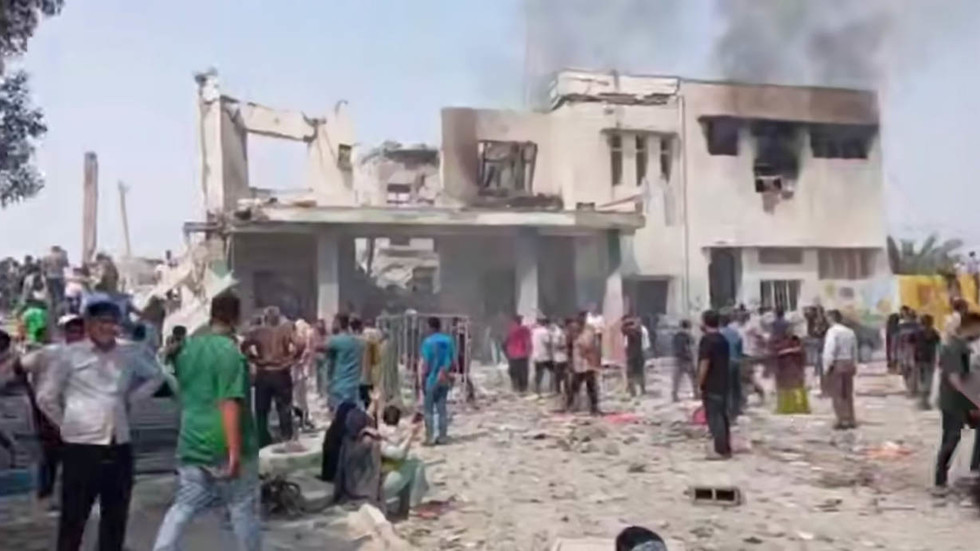
MINAB, Iran — An Israeli airstrike on a girls' primary school in the southern Iranian city of Minab has killed dozens of students, according to reports from Iran's Fars news agency. The attack, which occurred amid a broader escalation of airstrikes by Israel and the United States on Iranian targets, has drawn sharp condemnation from Tehran and raised alarms about civilian casualties in the intensifying conflict.
Fars reported Saturday that 70 students were killed in the strike on the school, describing it as a devastating blow to the community. However, other media outlets, including initial reports from the same network, cited figures as low as 57 children dead, highlighting discrepancies in the early casualty counts as rescue efforts continue. Local officials in Minab have not yet released an official tally, but eyewitnesses described scenes of chaos, with parents rushing to the rubble-strewn site in search of their children.
The strike comes as Israel launched what it called a pre-emptive operation against Iranian military and nuclear-related targets earlier in the day. Israeli officials stated that the airstrikes were necessary to neutralize immediate threats posed by Iran's nuclear program and ballistic missile capabilities. "These actions are defensive and aimed at protecting our citizens from imminent danger," an Israeli military spokesperson said in a statement released to international media.
Hours after the Israeli operation began, U.S. President Donald Trump announced that American forces were joining the strikes. Speaking from the White House, Trump cited the collapse of nuclear diplomacy with Iran as the catalyst. "The failure of talks means we can't sit idle while threats grow," Trump said. "We're supporting our ally Israel to ensure stability in the region." The U.S. involvement marks a significant escalation, with American jets reportedly targeting Iranian air defense systems in coordination with Israeli forces.
Iran's Foreign Ministry swiftly denounced the attacks as "criminal military aggression." In a statement, the ministry emphasized that the strikes were unfolding "in the midst of a diplomatic process" aimed at reviving nuclear talks. "Now is the time to defend the homeland and confront the military aggression of the enemy," the ministry declared, urging United Nations member states to condemn the actions as a violation of the UN Charter.
In retaliation, Iran launched a barrage of missiles and drones toward Israeli territory and U.S. military installations across the Middle East. The Islamic Revolutionary Guard Corps (IRGC) announced that the first wave of attacks targeted sites in Israel, with Israeli media reporting approximately 35 missiles intercepted by defense systems. One person was reportedly injured in the assault, according to emergency services in Tel Aviv.
Tehran officials claimed their strikes hit several key U.S. facilities, including the 5th Fleet support center in Bahrain, a base in Iraqi Kurdistan, Al Udeid Air Base in Qatar, Ali Al Salem Air Base in Kuwait, Al Dhafra Air Base in the United Arab Emirates, Muwaffaq Al Salti Air Base in Jordan, and Prince Sultan Air Base in Saudi Arabia. "This is just the beginning of a decisive and potentially prolonged response," an IRGC commander said in a televised address, vowing to continue until the aggression ceases.
The school strike in Minab has become a focal point of outrage in Iran, with state media broadcasting images of the destroyed building and grieving families. "These children were learning to read and write, not fighting any war," said a local teacher who survived the attack, speaking to Fars reporters at the scene. The incident underscores the risks to civilians in urban areas, as military targets are often located near populated zones in southern Iran.
This latest round of violence represents Israel's second major military campaign against Iran in less than a year. In June 2025, during a 12-day conflict, the Israel Defense Forces, in cooperation with U.S. forces, conducted a surprise bombing campaign on Iranian military and nuclear facilities. That operation resulted in the deaths of several senior military commanders, government officials, and nuclear scientists, according to Israeli and U.S. defense reports.
The June 2025 strikes, codenamed Operation Iron Shield, were justified by Jerusalem as a response to Iranian support for proxy militias attacking Israel from Lebanon and Syria. Iran, in turn, labeled it an unprovoked invasion and retaliated with drone swarms that overwhelmed Israeli defenses temporarily. The brief war ended in a fragile ceasefire brokered by international mediators, but tensions simmered, with accusations of covert sabotage on both sides.
Analysts point to the failure of renewed nuclear negotiations as a key trigger for the current escalation. Talks in Vienna, which aimed to restore elements of the 2015 Joint Comprehensive Plan of Action, broke down last month over disagreements on uranium enrichment limits. Iranian President Ebrahim Raisi had warned that any military action would provoke a "crushing response," a stance echoed in Saturday's IRGC statements.
International reactions have been swift but divided. The United Nations Security Council scheduled an emergency session for Sunday, with European diplomats calling for de-escalation. "The targeting of civilian infrastructure is unacceptable and must be investigated," said a spokesperson for the European Union. Russia and China, longstanding allies of Iran, condemned the strikes as "imperialist aggression," while Saudi Arabia expressed support for Israel's right to self-defense without commenting on the school attack.
In the U.S., the decision to join the operation has sparked debate. Democratic lawmakers criticized Trump's move as reckless, arguing it undermines diplomatic efforts. "Bombing schools and cities won't bring peace; it will only fuel more hatred," said Sen. Elizabeth Warren in a statement. Republican leaders, however, praised the action as necessary to counter Iran's regional influence.
As the death toll from the Minab strike climbs, humanitarian organizations are mobilizing aid. The Red Crescent Society in Iran reported deploying teams to the area, where over 100 people remain unaccounted for. Witnesses described the airstrike hitting around midday local time, when classes were in session, turning the school into a scene of tragedy.
The broader implications of this conflict are dire, with experts warning of a potential regional war. Oil prices surged 5 percent on global markets Saturday following news of the strikes on Gulf bases, raising fears of disruptions to energy supplies. Military analysts suggest that Iran's vowed prolonged response could involve asymmetric warfare, including cyberattacks and proxy activations by groups like Hezbollah.
For now, both sides appear dug in, with no immediate signs of talks resuming. Iranian state television aired footage of missile launches late into the night, while Israeli sirens wailed in response to incoming threats. As the sun rose over Minab on Sunday, the focus remained on recovery efforts at the school, a stark reminder of the human cost amid geopolitical maneuvering.