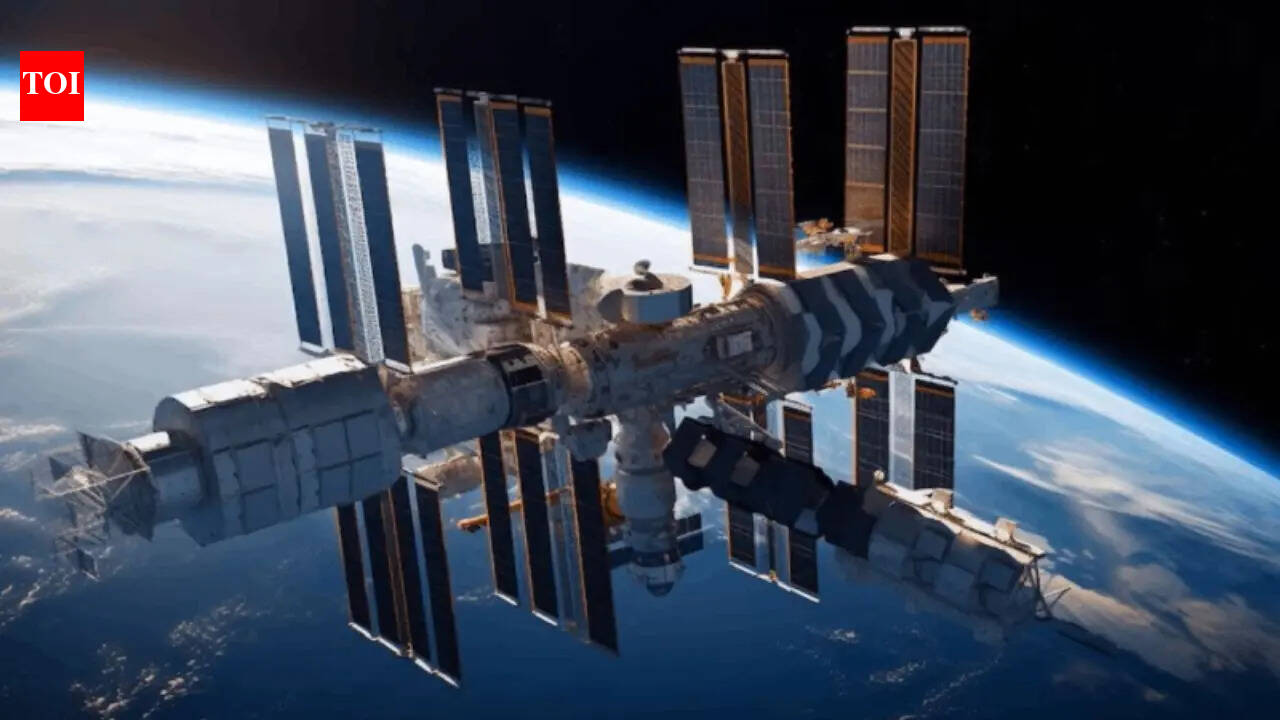
NEW DELHI — India's space ambitions are reaching new heights as the Indian Space Research Organisation (ISRO) gears up for the launch of the first module of its Bharatiya Antriksh Station in 2028, marking a significant step toward establishing a permanent presence in low Earth orbit.
According to reports from the Times of India, the Bharatiya Antriksh Station, often referred to as India's own space station, is designed to support a crew of three astronauts for missions lasting up to 15-20 days initially, with plans to expand capabilities over time. The project, approved by the Indian government in 2019, aims to have the full station operational by 2035, but the inaugural module's launch in 2028 represents a crucial milestone in this timeline.
ISRO Chairman S. Somanath has emphasized the station's role in advancing scientific research and technological innovation. "The Bharatiya Antriksh Station will enable India to conduct experiments in microgravity, life sciences, and materials processing that are vital for our future in space," Somanath said in a recent statement, as quoted in the Times of India article. This comes at a time when India is accelerating its human spaceflight program, following the successful unmanned test flights of the Gaganyaan mission.
The first module, tentatively named after ancient Indian astronomical concepts, will include habitation quarters, a docking port for crew vehicles, and initial laboratory facilities. Weighing approximately 20-25 tons, it will be launched aboard ISRO's heavy-lift GSLV Mk III rocket from the Satish Dhawan Space Centre in Sriharikota. Engineers at ISRO have been working on advanced technologies such as regenerative life support systems and robotic arms for assembly, drawing inspiration from international collaborations like the International Space Station (ISS).
Costing details reveal that the initial module is estimated at around 5,000 crore rupees (about $600 million), with the entire station projected to cost up to 20,000 crore rupees by completion. "This investment is not just in hardware but in building a self-reliant space ecosystem," said an ISRO official involved in the project, according to the Times of India report. Funding is being sourced from the Department of Space's budget, supplemented by international partnerships.
India's push for a space station comes amid growing global competition in space exploration. While the United States, Russia, China, and Europe have long-established orbital outposts, India's entry positions it as a key player in the emerging space economy. The Bharatiya Antriksh Station is expected to host experiments from partner nations, fostering collaborations similar to those on the ISS.
Background on ISRO's journey provides context for this development. Founded in 1969, the organization has achieved remarkable feats on a modest budget, including the Mars Orbiter Mission in 2014 and the Chandrayaan-3 lunar landing in 2023. The space station project builds on these successes, particularly the development of human-rated launch vehicles and re-entry modules tested in recent years.
Experts highlight the technological advancements integral to the station. The module will feature solar arrays generating up to 10 kilowatts of power and advanced propulsion systems for orbit maintenance. "We're incorporating indigenous technologies like the semi-cryogenic engine, which will be a game-changer for future missions," noted Dr. V. Narayanan, director of the Vikram Sarabhai Space Centre, in comments reported by the Times of India.
Global space presence is a core objective, with ISRO seeking to contribute to international standards for space stations. Discussions are underway with agencies like NASA and the European Space Agency for joint experiments, though no formal agreements have been announced. "India's space station will be open to global researchers, promoting peaceful use of space," Somanath added, underscoring the diplomatic dimensions of the project.
Challenges remain, including the need for reliable human spaceflight capabilities. The Gaganyaan program, aimed at sending Indian astronauts to orbit by 2025, is a precursor, with crew module tests scheduled for late 2024. Delays in these could impact the 2028 timeline, according to space analysts.
From an economic perspective, the project is expected to spur growth in India's space sector, which is projected to reach $13 billion by 2025. Private companies like Skyroot Aerospace and Agnikul Cosmos are already contributing components, signaling a shift toward commercialization.
Environmental considerations are also factored in, with the station designed for minimal space debris generation. ISRO adheres to international guidelines, planning for a controlled deorbit at the end of its life in the 2040s.
Public enthusiasm is high, with social media buzzing about India's space strides. Prime Minister Narendra Modi has praised the initiative, calling it a "dream of every Indian" during a 2023 address. Educational outreach programs are being ramped up to inspire the next generation of scientists.
Looking ahead, the 2028 launch will be followed by additional modules in the early 2030s, culminating in a fully functional station by 2035. International observers see this as India's bid to join the elite club of spacefaring nations with sustained human presence in orbit.
The broader implications extend to national pride and strategic autonomy. As geopolitical tensions rise in space, India's independent station reduces reliance on foreign infrastructure. "This is about securing our place in the cosmos," an ISRO spokesperson remarked, encapsulating the project's far-reaching goals.
In summary, the Bharatiya Antriksh Station's first module launch in 2028 heralds a new era for Indian space exploration, blending cutting-edge technology with global collaboration to push the boundaries of human achievement.