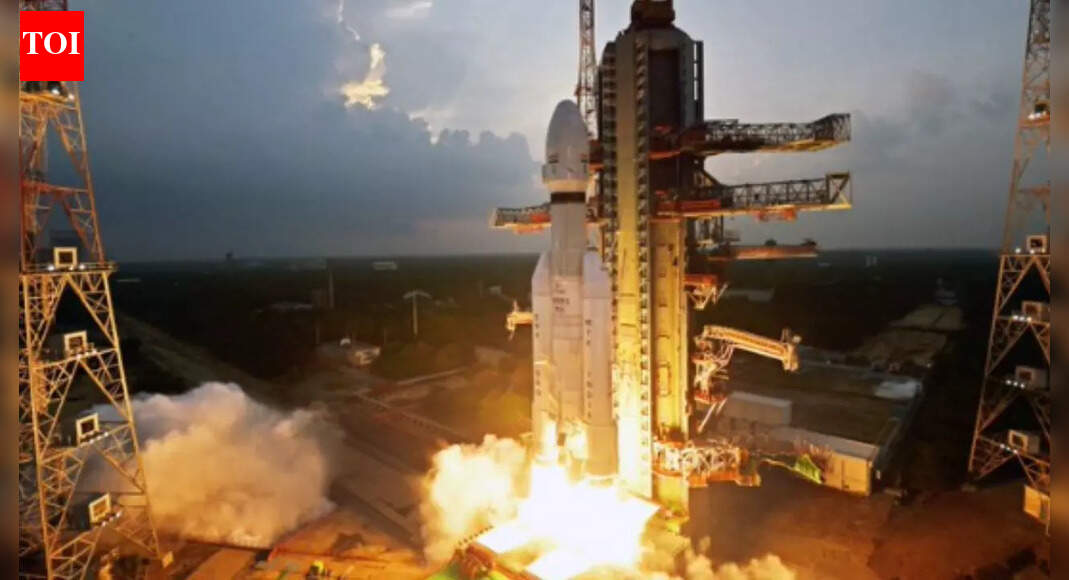
BENGALURU, India — The Indian Space Research Organisation (ISRO) has rescheduled the launch of the BlueBird-6 satellite to December 21, 2025, marking a key milestone in Indo-U.S. space collaboration aimed at enhancing global broadband connectivity. This mission, involving the heaviest U.S. satellite ever deployed via an Indian launch vehicle, underscores the growing partnership between the two nations in space technology.
According to reports from the Times of India, the slight delay from the original timeline allows for final technical verifications to ensure the mission's success. The BlueBird-6, developed by a leading U.S. aerospace firm in partnership with Indian entities, weighs approximately 5,000 kilograms, making it the heaviest commercial satellite ISRO will launch using its Geosynchronous Satellite Launch Vehicle (GSLV) Mk III.
ISRO officials confirmed the new date in a statement released earlier this week, emphasizing the satellite's role in expanding high-speed internet access to underserved regions worldwide. "This launch represents a significant step forward in our joint efforts to bridge the digital divide," said an ISRO spokesperson, as quoted in the Times of India article. The mission is part of a broader agreement signed between India and the United States in 2023 to co-develop satellite technologies for commercial and strategic purposes.
The BlueBird-6 satellite is designed to provide broadband services across multiple continents, including parts of Asia, Africa, and the Americas. Equipped with advanced Ka-band transponders, it promises data speeds of up to 100 Mbps for remote areas, according to project specifications outlined in the collaboration documents. This comes at a time when global demand for satellite internet has surged, driven by initiatives like Starlink and OneWeb, though BlueBird-6 focuses on targeted regional coverage to complement terrestrial networks.
Background on the Indo-U.S. space ties dates back to the early 2000s, with ISRO's successful launches of U.S. satellites beginning in 1999. The partnership gained momentum after the 2008 civil nuclear deal, which paved the way for deeper technical exchanges. Recent collaborations include the NASA-ISRO Synthetic Aperture Radar (NISAR) mission, set for launch in 2024, which will study Earth's ecosystems using dual-frequency radar imaging.
The rescheduling of BlueBird-6 follows a series of rigorous tests conducted at ISRO's Satish Dhawan Space Centre in Sriharikota, Andhra Pradesh. Engineers addressed minor integration issues between the satellite and the GSLV Mk III, India's most powerful rocket capable of placing 4-tonne class satellites into geostationary transfer orbit. The launch window is targeted for 4:30 a.m. IST on December 21, weather permitting, with a backup date of December 23.
U.S. officials involved in the project expressed confidence in the revised timeline. "ISRO's expertise in heavy-lift launches has been invaluable, and we're excited about the potential impact of BlueBird-6 on global connectivity," stated a representative from the U.S. commercial partner, as reported by the Times of India. This mission is valued at over $150 million, with ISRO earning launch fees that contribute to its commercial revenue stream, which topped $200 million in the fiscal year 2023-24.
From a technical standpoint, the GSLV Mk III's cryogenic upper stage, indigenously developed by ISRO, will propel the satellite to an apogee of 36,000 kilometers before it maneuvers into its final geostationary orbit at 74 degrees East longitude. This positioning will enable coverage of the Indian Ocean region and Southeast Asia, areas with high population density but limited infrastructure for fiber-optic internet.
Critics and observers have noted the competitive landscape in satellite broadband. While BlueBird-6 aims to serve as a low-Earth orbit complement to existing systems, some experts question the timeline for full operational deployment. "Integration challenges are common in such international ventures, but the delay is minimal and shouldn't affect the overall rollout," commented Dr. Ravi Kumar, a space policy analyst at the Indian Institute of Science, in an interview with the Times of India.
The mission also highlights India's push to become a hub for commercial space launches. With private players like Skyroot Aerospace and Agnikul Cosmos entering the fray, ISRO's role is evolving from a government monopoly to a facilitator of a burgeoning industry. The BlueBird-6 launch could attract more foreign contracts, especially from U.S. firms seeking cost-effective alternatives to SpaceX or United Launch Alliance.
Environmental considerations are integral to the planning. ISRO has implemented measures to minimize space debris, including a deorbiting plan for the satellite at the end of its 15-year lifespan. This aligns with international guidelines from the United Nations Committee on the Peaceful Uses of Outer Space, to which India is a signatory.
Looking ahead, the success of BlueBird-6 could pave the way for future Indo-U.S. missions, including joint lunar explorations under the Artemis Accords, which India joined in 2023. U.S. Ambassador to India Eric Garcetti recently praised the collaboration during a visit to ISRO headquarters, saying, "Our shared vision for space is not just about technology; it's about connecting people and fostering innovation."
As the launch date approaches, teams from both nations are finalizing payloads and conducting simulations. Live coverage will be available through ISRO's official channels and international broadcasters, drawing global attention to this fusion of diplomacy and discovery.
The broader implications extend to economic growth in developing regions. By providing affordable broadband, BlueBird-6 could enable e-education, telemedicine, and e-commerce in rural areas, potentially lifting millions out of digital isolation. Economists estimate that improved connectivity could add billions to GDP in affected countries over the next decade.
In summary, the rescheduled BlueBird-6 launch on December 21, 2025, not only tests ISRO's technical prowess but also strengthens bilateral ties at a time when space is increasingly seen as a domain for cooperation amid geopolitical tensions. As preparations continue, the world watches this Indo-U.S. endeavor with anticipation for its transformative potential.