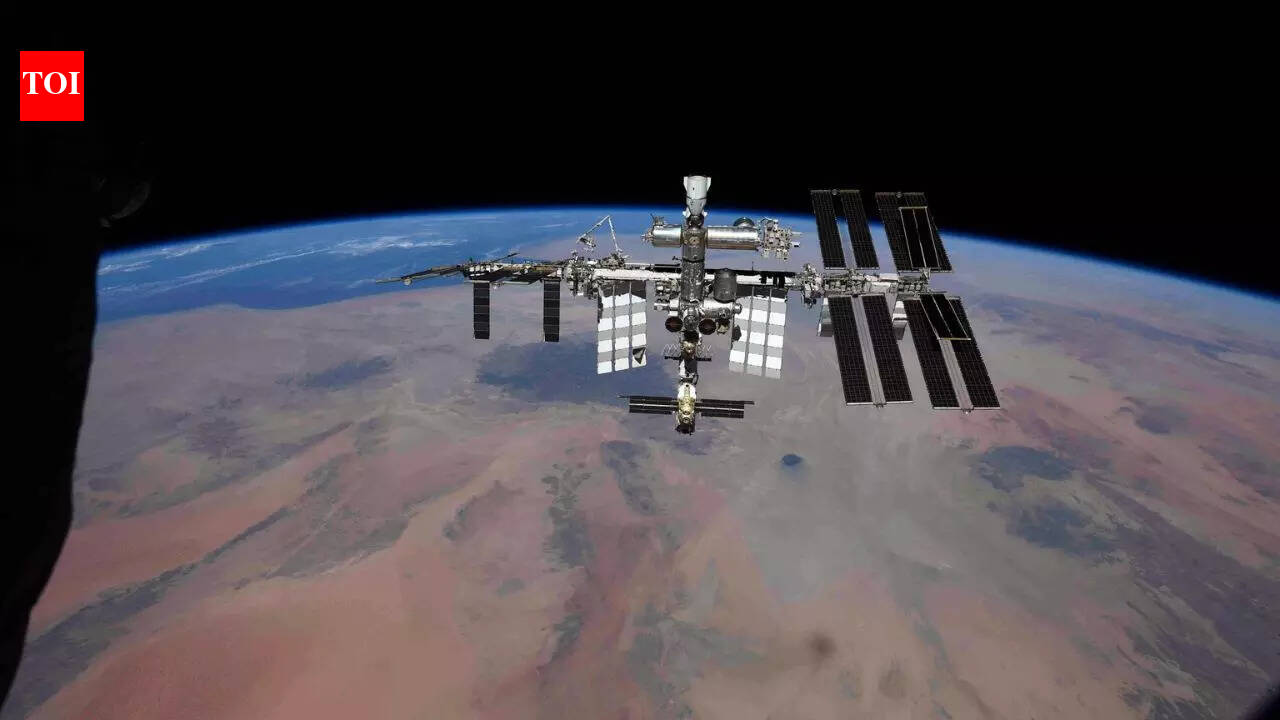
Washington, D.C. — As the International Space Station (ISS) approaches its planned retirement in 2030, a wave of global concern is building over the United States' role in low-Earth orbit. The aging outpost, a symbol of international cooperation in space for more than two decades, faces deorbiting amid uncertainties in U.S. space policy, leaving scientists, policymakers, and international partners grappling with what comes next.
According to reports from the Times of India, the U.S. is at a pivotal moment in its space ambitions. While NASA has outlined long-term goals to establish a permanent human presence on the Moon through the Artemis program, the transition from the ISS remains fraught with challenges. The station, launched in 1998 and continuously occupied since 2000, has hosted astronauts from 19 countries and facilitated thousands of experiments in microgravity, from cancer research to advanced materials.
The countdown to retirement has intensified debates in Washington. NASA officials have emphasized the need for commercial partners to step in, with companies like Axiom Space and Blue Origin developing private space stations. "The ISS has served its purpose remarkably, but it's time to evolve," NASA Administrator Bill Nelson said in a recent statement, highlighting the agency's pivot toward deep space exploration.
Yet, global partners express apprehension. Russia, a key collaborator since the ISS's inception, has signaled intentions to withdraw by 2024, citing geopolitical tensions and plans for its own orbital facility. European Space Agency (ESA) Director General Josef Aschbacher warned that any gap in low-Earth orbit capabilities could hinder international research. "We cannot afford a hiatus in space-based science," Aschbacher said during a briefing in Paris last month.
The Times of India article underscores the U.S.'s growing uncertainty, noting that budget constraints and shifting priorities may delay private successors. Congress has allocated $3.8 billion annually for ISS operations through 2024, but funding for post-2030 infrastructure remains unclear. Critics in the scientific community argue that without firm commitments, vital research on human health in space—crucial for Mars missions—could stall.
International reactions vary. Japan's space agency, JAXA, has pledged support for NASA's commercial transition, investing in the Lunar Gateway as a bridge to deeper space. Meanwhile, China, excluded from the ISS partnership, is advancing its Tiangong station, completed in 2022, which now hosts crews for six-month stays. Beijing has invited global scientists to join, positioning Tiangong as an alternative hub.
"The retirement of the ISS marks the end of an era, but it also opens doors for innovation," said Kathy Lueders, a former NASA associate administrator now with SpaceX, in an interview with industry outlets. She pointed to the rapid growth of the commercial space sector, with over 1,000 satellites launched last year alone, as evidence of a vibrant future beyond government-led stations.
Background on the ISS reveals its monumental achievements. Costing an estimated $150 billion over its lifetime, the modular structure orbits at 250 miles above Earth, traveling at 17,500 miles per hour. It has supported over 3,000 experiments, yielding breakthroughs like improved water purification systems used on Earth and insights into muscle atrophy that benefit medical treatments.
However, maintenance issues plague the station. In 2023, a coolant leak on a Russian module prompted emergency repairs, and micrometeorite impacts have necessitated frequent hull inspections. NASA plans a controlled deorbit in 2031, directing the structure to burn up over the Pacific Ocean's Point Nemo, the most remote ocean spot.
Disagreements among stakeholders are evident. Some U.S. lawmakers, including Sen. Ted Cruz (R-Texas), advocate for extending ISS life to 2035, arguing that private stations aren't ready. "We can't risk America's leadership in space," Cruz stated during a Senate hearing. Conversely, the Biden administration supports the 2030 timeline to free resources for Artemis, which aims to land the first woman and person of color on the Moon by 2026.
Experts highlight the economic stakes. The ISS has generated $100 billion in economic activity, according to a NASA economic impact report, supporting 300,000 jobs worldwide. A potential gap could disrupt this, especially for biotech firms relying on microgravity for drug development. "Losing the ISS without a seamless handover would be a setback for humanity's progress," said Scott Pace, director of the Space Policy Institute at George Washington University.
Broader implications extend to geopolitics. With Russia and China pursuing independent paths, the U.S. seeks to maintain alliances through initiatives like the Artemis Accords, signed by 22 nations as of 2023. These agreements promote peaceful space exploration but exclude major rivals, raising questions about fragmented orbital access.
Looking ahead, NASA has awarded contracts worth $415 million to three companies—Axiom, Blue Origin, and Nanoracks (now part of Voyager Space)—to design ISS successors by 2027. Axiom plans to attach modules to the ISS before detaching as a free-flying station, potentially operational by 2028.
International concern is palpable at forums like the United Nations Committee on the Peaceful Uses of Outer Space, where delegates urged coordinated planning. "The ISS was a triumph of multilateralism; its end must not fracture that unity," said UN Under-Secretary-General for Outer Space Affairs Simonetta Di Pippo.
As the retirement looms, the U.S. faces a delicate balance: honoring commitments to partners while accelerating commercial and lunar goals. With global eyes on Washington, the decisions made in the coming years will shape the next chapter of human spaceflight, ensuring that the void left by the ISS is filled not with uncertainty, but with opportunity.