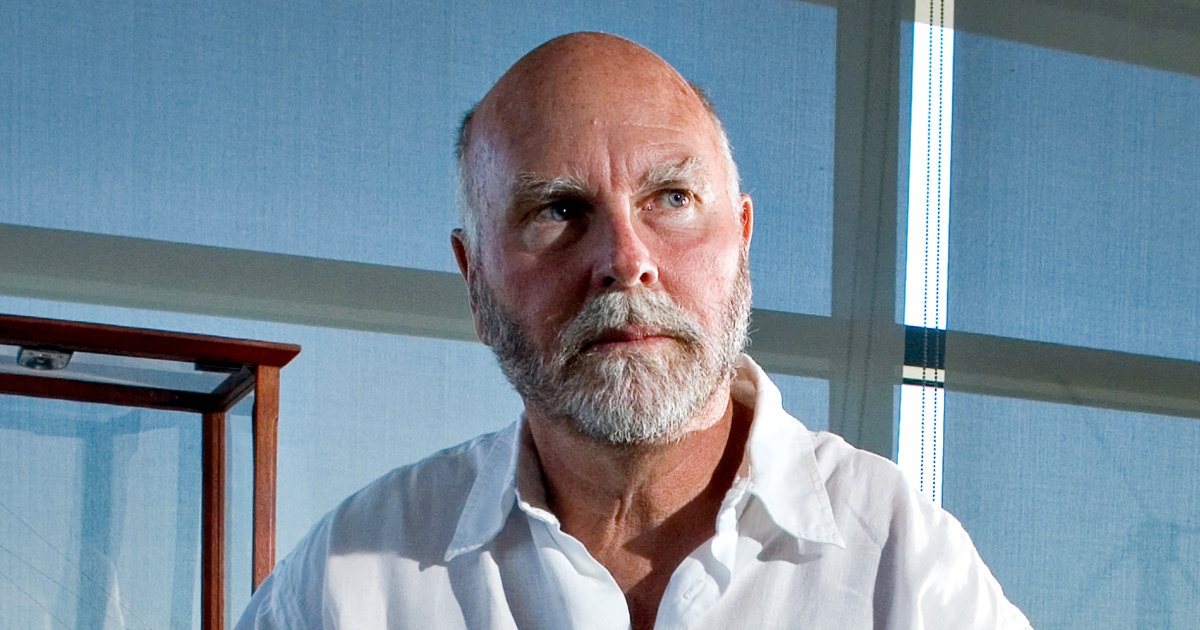
SAN DIEGO — J. Craig Venter, the bold and controversial scientist who played a pivotal role in decoding the human genome and pioneering the field of synthetic biology, died on Wednesday at the age of 79. His death, attributed to complications from cancer, was announced by the J. Craig Venter Institute, the research organization he founded, which said he passed away in San Diego after being hospitalized.
Venter's career was marked by a series of groundbreaking achievements that transformed genomics from a laborious, gene-by-gene process into a high-speed, data-driven science. According to the institute, he consistently advocated for scientific discoveries to have "real-world impact," a philosophy that drove his work from sequencing the first bacterial genome to designing synthetic organisms. His contributions extended beyond the lab, influencing fields like medicine, environmental science, and biotechnology.
Born in 1946, Venter's path to scientific stardom began far from the world of DNA. He served as a Navy corpsman during the Vietnam War from 1967 to 1968, an experience that, according to biographical accounts, profoundly shaped his later determination to tackle life's biggest questions through science. After his military service, he pursued higher education at the University of California, San Diego, earning a bachelor's degree in biochemistry followed by a Ph.D. in physiology and pharmacology.
In the early 1990s, while working at the National Institutes of Health, Venter and his team developed expressed sequence tags, a technique that accelerated the discovery of new genes by analyzing messenger RNA. This innovation laid the groundwork for more efficient genomic research. By 1995, Venter and collaborators had applied a method called "whole-genome shotgun sequencing" to decode the DNA of Haemophilus influenzae, the first free-living organism to have its genome fully sequenced. This approach, which fragmented DNA and reassembled it computationally, challenged traditional methods and set the stage for larger-scale projects.
The pinnacle of Venter's early career came with the founding of Celera Genomics in 1998, a private company that aimed to sequence the human genome faster and cheaper than public efforts. This sparked an intense race against the publicly funded Human Genome Project, backed by the NIH and international partners including British researchers. The competition, often described as a clash of scientific titans, pitted Venter's for-profit, technology-driven strategy against the collaborative, government-supported model led by figures like Francis Collins.
On June 26, 2000, Venter, then president of Celera, joined leaders of the public consortium at the White House to announce the completion of the first draft of the human genome — a complete set of genetic information stored as DNA in nearly every cell of the human body. The joint announcement, presided over by President Bill Clinton, hailed the achievement as a landmark for biology, promising advances in treating diseases like cancer and diabetes. Venter's team at Celera produced one version of the draft, while the public project delivered another, with both published simultaneously in the journals Science and Nature in February 2001.
The genome race was not without controversy. Critics accused Celera of restricting access to its data for commercial gain, while Venter argued that private innovation was essential to speed up progress. Despite the tensions, the competition undeniably accelerated the timeline; without it, according to some experts, the project might have taken years longer. Venter later reflected on the rivalry as a necessary spark for innovation, though it cemented his reputation as a maverick in the scientific community.
Beyond the human genome, Venter's ambitions grew bolder. In 2002, he led the creation of the first synthetic chromosome, a step toward building entire genomes from scratch. This work culminated in 2010 when his team at the J. Craig Venter Institute announced the first self-replicating synthetic bacterial cell, a milestone in synthetic biology that raised ethical questions about "playing God" with life forms. The institute described this as demonstrating that genomes could be "designed and constructed," opening doors to custom organisms for fuel production, pollution cleanup, and drug manufacturing.
Venter also ventured into environmental genomics with the Sorcerer II Global Ocean Sampling Expedition, launched in 2003. Over several years, his team sailed around the world, collecting and sequencing microbial DNA from ocean waters to map the planet's unseen biodiversity. The project, which analyzed samples from locations spanning thousands of miles, revealed millions of new genes and highlighted the role of microbes in global ecosystems, from carbon cycling to disease prevention.
Throughout his career, Venter received numerous accolades for his work. In 2008, he was awarded the National Medal of Science by President George W. Bush, recognizing his contributions to genomics. Other honors included the 2002 Gairdner Foundation International Award, the 2001 Paul Ehrlich and Ludwig Darmstaedter Prize, and the King Faisal International Award for Science. These awards underscored his influence, even as his methods sometimes divided the scientific world.
News of Venter's death prompted tributes from scientists worldwide, who remembered him as a transformative yet polarizing figure. "Craig Venter was a force of nature and a hugely important, though controversial, figure," said Sir John Hardy, professor of neuroscience at University College London, in a statement. He added, "The race to complete the human sequence was a testosterone driven competition between the US and UK consortia ... there is no doubt that this competition speeded things up enormously and it ended really in a score draw with both sides publishing simultaneously in Science and Nature."
Dr. Roger Highfield, science director at the Science Museum Group, described Venter as "a swashbuckling, restless pioneer of genome sequencing and synthetic biology." In a statement, Highfield shared a personal note: "I was emailing him only a few weeks ago about a new writing project. He mentioned a new diagnosis, but the news still came as a shock. Craig was a divisive figure, but he had huge chutzpah and was always driven by the science."
The J. Craig Venter Institute, founded by Venter in 2006 after he left Celera, continues his legacy through research in genomics, microbiology, and neuroscience. Colleagues there emphasized his role in shifting genomics toward practical applications, such as personalized medicine and biofuels. Venter's later years included authoring books like A Life Decoded (2007), where he detailed his scientific journey and advocated for open access to genomic data.
Venter's death comes at a time when genomics is more relevant than ever, with technologies like CRISPR gene editing building on the foundations he helped lay. His synthetic biology work, while ethically debated, has inspired ongoing efforts to engineer microbes for climate solutions and pandemic preparedness. As the field evolves, experts say Venter's emphasis on speed and innovation will continue to influence how scientists approach the next frontiers of biology.
While the circumstances of Venter's illness were kept private until recently, his institute confirmed that he had been battling cancer. No public funeral arrangements have been announced, but the scientific community is already reflecting on how his swashbuckling style pushed boundaries that others hesitated to cross. In an era of rapid technological change, Venter's story serves as a reminder of the drive that turns bold ideas into world-altering realities.