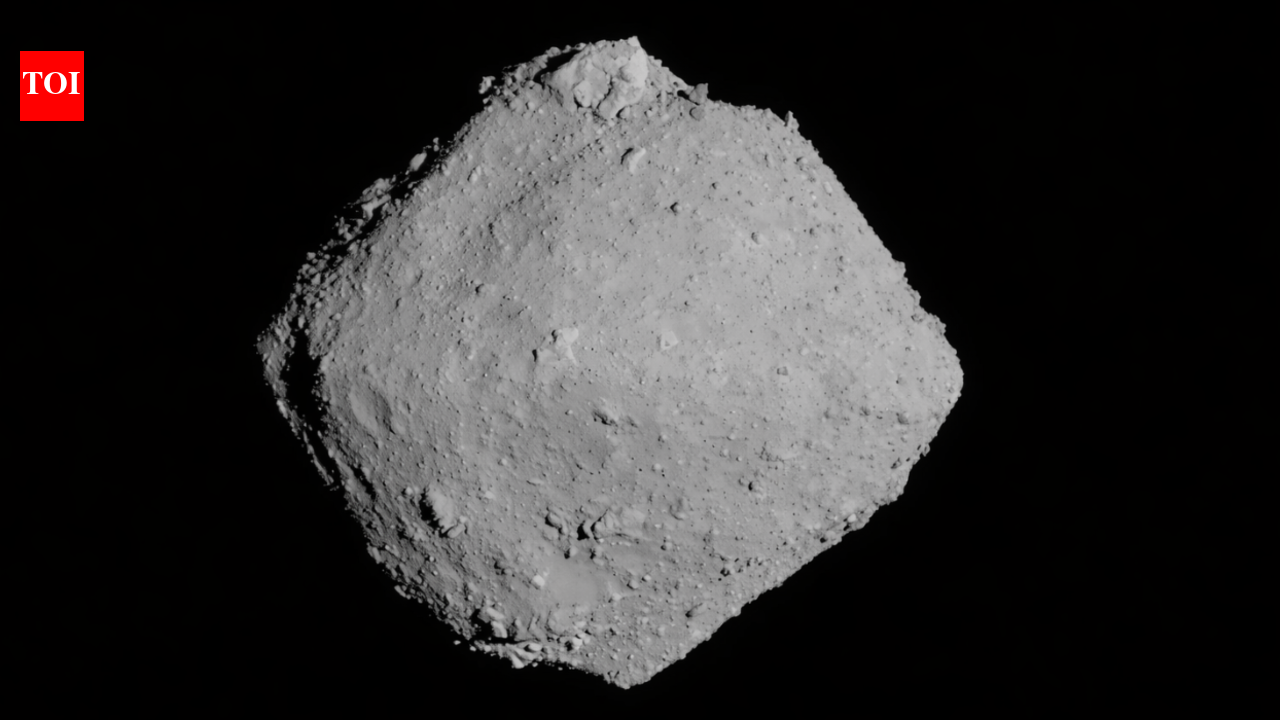
In a discovery that could reshape our understanding of life's beginnings in the universe, scientists analyzing samples from the asteroid Ryugu have identified all five nucleobases—the fundamental 'letters' of DNA and RNA—marking a significant milestone in astrobiology. The findings, revealed through a study led by Japan's space agency JAXA as part of the Hayabusa2 mission, suggest that the building blocks of genetic material may have been delivered to Earth from space billions of years ago. Researchers announced the results on Thursday, highlighting the presence of adenine, guanine, cytosine, thymine, and uracil in the asteroid's carbonaceous material.
The Hayabusa2 spacecraft, launched by JAXA in December 2014, reached the near-Earth asteroid Ryugu in June 2018 after a journey of over three years. The probe conducted extensive surveys, including deploying small rovers and a lander, before collecting subsurface samples by firing a projectile into the asteroid's surface to expose fresh material beneath the weathered exterior. These samples, totaling about 5.4 grams, were returned to Earth in December 2020, landing in the Australian outback under the coordination of the Japan Aerospace Exploration Agency.
According to the study published in the journal Nature Communications, the nucleobases were detected using advanced analytical techniques at facilities in Japan and internationally. 'This is the first time we've found all five canonical nucleobases in a single extraterrestrial sample,' said Yasuhiro Oba, a lead researcher from Kyushu University and the study's corresponding author, in a statement released by JAXA. Oba emphasized that the discovery strengthens the hypothesis of extraterrestrial delivery of life's precursors, a theory first proposed in the 19th century but bolstered by modern space missions.
Ryugu, classified as a C-type carbonaceous asteroid approximately 900 meters in diameter, orbits the Sun every 474 days and passes relatively close to Earth. Its composition, rich in organic compounds and water-bearing minerals, makes it a prime target for studying the solar system's early history. The Hayabusa2 mission built on the success of its predecessor, Hayabusa, which returned samples from the asteroid Itokawa in 2010, but Ryugu's samples have proven particularly fruitful for organic chemistry research.
The identification of nucleobases in Ryugu's samples is not entirely unexpected, as previous analyses from the mission had already uncovered amino acids, the building blocks of proteins, along with other organics. However, the comprehensive detection of all five nucleobases represents a breakthrough. Thymine and uracil, in particular, were found in lower abundances compared to the purines adenine and guanine, but their presence confirms the potential for RNA-world scenarios in prebiotic chemistry.
Scientists involved in the analysis collaborated with international partners, including NASA's Goddard Space Flight Center and the University of Chicago. 'The diversity of nucleobases in Ryugu indicates that the chemical pathways to form genetic material could have been widespread in the early solar system,' noted Hiroki Isobe, a co-author from Hokkaido University, during a press briefing in Tokyo. This international effort underscores the global nature of space science, with samples distributed to over 200 researchers worldwide under strict contamination protocols.
Background on the nucleobases provides crucial context for the discovery's implications. In terrestrial biology, DNA relies on adenine (A), thymine (T), cytosine (C), and guanine (G), while RNA substitutes uracil (U) for thymine. These molecules pair up to form the double helix of DNA and the single-stranded structure of RNA, encoding genetic information. On Earth, the origins of these compounds remain debated, with some evidence pointing to hydrothermal vents and others to meteoritic impacts.
Prior extraterrestrial detections of nucleobases have been limited. For instance, the Murchison meteorite, which fell in Australia in 1969, contained adenine, guanine, and cytosine, but not thymine or uracil. Similarly, samples from the Sutter's Mill meteorite in 2012 yielded traces of purines. Ryugu's complete set thus stands out, as reported by the Times of India in its coverage of the study.
The Hayabusa2 mission's success follows a series of challenges, including the asteroid's unexpectedly rugged terrain, which forced engineers to adjust the sampling strategy mid-mission. Despite these hurdles, the probe executed two sample collections: one from the surface in February 2019 and a subsurface one in July 2019 after creating an artificial crater. The return capsule's parachute deployment was flawless, and initial examinations confirmed the samples' pristine condition.
Broader context includes ongoing missions probing life's origins. NASA's OSIRIS-REx, which collected samples from the asteroid Bennu and returned them in September 2023, is expected to yield similar insights. 'Comparisons between Ryugu and Bennu will be key to determining if these organics are ubiquitous among carbonaceous asteroids,' said Dante Lauretta, principal investigator for OSIRIS-REx, in a related interview with scientific outlets. While Ryugu's findings are preliminary, they align with models suggesting that comets and asteroids bombarded the early Earth, seeding it with organics around 4 billion years ago.
Critics and alternative viewpoints exist within the scientific community. Some researchers caution that while nucleobases are present, the concentrations in Ryugu—on the order of parts per billion—are too low to directly explain life's abundance on Earth. 'Extraterrestrial delivery is compelling, but we must also consider endogenous synthesis on our planet,' argued Everett Shock, a geochemist at Arizona State University, in a commentary published alongside the study. Shock's perspective highlights the interplay between space and surface chemistry, without dismissing the asteroid's role.
The discovery also has implications for future space exploration. JAXA is planning the Martian Moons eXploration (MMX) mission, set to launch in 2024, which will sample Phobos and return materials by 2029. Such endeavors could extend the search for prebiotic molecules beyond asteroids. Meanwhile, the Ryugu samples continue to be studied, with over 100 research proposals approved for further analysis using techniques like mass spectrometry and spectroscopy.
Public reaction to the findings has been enthusiastic, with social media buzzing about potential links to alien life—though scientists stress this is about chemistry, not biology. 'It's a step toward understanding how life might arise elsewhere, but we're far from claiming extraterrestrial origins for Earth life,' Oba reiterated in his statement. Educational outreach efforts by JAXA include virtual tours of the curation facility in Sagamihara, Japan, where samples are stored in nitrogen-purged chambers.
Looking ahead, the Ryugu nucleobase discovery could influence astrobiology research for decades. As analytical tools improve, scientists anticipate uncovering more complex organics, perhaps even sugars or lipids. International collaborations, such as those under the International Space Exploration Coordination Group, will likely accelerate progress. For now, the Hayabusa2 mission stands as a testament to human ingenuity in unraveling cosmic mysteries.
In summary, the detection of all five DNA and RNA nucleobases in asteroid Ryugu samples offers a tantalizing glimpse into the solar system's chemical heritage. As researchers delve deeper, this breakthrough promises to inform not only Earth's history but also the prospects for life beyond our planet.