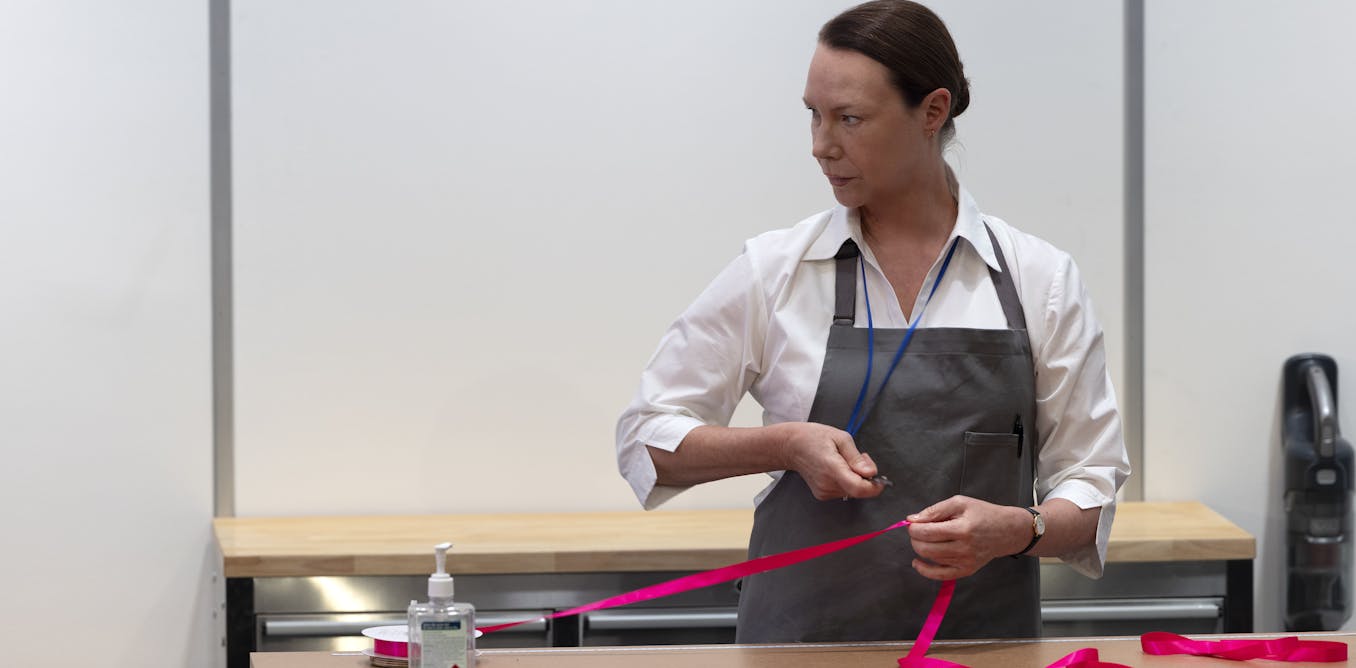
MELBOURNE, Australia — In a stark white room that could double as a factory floor or a sterile laboratory, two unlikely colleagues navigate the absurdities of corporate life in Jean Tong's new play, Do Not Pass Go. Premiering at the Melbourne Theatre Company, the production draws parallels to Franz Kafka's dystopian visions, offering a darkly comic lens on conformity, resistance, and the grinding machinery of modern bureaucracy. Running through March 28, the play has already sparked conversations about workplace monotony and human connection amid institutional pressures.
The story centers on Penny, played by Belinda McClory, a veteran employee who has weathered recent redundancies by strictly adhering to company rules. She has never taken a sick day, performs mandatory workplace exercises during breaks, and bans personal calls on the job. Her counterpart, Flux, portrayed by Ella Prince, is a fresh recruit who treats work as a mere transaction, unafraid to call out a mental health day or question outdated procedures. According to a review in The Conversation, their initial interactions "crackle with tension, shaped by suspicion and incomprehension," highlighting a generational and philosophical divide.
Directed by Katy Maudlin, the play unfolds at a deliberate pace, mirroring the endless monotony of office routines. The set, designed by Jacob Battista, features a clinical space under Harrie Hogan's fluorescent lighting, where boxes mysteriously arrive through a "box door." Penny and Flux spend their days inflating pool floaties, measuring ribbons, and inspecting plastic Christmas ornaments — tasks devoid of purpose, as the accumulating boxes symbolize existential stagnation.
"There is no rationale or meaning to this work," the review notes, emphasizing how the repetitive labor becomes a metaphor for the difficulty of breaking free from workplace rhythms. As days blur into months, the characters' exchanges evolve from stilted interrogations to tentative empathy. Flux helps Penny address her teenage daughter's climate anxiety, introducing compassion where Penny once showed only confusion.
In return, Penny offers Flux maternal guidance, particularly regarding Flux's plans for gender affirmation surgery funded by a new credit card. Though puzzled by Flux's desires, Penny worries more about the financial risks. This budding friendship, the production suggests, serves as a subtle rebellion against the isolating corporate environment.
The unseen management looms large, enforcing productivity through performance reviews and cryptic gestures like an unannounced cake delivery — a harbinger of past layoffs in Penny's experience. She discards it immediately, despite Flux's enthusiasm, capturing the paranoia bred by opaque leadership practices. The Conversation review describes this as "the atmosphere of paranoia cultivated by opaque management practices."
Beneath the humor, Do Not Pass Go delves into deeper themes of institutional oppression. Flux encourages Penny to seek an ADHD diagnosis, prompting reflections on neurodiversity. Penny wonders if her suburb's high rate of neurodiverse residents stems from the environment fostering such traits or from it attracting those seeking belonging. When Penny requests workplace adjustments, management denies them, underscoring systemic barriers.
The play also explores disability models, contrasting social and medical perspectives without resolution. In a pivotal monologue, Flux contemplates difference, desire, and longing, ultimately deciding to postpone surgery. This scene shifts the tone, as warm orange lighting envelops the characters outside their confines, illuminating their shared humanity amid corporate chaos.
Tong's script honors Kafka's legacy of absurd institutions trapping individuals in resignation or futile hope. Yet it updates the critique for today's anxieties: endless stocktakes, mental health days, and quiet acts of solidarity. As the review states, "resistance may begin in smaller, subtler acts: questioning a rule, taking a longer break, making an offer of solidarity or care to a work colleague, choosing compassion over compliance."
The Melbourne Theatre Company production, which opened earlier this month, features a cast and crew praised for their nuanced performances. McClory's Penny embodies rigid compliance with underlying vulnerability, while Prince's Flux brings fluid energy and introspection. Maudlin's direction ensures the contemplative pace builds tension organically, allowing the audience to feel the weight of time's passage.
Background on Tong reveals her as an emerging playwright tackling contemporary issues. Her work often examines identity and power structures, drawing from personal and societal observations. Do Not Pass Go fits this pattern, blending personal stories with broader critiques of labor in an era of gig economies and remote work pressures.
While the primary review from The Conversation hails the play as a "quietly devastating meditation on labour, conformity and the fragile human connections persisting, despite them," additional coverage echoes its themes without contradiction. The production's timing aligns with ongoing discussions about workplace mental health in Australia, where recent surveys indicate rising burnout rates post-pandemic.
Audience reactions, as reported anecdotally from opening nights, vary: some find the slow burn rewarding for its depth, others wish for more overt action. One theatergoer, speaking after a performance, said, "It made me rethink my own 9-to-5 grind — that cake scene hit too close to home." Officials from the Melbourne Theatre Company have not commented on box office figures but confirmed strong attendance for the limited run.
Looking ahead, Tong's play could influence broader theater conversations on corporate satire. With its run ending March 28, tickets remain available, and potential tours or adaptations are under consideration, according to company sources. In an age of AI-driven efficiencies and hybrid offices, Do Not Pass Go reminds viewers that behind the spreadsheets and screens, human stories persist.
The production's emphasis on subtle resistance offers no easy solutions but suggests that small connections can challenge the system. As workplaces evolve with new labor laws and diversity initiatives in Australia, plays like this provide timely reflection, bridging Kafka's era to our own.