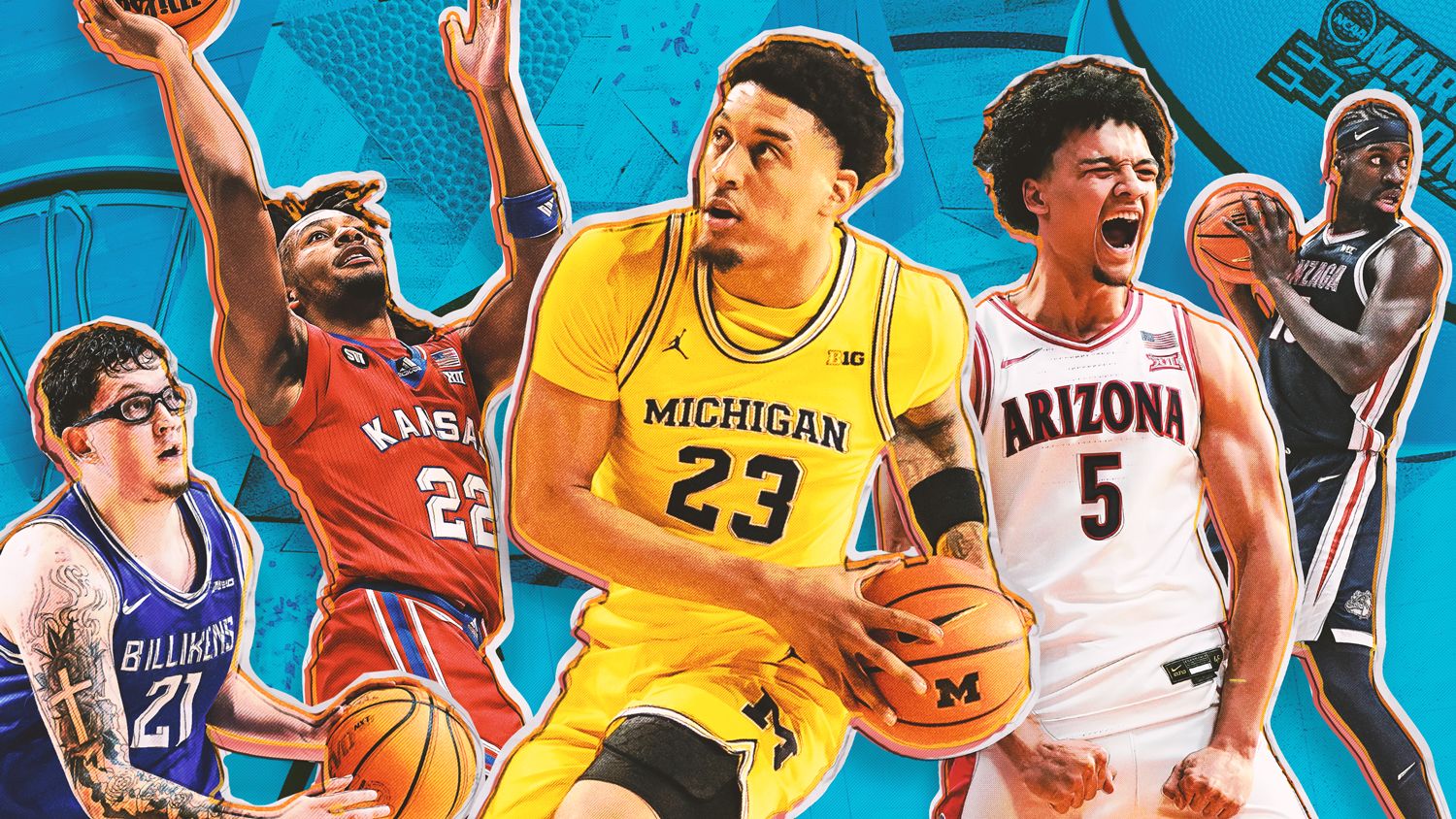
As the calendar flips toward March, college basketball fans are poring over the latest projections for the 2026 NCAA men's tournament, with ESPN bracketologist Joe Lunardi delivering his ultimate guide to the field of 68. Titled 'Joe Lunardi's ultimate guide to men's March Madness 2026,' the preview traces its roots back three decades to a printed 'Blue Ribbon' guide crafted by hoop enthusiasts during Selection Weekend. Today, it serves as a digital roadmap for bracket fillers, outlining each team's path to glory—or pitfalls—complete with Lunardi's final seed predictions and tournament forecasts.
Lunardi's analysis kicks off with the top contenders, spotlighting the No. 1 seed Duke Blue Devils as a prime candidate to end their championship drought since 2015. 'Duke's conveyor belt of ready-made freshman stars has delivered again with Cameron Boozer, Durham's latest hoops prodigy,' the guide states, noting Boozer's near-23 points per game average atop scouting reports. Under coach Jon Scheyer, Duke boasts a talent-laden roster and ranks first nationally in defensive efficiency per KenPom, a streak that includes top-20 defenses in all four of Scheyer's seasons, from 16th in 2022-23 to fifth last year and now No. 1.
Yet, Lunardi tempers the hype with cautions about Duke's youth. The Blue Devils rely heavily on freshmen and sophomores, and injuries to starters Patrick Ngongba II and Caleb Foster—both dealing with foot issues—could derail their run. 'The last teams standing in the Big Dance are often experienced squads,' the preview warns. Lunardi's 'Joey Brackets' prediction sees Duke reaching the national runner-up spot, falling to Arizona in the final, thanks to stars like Boozer, Ngongba, and Isaiah Evans, all projected 2026 NBA first-round picks.
Shifting to the No. 2 seed, UConn Huskies enter as back-to-back champions from 2023 and 2024, but Lunardi questions their staying power. Coach Danny Hurley's squad dominates with physical play, funneling opponents to rim protector Tarris Reed Jr. while excelling in rebounding to spark offense. 'The Huskies run Danny Hurley's offense like a well-oiled machine, yet they truly win games by physically dominating opponents on the glass and on defense,' according to the guide. Alex Karaban, the lone holdover from those title teams, eyes history as the first three-time champion in over 50 years, surpassing John Wooden's UCLA dynasty.
However, UConn's turnover issues—middle-of-the-pack nationally—have plagued them in losses to St. John's and Marquette, where they racked up over 15 miscues each time. Lunardi predicts an early stumble, with the Huskies vulnerable to a second-round upset by UCLA after a questionable late-season push. Seeded sixth overall, UConn ranks ninth on the eye test but sixth in résumé rating.
The No. 3 Michigan State Spartans, led by Tom Izzo in his 28th straight tournament appearance—the longest active streak—embody 'Izzology' with intense defense, balanced scoring, and relentless rebounding. Point guard Jeremy Fears Jr. orchestrates a fast-paced attack, pushing after made baskets. 'Another year, another season with 20-plus wins for legendary coach Tom Izzo,' the preview notes. The Spartans boast four double-digit scorers: Fears, seniors Jaxon Kohler and Carson Cooper, and junior Coen Carr.
Weaknesses include a middling 34.8% three-point shooting rate (140th nationally) and just 21 attempts per game (244th), allowing defenses to collapse without fear. Turnovers from their NASCAR pace add risk. Still, Lunardi forecasts a deep run, with Michigan State ousting all comers until Duke stops them in the Elite Eight. Seeded ninth, they rank 11th on eye test and eighth in résumé.
No. 4 Kansas Jayhawks hinge on star Darryn Peterson, the projected No. 1 NBA draft pick, who averages highlight-reel performances but has battled injuries. 'Darryn Peterson. Probably the most talented player in college basketball this season,' Lunardi writes. Without him, Kansas went 10-2, including a February upset of undefeated Arizona, thanks to Tre White, Flory Bidunga, and Melvin Council Jr. But with Peterson, they were 12-7, losing four of their last seven regular-season games, hinting at chemistry woes.
The Jayhawks' tournament history is spotty, with first- or second-round exits in five of the past six, including a 2025 opening loss to 10-seed Arkansas—except for their 2022 title. Lunardi sees them advancing to the second round before St. John's halts them short of the Sweet 16. Seeded 15th overall, Kansas ranks 21st on eye test and 14th in résumé.
Rick Pitino's No. 5 St. John's Red Storm channel old-school Big East grit, forcing contact and bullying foes with big man Zuby Ejiofor setting the tone. They lead the Big East in free-throw trips and blocks while dominating the glass. 'Rick Pitino has the Johnnies winning like an old-school Big East squad: i.e., trying to force teams into a wrestling match,' the guide explains. Yet, their inefficiency—second-lowest two-point percentage in conference play and poor three-point shooting—led to droughts, like 24 straight misses in a February blowout by UConn.
Pitino hasn't reached the second weekend in over a decade, despite his pedigree. Lunardi breaks that streak, predicting two wins—including over Kansas—before an exit. Seeded 18th, St. John's is 18th on eye test and 15th in résumé.
The No. 6 Louisville Cardinals' hopes rest on freshman Mikel Brown Jr., a lottery pick averaging 18.2 points and 4.7 assists, who missed the ACC tournament with a back injury but is expected back. His return bolsters a quartet of double-digit scorers: Ryan Conwell, J'Vonne Hadley, and Isaac McKneely. Brown, who studies tapes of Kobe Bryant, Steve Nash, John Wall, and Rajon Rondo, holds the Louisville freshman record with nine 20-point games.
Drawbacks include overreliance on threes and small-lineup rebounding woes against elites. Lunardi pegs them as upset bait against South Florida if Brown's health falters, though a full-strength version could hit the Sweet 16. Seeded 23rd, they rank 14th on eye test but 24th in résumé.
Further down, No. 7 UCLA Bruins, coached by Mick Cronin (525 wins, three Sweet 16s, one 2021 Final Four), feature scoring from Tyler Bilodeau (18.1 PPG), Donovan Dent (13.5 PPG, 7.6 APG—fourth nationally), Trent Perry (12.4), Skyy Clark (11.6), and Eric Dailey Jr. (11.3). Dent joins an elite UCLA assists club since 1973-74.
But defensive lapses—allowing 70.5 PPG and plus-0.1 rebounding—frustrate Cronin. Lunardi has them advancing past UCF and UConn to the second weekend in Philadelphia, despite warts. Seeded 28th, UCLA is 25th on eye test and 31st in résumé.
The No. 8 Ohio State Buckeyes clinched their spot with a four-game streak over Purdue, Indiana, and Iowa, despite a Big Ten quarterfinal loss to Michigan. Bruce Thornton (20.2 PPG, program's all-time leading scorer at 2,156 points, four-year captain) and John Mobley Jr. (15.8) lead, with Devin Royal (13.7), Christoph Tilly (11.1), and Amare Bynum (9.8) rounding out a tough core. Defensive rebounding and thin bench are concerns.
Lunardi predicts a quick exit to TCU. Seeded 31st, they rank 26th on eye test and 36th in résumé.
The No. 9 TCU Horned Frogs surged late, winning eight of nine, including over No. 5 Iowa State and at No. 10 Texas Tech, with four double-digit scorers topping out at 13.6 PPG. Coach Jamie Dixon, involved in half of TCU's 12 tournament trips (2-4 record as head coach), brings experience from his 1987 playing days.
No standout strength—32.9% threes, 70.6% free throws, plus-2.7 rebounding—limits them. Lunardi gives one win over Ohio State before Duke looms. Seeded 34th, tied for 36th in résumé and 45th on eye test.
The guide cuts off on No. 10 UCF Knights, highlighting transfers Themus Fulks and Jamichael Stillwell from Milwaukee, with Fulks' four points-assists double-doubles and Stillwell's seven. Lunardi's full bracketology, spanning East, Midwest, South, and West regions, equips fans for the tournament starting next week. As brackets fill, his insights—from Duke's championship ingredients to underdogs' upset potential—promise drama in the Big Dance.
Beyond individual teams, the preview underscores March's unpredictability, where experience often trumps talent and late surges matter. With streaks like Michigan State's 28-year run and historical nods to UCLA's dynasty, the 2026 field blends legacy and fresh faces, setting the stage for office pools and historic moments alike.