WASHINGTON — A closed-door briefing on Capitol Hill Monday left lawmakers sharply divided over the Trump administration's recent military strikes in Venezuela and the dramatic capture of President Nicolás Maduro, with Republicans defending the operation as a limited law enforcement action while Democrats raised alarms about potential escalation and lack of congressional oversight.
The roughly two-hour session, held deep within the congressional complex, brought together top Trump administration officials including Secretary of State Marco Rubio, Attorney General Pam Bondi, CIA Director John Ratcliffe, Joint Chiefs of Staff Chair Gen. Dan 'Raizin' Caine, and Secretary of War Pete Hegseth. They addressed congressional leaders along with the chairs and ranking members of the armed services, intelligence, and foreign relations committees. The meeting came just days after U.S. forces conducted strikes over the weekend, leading to Maduro's arrest on drug trafficking conspiracy charges — a move that has thrust the Western Hemisphere into a geopolitical spotlight.
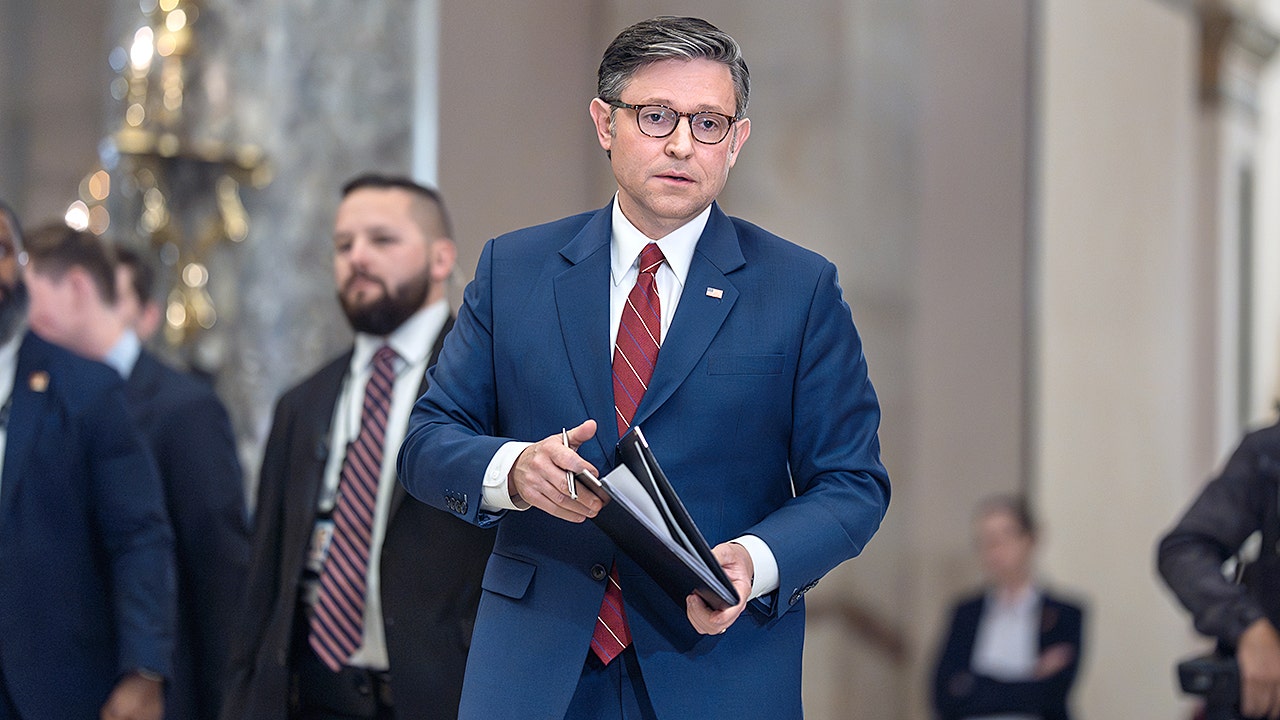
House Speaker Mike Johnson, R-La., emerged from the briefing to reassure reporters that the United States was not entangled in a broader conflict. 'We are not at war,' Johnson said. 'We do not have U.S. armed forces in Venezuela, and we are not occupying that country.' He emphasized that the administration's involvement was narrowly focused, adding, 'This is not a regime change. This is a demand for change of behavior by a regime. The interim government is stood up now, and we are hopeful that they will be able to correct their action.'
Johnson further clarified that there was no plan for U.S. troops on the ground or deeper engagement. 'There was no expectation that the U.S. would be on the ground, nor would there be any direct involvement in any other way beyond just coercing the interim government to get that going,' he told reporters outside the chamber.
House Foreign Affairs Committee Chair Brian Mast, R-Fla., echoed the speaker's sentiments, describing the operation as a precise and contained effort. 'These things are done before breakfast,' Mast said. 'They don't do protracted war operations.' He portrayed the strikes as a 'specific law enforcement function that took a significant obstacle out of the way for the Venezuelan people to go chart a new future,' and expressed confidence that no further military action was anticipated in the country.
The briefing's classified nature meant administration officials declined to comment afterward, leaving lawmakers to shape the public narrative. Senate Majority Leader John Thune, R-S.D., described the discussion as thorough. 'It was a very comprehensive discussion,' Thune said, indicating his satisfaction with the information provided.
Democrats, however, painted a far more skeptical picture. Senate Minority Leader Chuck Schumer, D-N.Y., criticized the session for leaving critical questions unresolved. 'The lengthy meeting posed far more questions than it ever answered,' Schumer said. He took particular issue with the administration's vague outline for U.S. involvement, noting that President Trump had previously stated the U.S. would govern Venezuela until a proper transition of power occurred.
'The plan presented behind closed doors or the U.S. running Venezuela is vague, based on wishful thinking and unsatisfying,' Schumer continued. He expressed concern over the potential for similar actions elsewhere, saying, 'I did not receive any assurances that we would not try to do the same thing in other countries.' Schumer warned of the pitfalls of such interventions, adding, 'And in conclusion, when the United States engages in this kind of regime change and so called nation building, it always ends up hurting the United States. I left the briefing feeling that it would again.'
The partisan rift was evident in other reactions as well. Sen. Mark Warner, D-Va., the top Democrat on the Senate Select Committee on Intelligence, praised the military's execution of the mission. 'The region was better off without Maduro,' Warner said, lauding it as a 'brilliant execution.' Yet he joined Schumer in seeking clarity on the path forward. 'The question becomes, as policymakers, what happens the day after,' Warner remarked.
Sens. Tim Kaine, D-Va., Adam Schiff, D-Calif., and even libertarian-leaning Sen. Rand Paul, R-Ky., aligned with Schumer in planning to force a vote later this week on a war powers resolution. If passed, the measure would mandate congressional approval for any additional military actions in Venezuela, aiming to reassert legislative authority over foreign engagements.
The operation, dubbed part of Operation Absolute Resolve, stems from years of escalating tensions with Maduro's regime. Maduro, who has ruled Venezuela since 2013, faced international condemnation for human rights abuses, economic mismanagement, and alleged ties to drug cartels. The U.S. had imposed sanctions and recognized opposition leader Juan Guaidó as interim president in 2019, but the weekend strikes marked a kinetic escalation. According to reports, U.S. special forces captured Maduro in a raid on his Caracas residence, airlifting him to an undisclosed location for prosecution.
Background context underscores the high stakes. Venezuela's collapse under Maduro led to a humanitarian crisis, with millions fleeing to neighboring countries like Colombia and Brazil. The U.S. has long accused Maduro's government of facilitating cocaine trafficking to American shores, a charge central to his capture. Trump, during his 2024 campaign, vowed a tough stance on Latin American adversaries, promising to restore U.S. influence in the hemisphere.
Supporters of the administration's approach, including some Democrats like Sen. John Fetterman, D-Pa., have defended the strikes against intra-party criticism. Fetterman reportedly called the operation a necessary response to Maduro's dictatorship, though details of his comments were not immediately available from the briefing.
Navy Secretary's praise for the mission as a 'masterclass in precision' highlights the technical success of the strikes, which reportedly involved drone surveillance and elite SEAL teams without significant casualties. Yet the political fallout continues to simmer, with questions about the interim government's stability and U.S. leverage in Caracas.
Looking ahead, lawmakers anticipate another briefing later this week, where Trump officials will provide a fuller accounting of Operation Absolute Resolve to a broader congressional audience. The war powers vote looms as a potential flashpoint, testing the balance between executive action and legislative checks in an era of assertive U.S. foreign policy. As Venezuela navigates this uncertain transition, the briefing's divisions reflect deeper debates over America's role on the world stage, with implications that could ripple from the halls of Congress to the streets of Latin America.