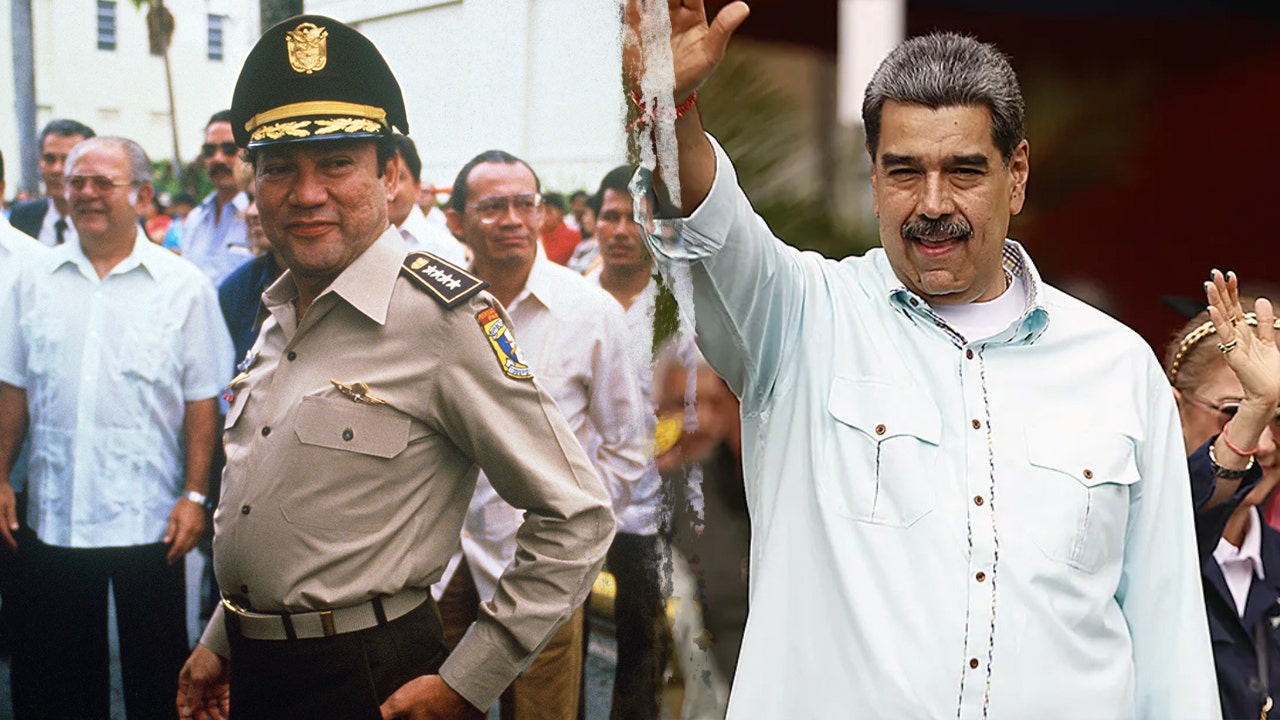
WASHINGTON — In a dramatic operation that has sparked intense debate over U.S. foreign policy and presidential powers, the Trump administration announced the capture of Venezuelan President Nicolás Maduro and his wife, Cilia Flores, in what officials described as a law enforcement action to bring indicted individuals to justice. The seizure, carried out earlier this week, drew parallels to the 1989 U.S. invasion of Panama to apprehend dictator Manuel Noriega, according to legal experts. President Donald Trump, speaking at a press conference at his Mar-a-Lago estate in Florida on Wednesday, confirmed the operation's success while outlining broader ambitions for Venezuela's future, including temporary U.S. oversight to ensure regime change and economic recovery.
The operation unfolded swiftly, with U.S. forces extracting Maduro and Flores from Caracas under the cover of night, according to details shared by administration officials. Secretary of State Marco Rubio emphasized during the briefing that the mission was not an act of war but a targeted effort to apprehend fugitives. "This was an operation intended to bring two individuals to justice," Rubio said, adding that Maduro was "not the head of state but a criminal dictator who took control after losing democratic elections." Air Force Gen. Dan Caine, chairman of the Joint Chiefs of Staff, reinforced this narrative, noting that law enforcement personnel were embedded in the extraction team to immediately place the couple in legal custody upon capture.
House Foreign Affairs Committee Chairman Rep. Brian Mast, a Republican from Florida, voiced strong support for the mission during an appearance on Fox News' 'Fox Report.' Mast highlighted the operation's success in disrupting Maduro's regime, which he described as a humanitarian catastrophe. The capture comes amid longstanding U.S. indictments against Maduro on charges including narco-terrorism and corruption, filed in a New York federal court. Following the extraction, Maduro and Flores were reportedly transferred to the Metropolitan Detention Center in Brooklyn, New York, where they await trial.
Legal analyst Jonathan Turley, a professor at George Washington University and Fox News contributor, argued in an opinion piece published Thursday that the operation's core legality is solid, drawing on precedents like the Noriega case. "The courts have previously upheld the authority of presidents to seize individuals abroad, including the purported heads of state," Turley wrote. He noted that Maduro's legal challenges would likely mirror those raised by Noriega, who was captured in 1989 and extradited to the U.S. for trial on drug trafficking charges. Turley predicted that, under existing judicial standards, the Trump administration would prevail in defending the seizure.
However, Trump's remarks at the Mar-a-Lago press conference introduced complications by expanding the operation's scope beyond mere arrest. The president declared that the U.S. would engage in nation-building to achieve lasting regime change in Venezuela. "We’re going to run the country until such time as we can do a safe, proper and judicious transition," Trump stated, emphasizing the need to prevent unfriendly elements from regaining power. He also cited the repayment of seized U.S. property dating back to the era of Maduro's predecessor, Hugo Chávez, and expressed a desire for Venezuela to become a stable partner, particularly for its vast oil reserves.
This shift in rhetoric prompted pushback from some quarters. Rubio appeared to steer the conversation back to the law enforcement angle during the briefing, struggling at times to reconcile Trump's broader vision with the initial narrative. Turley acknowledged the tension in his analysis, writing that if the purpose was regime change, "this attack was an act of war." He criticized the erosion of Congress's war declaration powers, referencing his past representation of lawmakers opposing President Barack Obama's 2011 military intervention in Libya. Yet, Turley pointed out the hypocrisy in criticisms, noting that Democrats were largely silent during Obama's Libya campaign and the use of a "kill list" policy that targeted an American citizen without charges.
Venezuela's descent into crisis provides critical context for the operation. Under Chávez, who ruled from 1999 until his death in 2013, and then Maduro, the country implemented socialist policies that Turley described as "moronic," transforming one of Latin America's wealthiest nations into an economic disaster. Hyperinflation, food shortages, and repression drove millions to flee, with an estimated third of the population emigrating, many to the United States. Cuban security forces were reportedly brought in to bolster Maduro's control, exacerbating the authoritarian grip.
The capture has elicited mixed reactions globally. Venezuelans in exile celebrated the news, with images circulating of jubilant crowds in Miami and other diaspora hubs. "SEE PICS: VENEZUELANS WORLDWIDE CELEBRATE AS EXILES REACT TO MADURO’S CAPTURE," read a Fox News headline capturing the mood. Yet, allies of Maduro, including socialist networks in the U.S., mobilized quickly in opposition. A secondary report detailed how a "socialist cell in the US mobilized pro-Maduro foot soldiers within 12 hours," organizing protests and lobbying efforts against the U.S. action.
Turley addressed potential legal fallout from Trump's nation-building comments, arguing that courts would likely separate the immediate capture from subsequent stabilization efforts. "The immediate purpose and result of the operation was to capture Maduro and to bring him to face his indictment in New York," he wrote. "That is Noriega 2.0." He contended that under Article II of the Constitution, the president has authority to manage the aftermath absent congressional intervention, even if such policies raise ethical concerns about Venezuelan self-determination.
Critics, though not directly quoted in available reports, have long argued for congressional oversight in foreign military actions. Turley himself expressed a preference for authorization, stating, "My strong preferences for congressional authorization and consultation are immaterial." He noted that challenges to undeclared offensives, like those against Libya, have routinely been dismissed by courts. In a related piece, Turley elaborated, "JONATHAN TURLEY: WHY CAPTURE OF MADURO DIDN'T REQUIRE APPROVAL FROM CONGRESS," underscoring the expansive presidential powers in such scenarios.
The operation's execution involved elite U.S. special forces, though specifics remain classified. Reports indicate the team landed via helicopter in a secure Caracas compound around 2 a.m. local time on Tuesday, overpowering Maduro's guards with minimal resistance. Law enforcement agents from the Justice Department were on site to effect the arrest, ensuring chain-of-custody protocols were followed from the outset. Maduro, 61, and Flores, 64, were flown out aboard a U.S. military aircraft, landing at Joint Base Andrews outside Washington before their transfer to New York.
Broadly, the event underscores ongoing U.S. tensions with leftist regimes in Latin America. Trump's transactional approach, as Turley described it, prioritizes American interests—security, economic restitution, and resource access—over multilateral diplomacy. "In Venezuela, he wants a stable partner, and he wants oil," Turley observed, highlighting the president's frankness in press interactions, which he called the most transparent in modern history.
Looking ahead, Maduro's trial could extend for years, with potential appeals testing the seizure's validity. The U.S. role in Venezuela's transition remains fluid; Trump insisted, "We can’t take a chance that somebody else takes over Venezuela that doesn’t have the good of the Venezuelan people in mind." International observers, including the United Nations, have called for a peaceful handover, while regional powers like Brazil and Colombia monitor developments closely. For now, the administration maintains that its involvement will be temporary, focused on enabling democratic elections.
As legal proceedings unfold, the Maduro operation highlights the blurred lines between law enforcement, military action, and foreign policy in the Trump era. With precedents like Noriega and Libya in play, courts will ultimately decide the boundaries of executive power. Meanwhile, Venezuelans both at home and abroad grapple with the promise of change amid uncertainty.
Jonathan Turley, a nationally recognized constitutional scholar, brings extensive credentials to his analysis. He has testified over 50 times before Congress on issues including the impeachments of Presidents Bill Clinton and Donald Trump, and authored forthcoming book "Rage and the Republic: The Unfinished Story of the American Revolution." His perspective, while supportive of the operation's legality, underscores the complexities introduced by Trump's unscripted style.