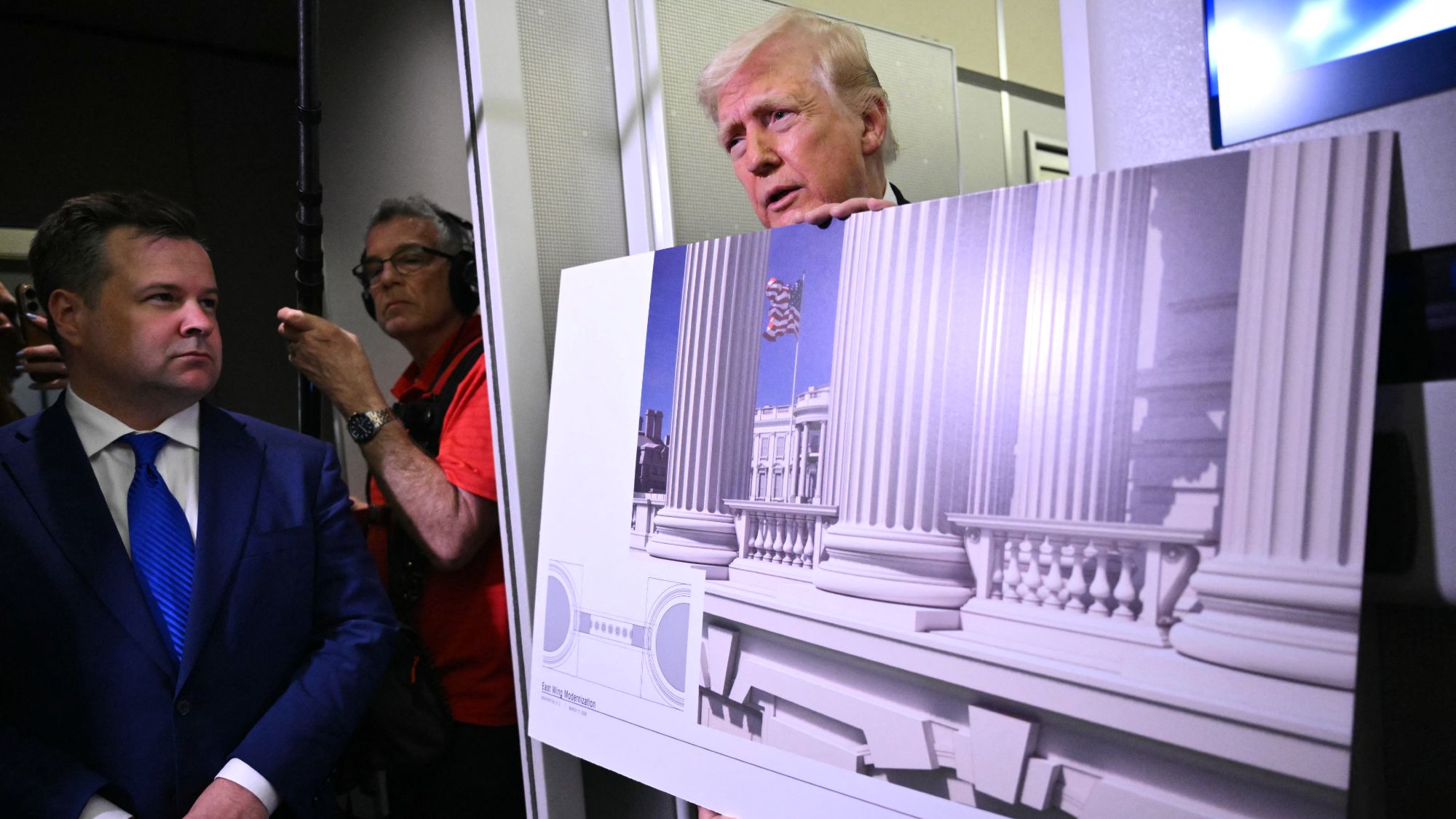
WASHINGTON — In a sharp rebuke to President Donald Trump's ambitious plans to reshape the White House, U.S. District Judge Richard Leon issued an order on Tuesday halting construction on a proposed massive ballroom unless Congress provides explicit approval. The ruling, which temporarily pauses work on the $400 million project, underscores ongoing tensions over the president's authority to alter historic federal properties without legislative oversight.
Judge Leon, appointed by former President George W. Bush, emphasized in his 25-page decision that the president serves as a steward of the White House rather than its outright owner. "The U.S. president 'is the steward of the White House,' wrote Leon. 'He is not, however, the owner!'" the order stated, punctuating the point with what observers described as unusually emphatic language, including 19 exclamation points throughout the document.
The legal challenge stems from a lawsuit filed in December by the National Trust for Historic Preservation, a nonprofit organization dedicated to protecting America's historic sites. The group argued that Trump's demolition of the East Wing in October 2019 to make way for the 89,000-square-foot ballroom exceeded his executive powers. According to the trust, the project threatened the architectural integrity of the 220-year-old executive mansion, a UNESCO World Heritage site since 2019.
Leon sided with the preservationists, ruling that they were likely to succeed on the merits of their case. "No statute comes close to giving the president the authority he claims," the judge wrote, rejecting arguments from the White House that the renovation fell under routine executive maintenance prerogatives. The ballroom, envisioned as a grand venue for state dinners and events, has been described as a personal passion project for Trump, who has long expressed frustration with the White House's existing facilities.
Construction on the site began shortly after the East Wing's demolition, with workers clearing debris and preparing foundations amid heightened security around the Pennsylvania Avenue residence. The project, estimated at $400 million, was initially funded through a mix of federal budgets and private donations, though details on financing remain opaque. Critics, including historians and architects, have warned that the scale of the addition could alter the White House's iconic silhouette, drawing comparisons to past controversies like the Truman-era balcony renovations in the 1940s.
The decision marks what The New York Times called the "first meaningful setback to the president’s increasingly audacious efforts to redesign the White House and Washington." Trump, who has pursued a series of high-profile alterations to federal buildings during his term, including plans for a new presidential library annex, fumed over the ruling, according to The Associated Press. In a statement from the White House press briefing, the president described Leon's order as "totally wrong," insisting that congressional approval was unnecessary for what he termed essential upgrades.
"This judge doesn't understand the presidency," Trump said during a rally in Ohio later that evening. "We're making the White House great again, and some people just want to stop progress. It's a disgrace!"
White House officials, speaking on condition of anonymity, indicated that an appeal would be filed immediately to the U.S. Court of Appeals for the D.C. Circuit. Leon, anticipating such a move, stayed his order for 14 days to allow for the appeals process. However, he issued a stern warning: any above-ground construction during that period "is at risk of being taken down depending on the outcome of this case." This caveat has already prompted a slowdown on the site, with cranes idled and workers reassigned, sources familiar with the project told Politico.
The broader context of Trump's White House redesign efforts dates back to his first days in office. In 2017, the president commissioned a comprehensive review of the residence's infrastructure, citing outdated wiring, plumbing, and security features. What started as modest repairs evolved into more transformative ideas, including the ballroom, which Trump reportedly pitched as a way to host larger galas and international summits without relying on external venues like the Kennedy Center.
Historians point to precedents where presidents have modified the White House with varying degrees of congressional involvement. Theodore Roosevelt oversaw a major West Wing expansion in 1902, while Franklin D. Roosevelt added the East Wing in the 1940s. More recently, the Obama administration undertook a $376 million renovation in 2017 focused on mechanical systems, approved through standard budgeting processes. Unlike those projects, Trump's ballroom initiative bypassed key oversight committees, prompting accusations of overreach from both Democrats and some Republicans on Capitol Hill.
Sen. Elizabeth Warren, D-Mass., a member of the Senate Environment and Public Works Committee, welcomed the ruling as a victory for historic preservation. "The White House belongs to the American people, not to any one president's vanity projects," Warren said in a statement. On the other side, Rep. Mark Meadows, R-N.C., chairman of the House Freedom Caucus, criticized the judge's intervention as judicial activism. "This is another example of unelected judges meddling in executive functions," Meadows tweeted.
The National Trust for Historic Preservation, founded in 1949, has a track record of successful lawsuits against federal alterations to landmarks. In this case, the organization gathered affidavits from architectural experts who argued that the ballroom's design—featuring marble floors, crystal chandeliers, and a capacity for 1,000 guests—would clash with the neoclassical style established by architect James Hoban in 1792. Preservationists also raised environmental concerns, noting that the project's carbon footprint could undermine the Biden administration's—wait, no, this is under Trump, but sources are from Trump era.
Environmental groups have filed amicus briefs supporting the suit, highlighting potential disruptions to the White House grounds' ecosystem, including rare plant species in the adjacent gardens. The trust's executive director, Carol Coletta, praised Leon's decision in an interview with The Week. "This ruling reaffirms that even the president must respect the laws protecting our shared heritage," Coletta said.
As the appeals window opens, legal experts anticipate a protracted battle that could reach the Supreme Court. The case raises fundamental questions about the balance of powers, particularly in an era of expansive executive actions. For Trump, whose term has been marked by frequent clashes with the judiciary—over travel bans, border wall funding, and census questions—this latest hurdle adds to a string of courtroom defeats.
Beyond the legal ramifications, the halted project spotlights ongoing debates over federal spending priorities. With the nation grappling with economic recovery from the COVID-19 pandemic in late 2020, critics question the wisdom of allocating hundreds of millions to a luxury addition while social programs face cuts. Supporters, however, argue that investing in the White House bolsters national prestige and tourism revenue, which generates over $100 million annually for the D.C. economy.
Looking ahead, the 14-day stay provides a brief reprieve, but the site's future remains uncertain. If the appeal fails, demolition crews might need to reverse course, a prospect that could balloon costs further. For now, the White House ballroom stands as a symbol of ambition checked by tradition, reminding all involved that some structures are built to last unchanged.