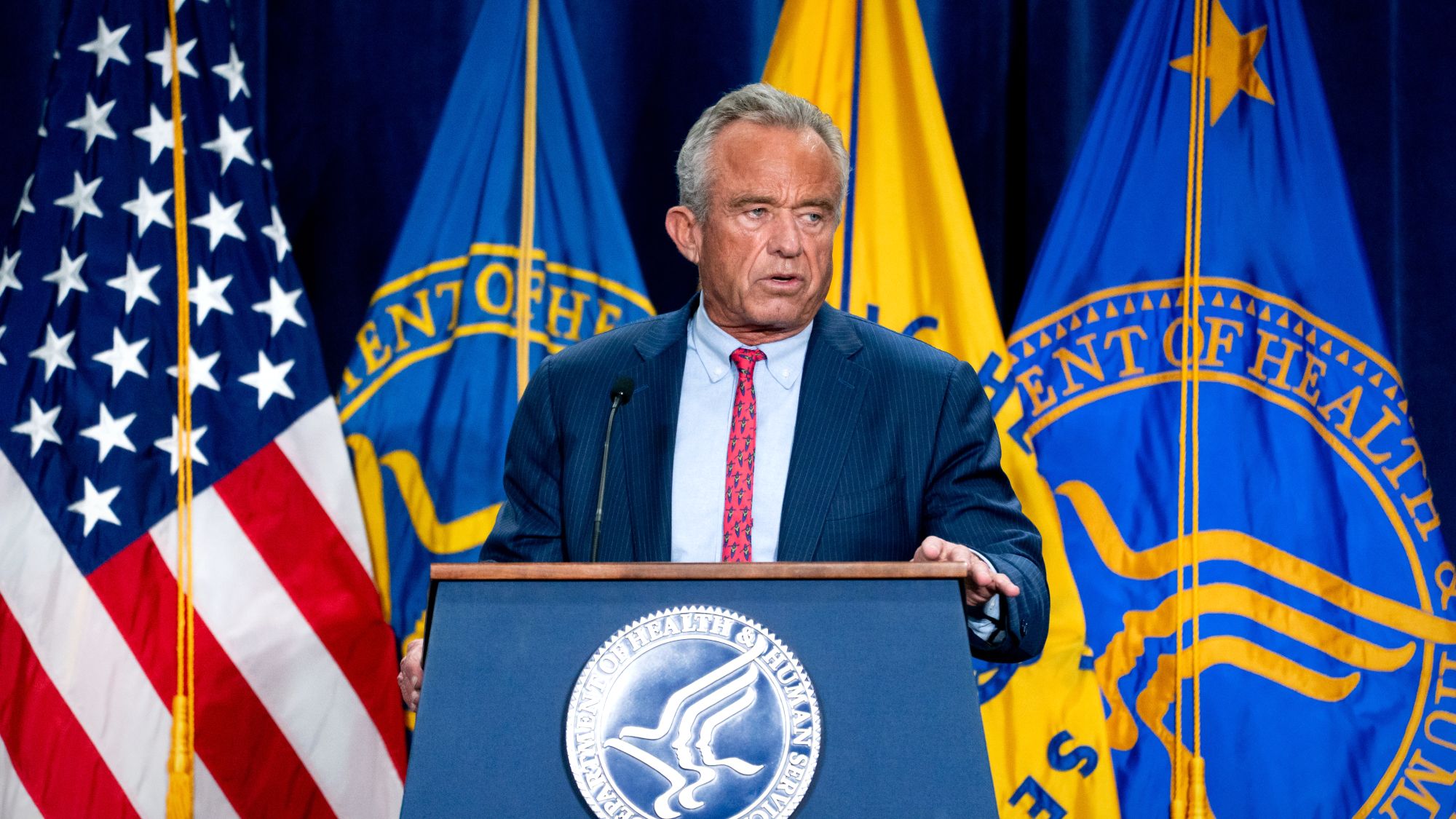
In a significant setback for the Trump administration's health policy initiatives, a federal judge in Boston on Monday temporarily halted most of Health and Human Services Secretary Robert F. Kennedy Jr.'s recent changes to the nation's vaccine guidelines. U.S. District Judge Brian Murphy, who was appointed by former President Joe Biden, ruled in favor of the American Academy of Pediatrics and five other medical organizations, finding that Kennedy likely violated federal administrative procedures in reshaping the influential Advisory Committee on Immunization Practices, or ACIP.
The decision blocks the committee from proceeding with its scheduled meetings on Wednesday and Thursday this week and freezes a series of actions taken since June. According to the ruling, Kennedy bypassed the newly appointed panel in January to reduce the federal schedule for routine childhood immunizations from 17 to 11, a move that critics argue undermines decades of established public health protocols.
ACIP, established in 1964, has long served as the cornerstone of U.S. vaccine policy, providing independent expert guidance to the Centers for Disease Control and Prevention on which vaccines are safe and effective. "All U.S. vaccine policy has first run through ACIP, an independent panel of vaccine experts," CNN reported, emphasizing the committee's role in ensuring recommendations are based on rigorous scientific review.
Judge Murphy's order specifically bars 13 of the committee's 15 members from serving, as they were handpicked by Kennedy following what the plaintiffs described as an improper overhaul of the panel. The judge wrote that the committee's historical decisions have followed "a method scientific in nature and codified into law through procedural requirements." He further stated that under Kennedy's leadership, "the government has disregarded those methods and thereby undermined the integrity of its actions."
The lawsuit, filed by prominent medical groups including the American Academy of Pediatrics, contends that Kennedy's actions bypassed required transparency and expertise in vaccine policymaking. These organizations argued that the changes posed risks to public health by altering recommendations without sufficient evidence or due process. Murphy's preliminary injunction comes as a response to these claims, pausing the implementation of the reduced vaccine schedule and other committee decisions until a full trial or summary judgment can be reached.
This ruling represents a severe blow to the Trump administration's broader health agenda, particularly as it pertains to vaccines, according to The New York Times. The outlet described the decision as disrupting Kennedy's push to align federal policy more closely with his long-held skepticism toward certain vaccines. Kennedy, a vocal critic of vaccine mandates and safety protocols during his earlier career as an environmental lawyer and activist, was confirmed as HHS secretary earlier this year amid controversy over his views.
Axios reported that the pause lands at a precarious moment for the White House, which has been working to curb the influence of vaccine skeptics within the administration ahead of the upcoming midterm elections. Public support for vaccines remains strong, with polls consistently showing widespread approval for childhood immunization programs. As Politico noted, the administration is now seeking to pivot attention toward issues like lowering prescription drug costs, which enjoy broader bipartisan appeal among voters.
Background on ACIP reveals its evolution as a bulwark against politicized health decisions. Formed under the Public Health Service Act, the committee comprises medical and public health experts who review clinical data, safety profiles, and efficacy studies before issuing recommendations. These guidelines, while not legally binding, heavily influence state laws, school requirements, and insurance coverage for vaccines across the country.
Kennedy's tenure at HHS has been marked by efforts to reassess vaccine approvals and schedules, drawing from his advocacy through groups like Children's Health Defense. In January, shortly after his confirmation, he directed a revision that eliminated six vaccines from the routine childhood list, citing concerns over long-term safety data that mainstream health experts have largely dismissed. The American Academy of Pediatrics, in its court filing, warned that such changes could lead to outbreaks of preventable diseases like measles and whooping cough, which have seen resurgences in under-vaccinated communities.
Representatives from the medical groups involved in the lawsuit expressed cautious optimism about the ruling. Dr. Sally Goza, former president of the American Academy of Pediatrics, stated in a prepared release that the decision "affirms the importance of science-driven policy in protecting our children's health." She added, "We hope this pause allows for a return to evidence-based decision-making at ACIP."
On the administration's side, spokespeople indicated plans to appeal the decision swiftly. A statement from the Department of Health and Human Services described the ruling as "an overreach by activist judges" and defended Kennedy's reforms as necessary to address "legitimate concerns about vaccine overreach." The Associated Press noted that while Murphy's order is not the final word, it effectively stalls the committee's work for the immediate future, potentially delaying any further policy shifts.
The broader context of this legal battle unfolds against a backdrop of polarized debates over public health measures. During the COVID-19 pandemic, vaccine hesitancy fueled by misinformation contributed to uneven vaccination rates and prolonged outbreaks. Kennedy's appointment was hailed by some conservative figures as a counterbalance to what they viewed as overzealous mandates under the previous administration, but it drew sharp rebukes from public health advocates who fear a rollback of progress in disease prevention.
Experts unaffiliated with the case have weighed in on the implications. Dr. Paul Offit, a vaccine researcher at Children's Hospital of Philadelphia and a member of previous ACIP panels, told Politico that the ruling "sends a clear message that you can't just remake scientific bodies on a whim." He emphasized that ACIP's independence is enshrined in law to prevent exactly the kind of executive overreach alleged here.
Looking ahead, the Trump administration's appeal could elevate the issue to higher courts, possibly reaching the Supreme Court if it progresses. In the meantime, the paused schedule means that the current 17-vaccine recommendation remains in effect, providing temporary stability for pediatricians, schools, and parents. Health officials in states like Massachusetts, where the case was heard, have already begun advising providers to adhere to pre-January guidelines.
This development underscores ongoing tensions between administrative efficiency and procedural safeguards in federal health policy. As the case unfolds, it may set precedents for how future secretaries navigate advisory committees, balancing innovation with accountability. For now, the pause serves as a reminder of the judiciary's role in upholding the scientific foundations of public health, even amid shifting political winds.