CHICAGO — A federal judge in Illinois has issued a temporary order blocking the Trump administration from rescinding $600 million in public health grants to four Democratic-led states, providing a short reprieve for programs aimed at tracking disease outbreaks and addressing health disparities among vulnerable populations.
U.S. District Judge Manish Shah ruled Thursday that the states of California, Colorado, Illinois, and Minnesota have demonstrated they would suffer irreparable harm if the cuts went forward immediately. The 14-day pause halts the planned termination of funding from the Centers for Disease Control and Prevention, which supports state and city health departments as well as partner organizations in efforts to monitor public health threats and study outcomes for LGBTQ+ individuals and communities of color in major urban areas.
The states filed their lawsuit on Wednesday, seeking to prevent what they described as politically motivated funding cuts. According to court documents, the grants in question fund critical initiatives, including the fight against the spread of HIV and other sexually transmitted infections, particularly among gay and bisexual men, adolescents, and ethnic minorities.
"The first batch of grants could have been pulled Thursday if the judge had not intervened," Colorado Attorney General Phil Weiser said in a statement following the ruling. Weiser's office, along with counterparts in the other states, argued that the abrupt loss of funds would disrupt ongoing public health work at a time when infectious disease surveillance remains essential.
The Department of Health and Human Services, which oversees the CDC, justified the rescission by stating that the grants no longer align with the agency's revised priorities. Officials noted that the CDC's focus shifted last year to better reflect the administration's emphasis on core public health functions, moving away from initiatives centered on health equity — the concept that certain populations require targeted support to address longstanding disparities.
Federal health officials did not immediately respond to requests for comment on Judge Shah's order. However, the administration has maintained that such reallocations are necessary to streamline resources toward national priorities, though critics contend the changes disproportionately affect progressive-leaning areas.
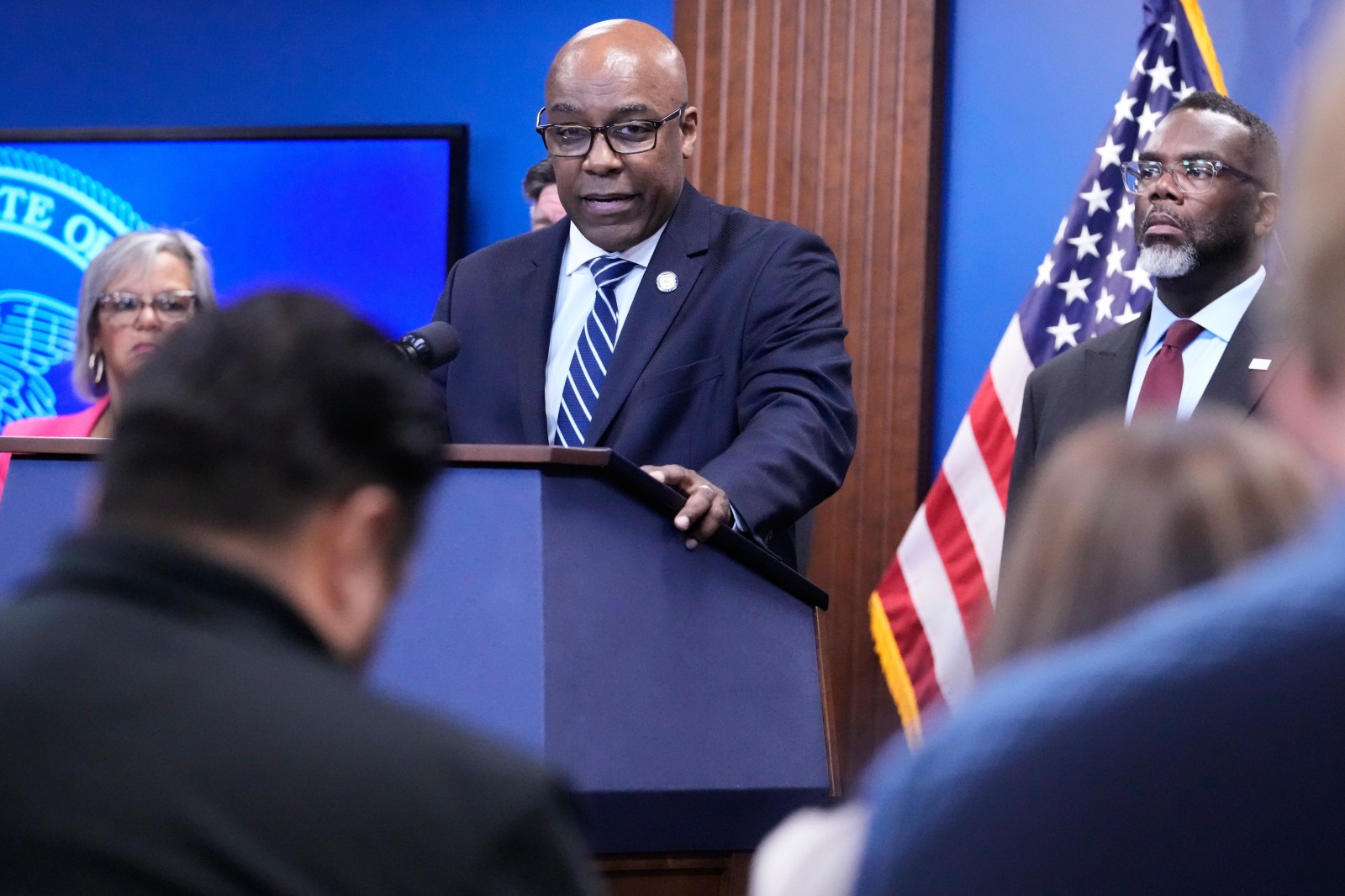
Illinois Attorney General Kwame Raoul, who is leading the lawsuit, framed the cuts as retaliation against states that have vocally opposed President Donald Trump's immigration enforcement policies. "Targeting four Democrat-run states that are standing up to his completely unrelated immigration policies is a transparent attempt to bully us into compliance," Raoul said. He added, "The president may be playing politics with critical public health funding, including more than $100 million to Illinois, but our residents are the ones who pay the price."
The attorneys general from the four states emphasized that the funding supports a wide array of programs beyond disease tracking. In Illinois alone, the grants bolster efforts in Chicago and other cities to improve health outcomes for underserved groups, including research into social determinants of health like access to care for LGBTQ+ youth and minority communities facing higher rates of chronic conditions.
Minnesota Attorney General Keith Ellison echoed Raoul's concerns, stating that the states intend to seek an extension of the judge's pause throughout the duration of the litigation. "This funding is vital for protecting public health in our communities," Ellison said. He highlighted that the loss could force the layoff of hundreds of public health workers across the affected states, potentially weakening response capabilities to future outbreaks.
The lawsuit contends that the rescission violates the Constitution by imposing retroactive conditions on funds already appropriated by Congress. Legal experts familiar with federal funding disputes noted that such challenges often hinge on whether executive actions infringe on legislative intent, a point of contention in previous Trump-era cases.
This is not the first time courts have intervened in similar funding disputes involving these states. Earlier efforts by the administration to withhold billions in child care subsidies, food assistance, and electric vehicle infrastructure grants from California, Colorado, Illinois, Minnesota, and New York were temporarily blocked by federal judges. Those rulings cited concerns over arbitrary decision-making and potential political motivations, setting a precedent that the current plaintiffs are leveraging.
Background on the grants reveals they stem from bipartisan legislation passed in recent years to bolster public health infrastructure, especially in the wake of the COVID-19 pandemic. The $600 million at stake represents a portion of broader CDC allocations aimed at enhancing data collection and intervention strategies in high-risk areas. For instance, in California, the funds support HIV prevention in Los Angeles and San Francisco, where rates among young men who have sex with men remain elevated despite national declines.
In Colorado, the grants aid Denver's health department in studying environmental factors contributing to disparities in maternal health outcomes for Black and Indigenous women. Illinois uses its share for community-based research on mental health in urban LGBTQ+ populations, while Minnesota focuses on adolescent STI education in the Twin Cities. Officials in each state reported that alternative funding sources are scarce, making the federal support irreplaceable in the short term.
The broader context of federal-state tensions under the Trump administration includes multiple high-profile clashes over policy enforcement. The four states have been vocal critics of immigration measures, including family separations at the border and expanded deportations, leading to lawsuits and public condemnations. Proponents of the cuts argue that fiscal responsibility requires periodic reviews of grant efficacy, while opponents see a pattern of punitive actions against non-cooperative jurisdictions.
As the 14-day injunction plays out, the case is expected to return to Judge Shah's courtroom in Chicago for further arguments. The states' attorneys general have indicated they are prepared for a prolonged battle, potentially appealing to higher courts if necessary. Meanwhile, public health advocates are watching closely, warning that prolonged uncertainty could hamper proactive measures against emerging health threats like resurgent measles outbreaks or rising opioid-related infections.
The ruling underscores ongoing debates over the role of federal funding in addressing social inequities. While the administration prioritizes what it calls "traditional" public health metrics, such as vaccination rates and emergency preparedness, the affected states argue that ignoring equity exacerbates vulnerabilities in diverse populations. With the pause in place, health departments can continue operations, but the ultimate fate of the $600 million hangs in the balance of the judicial process.
Looking ahead, similar grant reviews are underway for other programs, raising questions about the stability of public health financing nationwide. Experts suggest that congressional oversight may be needed to clarify funding protections, especially as midterm elections approach and partisan divides deepen. For now, the temporary victory offers breathing room to the four states, but the underlying conflict between federal priorities and local needs persists.