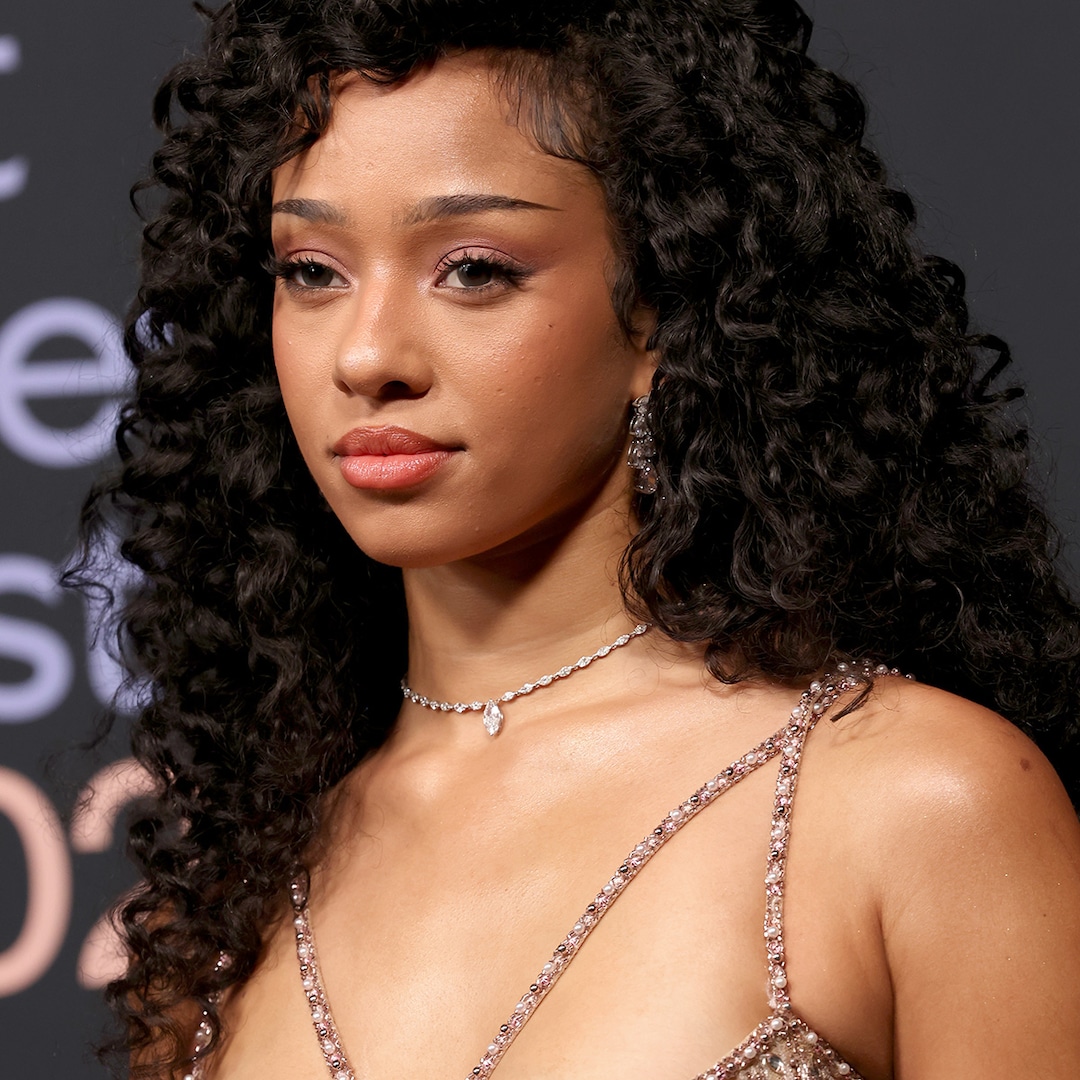
In a candid announcement that underscores the growing emphasis on mental health in the entertainment industry, KATSEYE member Manon Bannerman revealed she is taking a temporary hiatus from the group to prioritize her health and wellbeing. The 23-year-old Swiss-born singer shared the news through the group's official channels on February 20, prompting an outpouring of support from her bandmates and fans alike.
"We fully support this decision," the group posted on X, formerly known as Twitter, emphasizing their commitment to one another. The statement continued, "We remain committed to showing up for one another and for the fans who mean everything to us." KATSEYE, formed in 2024 through Netflix's Popstar Academy, consists of Bannerman alongside Yoonchae, Lara Raj, Daniela Avanzini, Sophia Laforteza, and Megan Skiendiel. The members assured followers that they would proceed with scheduled activities in her absence, adding, "We look forward to being together again when the time is right."
The hiatus comes at a pivotal moment for KATSEYE, who recently garnered attention for their nomination for Best New Artist at the 2026 Grammys. Bannerman, known for her powerful vocals and charismatic stage presence, had spoken glowingly about the group's dynamic just weeks earlier. During an interview with E! News at the Grammys on February 3, she highlighted the importance of mutual support, saying, "The biggest thing is we’re constantly supporting each other. That’s the one thing. Just constantly making sure that we’re all coming up on this crazy journey together and that we’re not leaving anybody behind. And we’re really taking it serious."
She elaborated on their close-knit communication, noting, "We’re always communicating with each other, checking in. That’s so important to us." Bannerman's reflections on Instagram that same month captured the surreal nature of their success: "Of all the places my younger self dreamed herself into… this one still doesn’t feel real. Getting to attend and perform at the Grammys, surrounded by artists and creatives I’ve looked up to for so long is something I’ll never take for granted."
The post continued with an inspirational message: "This moment isn’t just mine! It’s ours. For the little versions of us who didn’t always feel like we belonged. If you’re quietly working, doubting yourself, but still showing up… please keep going. you’re closer than you think." Fans, affectionately called EYEKONS, responded with messages of encouragement, with the group thanking them for "your continued love, patience, and understanding."
Bannerman's decision aligns with a broader wave of celebrities openly addressing mental health challenges, a trend that has gained momentum in recent years. For instance, rapper Gucci Mane, whose real name is Radric Davis, detailed his diagnoses of schizophrenia and bipolar disorder in his October 2025 book Episodes: The Diary of a Recovering Mad Man. He recounted a 2020 mental health episode that prompted him to seek therapy, stating on The Breakfast Club, "After that, I was like, ‘Man, I got to really just hold myself accountable and take care of my health.’ I don’t never want to have an episode again. I’m gonna see a therapist, [even] if I have to take medicine."
Gucci Mane credited his family, including his wife Keyshia Ka’Oir and children Ice Davis and Iceland Ka’oir Davis, as key motivators. "My wife was pregnant with my little boy," he said. "I don’t want to raise a family and then my mental health [is] gone. What if I have an episode I can’t come back from? So, I just started doing the work and started seeking help." His openness aims to destigmatize mental health issues, particularly in the hip-hop community.
Similarly, actor Penn Badgley, known for his role in Gossip Girl, spoke about his experiences with body dysmorphia as a child actor in an April 2025 interview with The Guardian. "I know that I hated my body," he said, "and simply wanted a different one." Badgley linked his struggles to weight gain following his parents' divorce and the pressures of Hollywood, where "the more conventionally beautiful I seemed, the more successful I might be, the more value I might have."
Despite these challenges, Badgley attributed his resilience to spirituality: "That is what allowed me to persevere through the disillusionment, all the things I’d been grappling with, and then come back to it all, but with hopefully some kind of inner transformation." His story highlights the intersection of personal trauma and professional demands in the industry.
Former Scrubs star Sarah Chalke has been vocal about her past relationship with food, describing it on The Funny Thing Is podcast as her "drug of choice." "Some may call it an eating disorder, I just call it my life," she said. "I did crazy s--t with it. I would over-exercise, and there was a sprinkle of bulimia in there." Chalke shared her path to recovery, telling Bon Appétit in 2017, "When I was 23, I cut all sugar out of my diet, quit drinking, and found yoga and breathing and stretching. That’s the best Ritalin you could give anyone."
She emphasized ongoing efforts: "I’m an actress with food issues and body image issues—that's real. But I'm trying to heal that part of myself and also handle my physical issues naturally by putting the best things into my body." Chalke's narrative reflects how performers often navigate eating disorders amid public scrutiny.
Full House alumna Candace Cameron Bure discussed her battle with depression on her podcast, noting the difficulty of opening up. "It's very difficult to speak out about it, even to your most trusted people," she said. "At least for me, I feel like I should be strong enough to overcome that and then it feels so weak." Bure, a Grammy winner in her music career, advised patience in an interview with Vogue: "When people ask me what I'd say to somebody looking for advice on mental health, the only thing I can say is patience. I had patience with myself. I didn't take that last step. I waited. Things fade."
During the COVID-19 pandemic, singer Katy Perry shared her struggles with depression on Twitter, writing, "Sometimes I don't know what's worse trying to avoid the virus or the waves of depression that come with this new norm." She described her car as a safe space: "There is not really anywhere to go besides my car. So I go to my car a lot. That is my safe space." Perry's candor during isolation periods illustrates how global events can exacerbate mental health issues.
Model Kendall Jenner, partnering with designer Kenneth Cole for The Mental Health Coalition, spoke on Good Morning America about her anxiety. After recurring panic attacks, she said, "I finally kind of got the information that I needed about it. For me, I have good days and I have some really anxious days, so I'm really off and on." Jenner aimed to foster connection: "What I hope to accomplish is for people to not feel as alone."
Actor Dwayne Johnson, known as The Rock, addressed depression on Twitter: "We all go thru the sludge/shit and depression never discriminates. Took me a long time to realize it but the key is to not be afraid to open up. Especially us dudes have a tendency to keep it in. You're not alone." Prince Harry, the Duke of Sussex, echoed this in a Telegraph interview, saying therapy revealed he was "part of quite a big club."
Actress Taraji P. Henson has advocated for therapy, telling Variety, "I have a therapist that I speak to. That's the only way I can get through it." She founded The Boris Lawrence Henson Foundation to reduce stigma in the African American community. Singer Fiona Apple explored MDMA and psilocybin therapy for PTSD related to eating disorders and stage fright, telling Rolling Stone in May 2025, "I was touring without stage fright for the first time."
Apple's experiences led to a more expansive view of gender after stopping birth control: "I felt like stopping taking my birth control, I had cut some sort of cord between myself and this regulated femininity. It sounds crazy, but I felt that all of a sudden, I was off the map of femininity. And I totally believed that that allowed things to open up." Actress Lili Reinhart shared on Instagram in 2017, "When I was in middle school, I was struggling with severe anxiety and depression and the help and support I received from my family and a therapist saved my life."
Country singer Carly Pearce revealed her lifelong OCD on the Dumb Blonde podcast in August 2025: "I got really conditioned over the last 10 years to just zip it up and deal with it, and it just kind of got to a place where a couple years ago I just had to really start back into therapy." Actress Idina Menzel advocates personalized strategies, including medication and exercise, per Health magazine.
Gwyneth Paltrow addressed postpartum depression in a 2017 Glamour letter: "It got easier and easier to say it aloud every time. I want people to know it can happen to anybody and I don't want people who have it to feel embarrassed or to feel alone." Model Cara Delevingne recounted teenage depression in The Edit: "I relied too much on love, too much on other people to make me happy, and I needed to learn to be happy by myself."
Ariana Grande promoted therapy on Twitter: "lmaoaoo this is funny as f--k but in all honesty therapy has saved my life so many times. If you're afraid to ask for help, don't be. u don't have to be in constant pain & u can process trauma." Demi Lovato reminded fans on Instagram, "A reminder to anyone struggling out there - this life is a journey with tons of ups and downs but you can't give up." Zendaya managed anxiety post a 2013 Ellen mishap, advising, "Sometimes you just have to take a step back so things stop stressin' you."
Selena Gomez described her mental health journey to WSJ Magazine: "My highs were really high, and my lows would take me out for weeks at a time. I found out I do suffer from mental health issues. I got on the right medication, and my life has been completely changed." At the 2018 Empathy Rocks fundraiser, she said, "I have struggled for a long time, both being public and not public about my mental health issues or my mental illness. But, I truly believe that secrets keep you sick."
Bannerman's hiatus, set against these stories, signals a cultural shift toward prioritizing wellbeing over relentless schedules. As KATSEYE continues promotions, the industry watches closely, hopeful for her return. Officials from the group's management have not specified a timeline, but the emphasis on support suggests a thoughtful recovery process ahead.