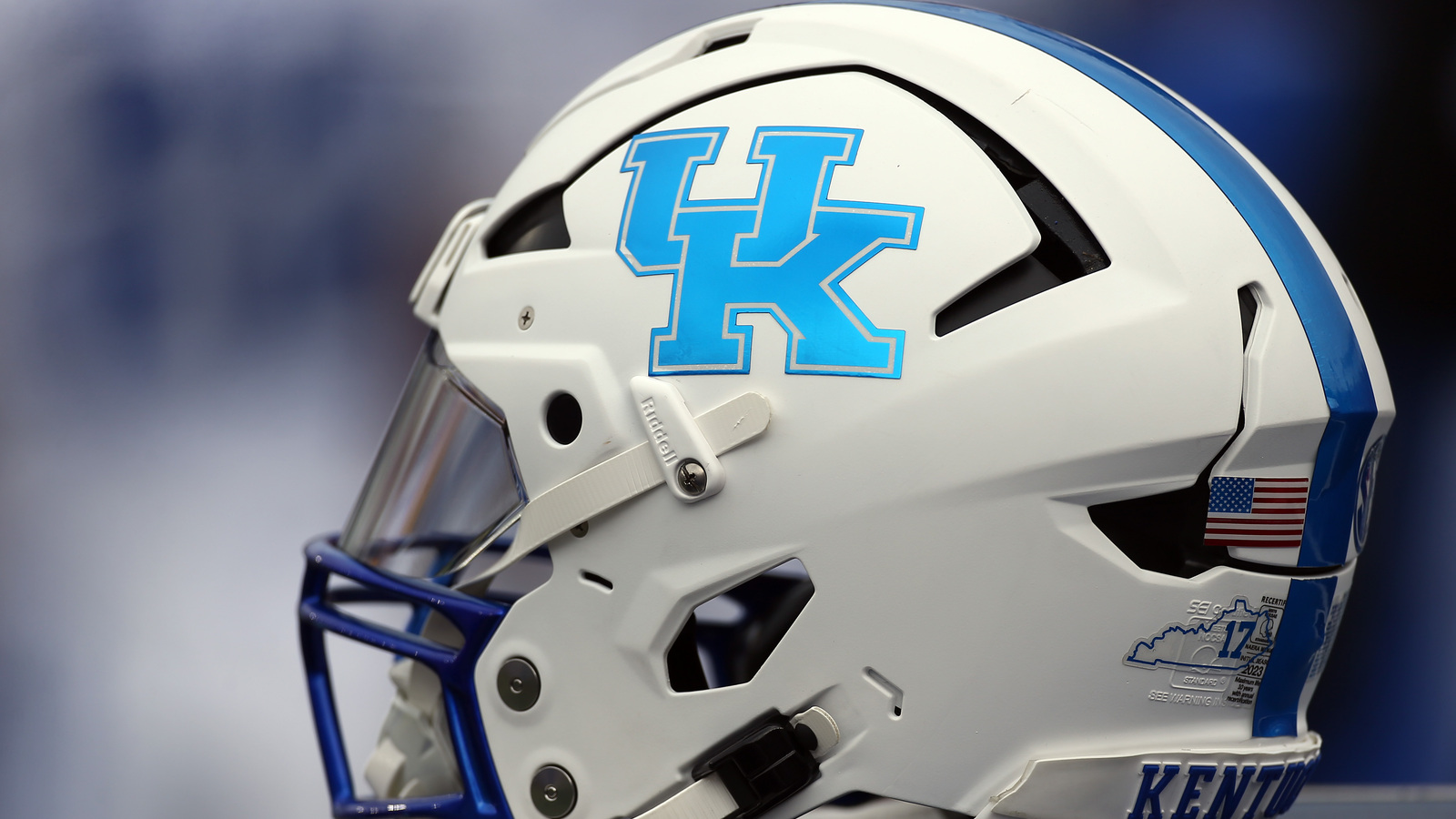
In a significant blow to the Kentucky Wildcats football program's recruiting efforts, class of 2027 quarterback DJ Hunter has decommitted from the team, reopening his recruitment just months after pledging his future to the program. The 3-star prospect from Buford High School in Buford, Georgia, had been committed to Kentucky since April 2025, a commitment that spanned nearly a year amid the fast-paced world of college football recruiting. Hunter's decision comes at a precarious time for the Wildcats, who are navigating a transition in leadership following the departure of former head coach Mark Stoops and the arrival of the Will Stein era.
Hunter, listed at 6-foot-2, 200 pounds according to some reports and 6-foot-1, 190 pounds in others, broke the news directly to recruiting analyst Chad Simmons of Rivals. "After consideration, my family and I felt it was in my best interest to go ahead and decommit and fully open my recruitment back up," Hunter said. He added, "It’s been in the back of my mind ever since the head coaching change went down. After this weekend, [it] just felt like the right time to do it." The timing of the decommitment aligns with recent developments in Hunter's recruitment, including visits from multiple programs to Buford High School in January.
The coaching transition at Kentucky appears to have played a pivotal role in Hunter's change of heart. Committed initially under Stoops, Hunter's pledge endured through the early stages of Stein's tenure as the new head coach. However, the shift in leadership, which occurred in the latter part of 2025, introduced uncertainties that lingered for the young quarterback. Sources close to the recruitment indicate that the instability following Stoops' exit prompted Hunter and his family to reassess their options, especially as other powerhouse programs began intensifying their pursuit.
BREAKING: Class of 2027 QB DJ Hunter has Decommitted from Kentucky, he tells me for @Rivals
The 6’2 200 QB from Buford, GA had been Committed to the Wildcats since April 2025
This announcement, shared via Simmons' social media post, underscores the volatility of high school recruiting in modern college football, where commitments can shift rapidly due to coaching changes, NIL opportunities, and competitive offers. Hunter, ranked as the No. 38 quarterback in the 2027 class by 247Sports, represents a key loss for Kentucky, which had viewed him as a cornerstone for their future quarterback room. His decommitment leaves the Wildcats' 2027 recruiting class particularly thin, now consisting of just two commitments: 3-star offensive lineman Brady Hull and unranked safety Larron Westmoreland.
Buford, Georgia, has long been a hotbed for football talent, producing numerous Division I prospects over the years. Hunter's emergence as a dual-threat quarterback with strong arm talent and mobility has drawn attention from across the Southeast and beyond. During his junior season, he showcased his skills in leading Buford to a competitive record, though specific stats from that year were not immediately available. His decision to decommit opens the door for a broader evaluation of his options, with several programs already positioning themselves as frontrunners.
Among the schools Hunter mentioned as potential destinations are USF, Maryland, West Virginia, Florida State, and Duke. He indicated that USF, Duke, Maryland, and West Virginia are likely to host him for official visits in the coming months. These programs have ramped up their interest following the coaching shakeup at Kentucky, with recruiters making in-person stops at Buford High School earlier this year. Florida State, in particular, has a history of success with Georgia recruits, which could appeal to Hunter's regional ties.
Additional programs in the mix include Auburn, Kennesaw State, UAB, Vanderbilt, and Virginia Tech, all of which sent representatives to meet with Hunter in January 2026. Auburn's involvement is noteworthy, given their aggressive recruiting in the talent-rich state of Georgia, while Vanderbilt offers an academic angle that might resonate with Hunter's family. West Virginia and Virginia Tech, both from the ACC, provide pathways to Power Five competition, contrasting with the Group of Five options like USF and UAB.
The broader context of Kentucky's recruiting challenges cannot be overstated. The Wildcats, under Stoops, had built a reputation for steady, if unspectacular, classes, often punching above their weight in the SEC. However, the transition to Stein—a former offensive coordinator known for his innovative schemes—has introduced both excitement and uncertainty. Stein's staff is reportedly focusing on rebuilding the quarterback pipeline, but losing Hunter, who was one of their earliest commitments, signals potential hurdles ahead. Kentucky's 2027 class, already small, will require aggressive outreach to fill gaps, especially at premium positions like quarterback.
Recruiting analysts have noted that the 2027 cycle is shaping up to be particularly competitive for quarterbacks, with top prospects fielding offers from blue-blood programs early. Hunter's decommitment is part of a larger trend where coaching changes lead to roster and recruiting instability; similar situations unfolded at other programs last year, resulting in multiple flips. For instance, when major conferences realign, as seen with the recent ACC and Big Ten expansions, recruits like Hunter often explore new landscapes.
From Hunter's perspective, reopening his recruitment allows him to explore fits that align better with his development goals. At 6-foot-2, he possesses the frame to add strength and withstand the rigors of college play, while his experience in Buford's high-octane offense has prepared him for spread concepts prevalent in today's game. Programs like Florida State, with their emphasis on quarterback development under coach Mike Norvell, could provide a seamless transition, according to scouting reports.
Kentucky officials have not publicly commented on Hunter's decommitment, but sources suggest the new staff is prioritizing relationships with remaining commits like Hull and Westmoreland. Hull, a 3-star offensive lineman from an undisclosed location, brings versatility to the trenches, while Westmoreland's unranked status belies his potential as a hard-hitting safety. Stein's team will need to leverage home games and camps to attract new talent, potentially targeting other Georgia prospects to offset the loss.
The implications for Kentucky extend beyond the 2027 class. With the SEC's talent wars intensifying, every commitment counts toward building depth and future starters. Losing a quarterback of Hunter's caliber could delay the Wildcats' return to contention in the conference, especially if Stein's offensive vision requires a specific archetype at the position. Meanwhile, Hunter's openness to visits positions him to potentially land at a program with stronger immediate playing opportunities or better NIL deals.
As the recruiting calendar progresses, all eyes will be on Hunter's official visits, scheduled tentatively for the spring and summer of 2026. Programs like Maryland and Duke, which emphasize academics alongside athletics, may appeal if Hunter prioritizes a balanced college experience. Conversely, SEC hopefuls like Auburn could tempt him with the allure of playing in front of massive crowds at Jordan-Hare Stadium.
In the end, Hunter's decommitment highlights the fluid nature of college football commitments, where a single coaching change can reshape a recruit's path. For Kentucky, it's a call to action for Stein and his staff to stabilize the class and demonstrate the program's vision. As Hunter weighs his options, the recruiting world waits to see where this talented quarterback from Buford ultimately lands.