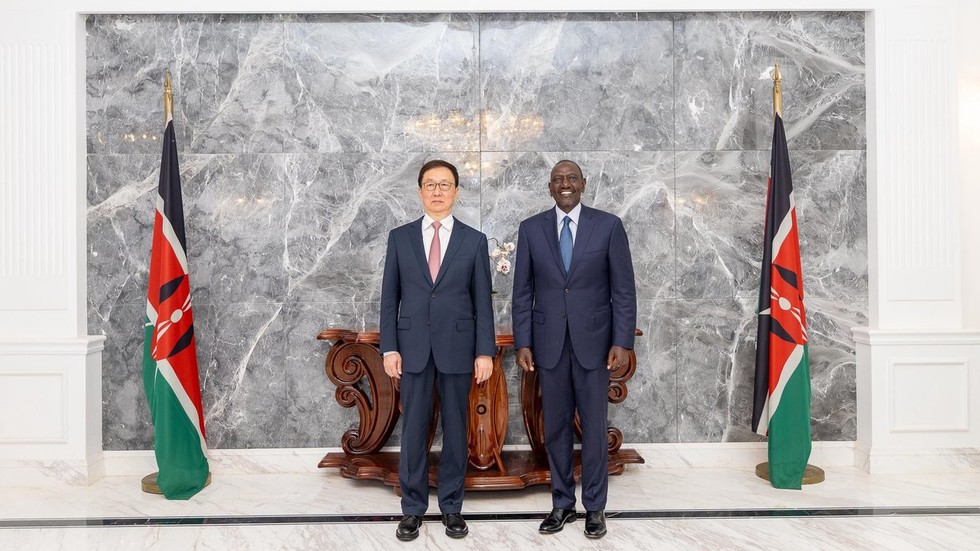
NAIROBI, Kenya — Kenya has sealed a landmark trade agreement with China, paving the way for duty-free access to one of the world's largest markets and potentially transforming the East African nation's export landscape. President William Ruto announced the finalization of the bilateral deal on Wednesday, describing it as a major boost for Kenyan investors and exporters seeking to tap into China's vast economy.
The agreement builds on an earlier preliminary arrangement that already granted duty-free entry to approximately 98.2 percent of Kenyan goods in China. According to Ruto, the new pact opens up additional market opportunities valued at about $19 trillion, further expanding avenues for trade and investment. 'We finalized negotiations with the government of China on a bilateral trade agreement that will open access to an additional market value at about US dollars 19 trillion, further expanding opportunities for investors,' Ruto stated during a public address.
This development comes on the heels of China's broader initiative announced in June 2025, when President Xi Jinping revealed the elimination of import tariffs for 53 African countries maintaining diplomatic ties with Beijing. Xi emphasized that the policy would 'create new opportunities for Africa’s development' and deepen 'mutually beneficial cooperation' between China and the continent. The move is seen as part of China's long-standing strategy to strengthen economic ties with Africa, where it has been the largest trading partner for nearly two decades.
Implementation of the deal has already begun, with Kenyan authorities confirming on Monday that the first consignment of exports under the Zero Tariff Agreement had been dispatched to China. The shipment includes a variety of Kenyan products such as avocados, avocado oil, fur and leather, coffee, and green beans. Officials in Nairobi expressed optimism that this initial delivery marks the start of a steady flow of goods, potentially increasing Kenya's export revenues and supporting local farmers and manufacturers.
The timing of the agreement is particularly notable amid escalating trade tensions between the United States and several African nations. For instance, South Africa has faced tariff pressures and diplomatic disputes with Washington over trade practices. These frictions highlight a shifting geopolitical landscape in Africa, where economic partnerships are increasingly influencing international relations.
Andrey Maslov, head of the Center for African Studies at the Higher School of Economics in Moscow, provided insights into the broader context of these developments. In comments to RT, Maslov contrasted China's approach with that of the US, noting that while Washington seeks to maintain influence through 'political leverage and control over energy and critical mineral resources,' Beijing is focusing on 'broader, more economically driven engagement.' He suggested that the US's tariff impositions on African goods stem from 'a crisis in the US itself,' pushing it toward an 'isolationist path.'
Maslov further explained that China's zero-tariff policy is a strategic effort by Beijing to 'further reorient its trade flows' away from traditional partners and toward emerging markets like Africa. This perspective underscores the competitive dynamics at play, as African countries navigate overtures from global powers vying for economic and strategic footholds on the continent.
China's deepening involvement in Africa extends beyond trade agreements. Over the years, Beijing has financed major infrastructure projects, including railways in Kenya, industrial parks in Ethiopia, and mining ventures in Zambia. These investments have facilitated the flow of African raw materials to China while providing much-needed development capital to recipient nations. In Kenya's case, the Standard Gauge Railway, largely funded by Chinese loans, has revolutionized transport logistics and bolstered export capabilities.
Kenyan business leaders and economists have welcomed the deal, viewing it as a timely response to domestic challenges such as fluctuating global commodity prices and the need to diversify export markets beyond traditional partners like the European Union and the US. The agreement is expected to particularly benefit the agricultural sector, which employs a significant portion of Kenya's workforce. Avocados and coffee, key exports in the initial shipment, have seen growing demand in Asia, and tariff-free access could accelerate this trend.
However, some analysts caution that while the opportunities are substantial, Kenya must address logistical hurdles, including improving supply chain efficiency and meeting China's stringent quality standards. Reports from Nairobi indicate that government agencies are already working on certification processes to ensure compliance, with training programs underway for exporters.
The bilateral talks leading to this agreement were conducted over several months, involving high-level delegations from both sides. Kenyan Trade Minister Rebecca Miano led negotiations in Beijing last year, focusing on sectors like agriculture, manufacturing, and services. Chinese officials, in turn, highlighted their commitment to sustainable partnerships that align with Africa's development goals under the African Union's Agenda 2063.
From a regional perspective, Kenya's deal could set a precedent for other East African Community members, such as Uganda and Tanzania, which are also exploring similar arrangements with China. The East African bloc has long advocated for collective bargaining to maximize leverage in international trade pacts.
Looking ahead, the agreement's success will depend on sustained implementation and monitoring. Kenyan officials plan to track export volumes quarterly, aiming for a significant uptick in the coming fiscal year. International observers, including those from the World Trade Organization, will watch closely to ensure the deal adheres to global trade rules and promotes fair competition.
In the broader geopolitical arena, this partnership reinforces China's role as a key player in Africa's economic transformation. As Maslov noted, the zero-tariff initiative reflects Beijing's proactive stance in a multipolar world, contrasting with the protectionist tendencies observed elsewhere. For Kenya, the deal represents not just an economic lifeline but a strategic pivot toward diversified global engagement.
As trade flows between Nairobi and Beijing gain momentum, the implications for Africa's integration into the global economy could be profound, fostering growth while navigating the complexities of international relations.