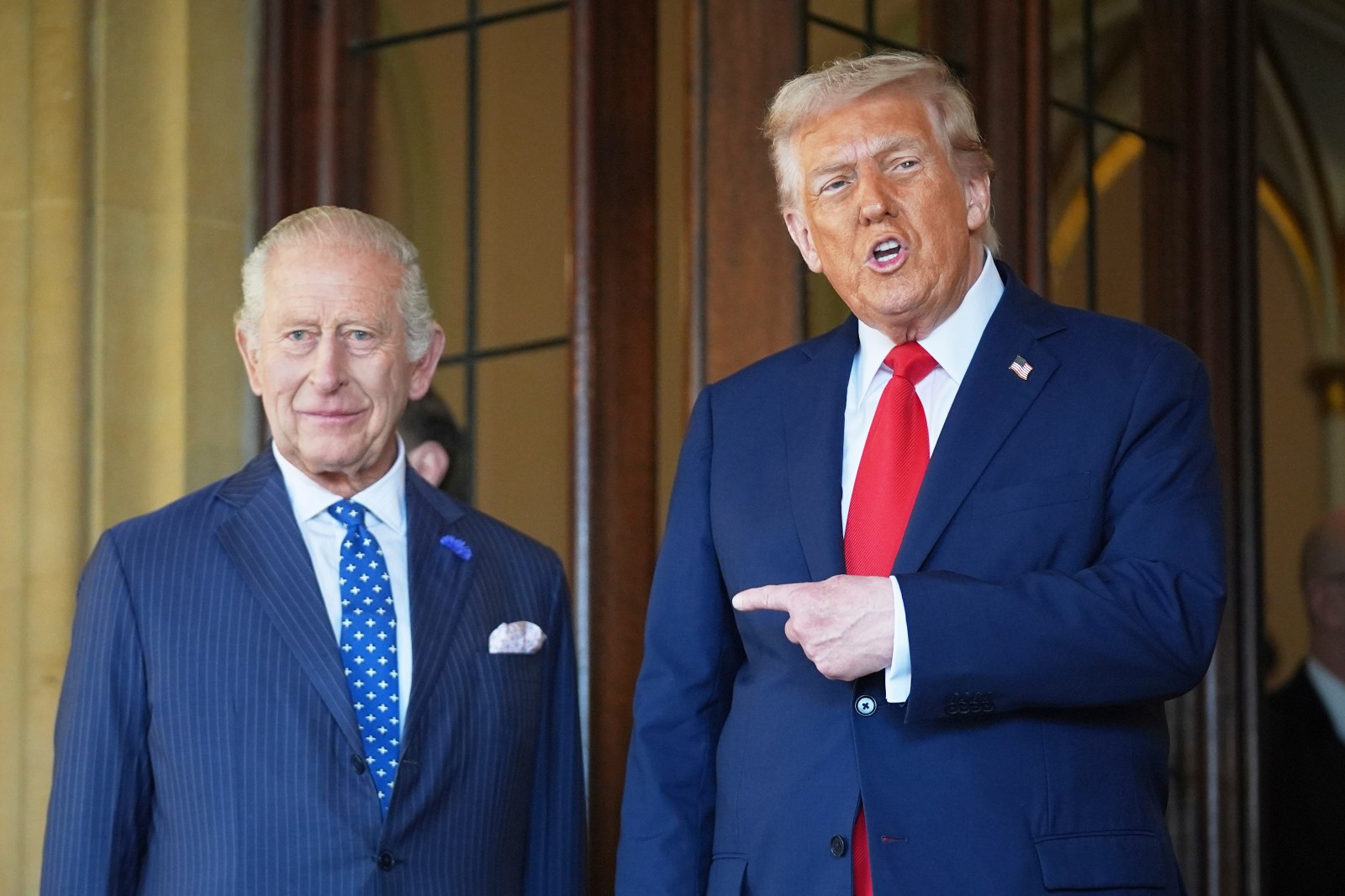
WASHINGTON — King Charles III arrived in Washington on Monday, embarking on a four-day state visit aimed at bolstering the longstanding 'special relationship' between the United Kingdom and the United States, even as trans-Atlantic ties face significant strain. The monarch's trip, timed to coincide with celebrations of the United States' 250th anniversary, comes two and a half centuries after the American colonies declared independence from Britain under King George III, Charles's ancestor. Accompanied by Queen Camilla, the 77-year-old king, who was diagnosed with an undisclosed form of cancer in early 2024, is set to engage in a series of high-profile events, including a private tea with President Donald Trump and First Lady Melania Trump, a garden party, and a formal White House state dinner.
The visit's timing could not be more delicate. Just two days earlier, on Saturday, a shooting at a Washington dinner attended by Trump prompted a last-minute security review. Buckingham Palace confirmed that the king 'is greatly relieved to hear that the president, first lady and all guests have been unharmed.' Following the review, the palace announced that the trip 'will proceed as planned,' underscoring the commitment to the itinerary despite heightened security concerns.
Underlying the pomp and pageantry are deepening political rifts between the Trump administration and the UK government led by Prime Minister Keir Starmer. In recent weeks, Trump has publicly criticized Starmer for refusing to join U.S. military actions against Iran, dismissing the British leader as 'not Winston Churchill' — a reference to the World War II prime minister who popularized the term 'special relationship' for the UK-US alliance. Trump has extended his rebukes to NATO allies, labeling them 'cowards' and 'useless' for not supporting the operations. According to a leaked Pentagon email, the U.S. might even reassess its support for Britain's sovereignty over the Falkland Islands in the South Atlantic, a territory over which Britain and Argentina fought a war in 1982.
Despite these tensions, Trump has insisted that the discord will not impact the royal visit. 'Charles has nothing to do with that,' the president said in March, referring to NATO-related issues. Trump has spoken warmly of the king, calling him his 'friend' and a 'great guy' on multiple occasions. He also reminisced about his 'amazing' trip to the UK in September, during which he and Melania Trump received an unprecedented second state visit, complete with scarlet-clad guardsmen, brass bands, and a banquet at Windsor Castle. That invitation was hand-delivered by Starmer in the Oval Office just five weeks after Trump's return to office, in what observers described as a deliberate effort to court the Republican leader.
White House spokesperson Anna Kelly echoed the positive tone, telling The Associated Press, 'President Trump has always had great respect for King Charles, and their relationship was further strengthened by the president’s historic visit to the United Kingdom last year. The president looks forward to a special visit by Their Majesties, which will include a beautiful state dinner and multiple events throughout the week.' Trump himself told the BBC that the king's arrival could 'absolutely' aid in mending the trans-Atlantic bond. 'He’s fantastic. He’s a fantastic man. Absolutely the answer is yes,' the president said.
Not everyone in the UK shares this optimism. Some politicians have voiced concerns that the trip could lead to embarrassment for the monarchy. Ed Davey, leader of the centrist Liberal Democrats opposition party, called earlier this month for the visit to be canceled, describing Trump as 'a dangerous and corrupt gangster.' In a speech to the House of Commons, Davey said, 'I really fear for what Trump might say or do while our king is forced to stand by his side. We cannot put His Majesty in that position.'
Prime Minister Starmer pushed back, defending the visit's value. He argued that 'the monarchy, through the bonds that it builds, is often able to reach through the decades' and strengthen vital relationships. Kristofer Allerfeldt, a University of Exeter professor specializing in American history, highlighted the differing objectives of the two sides. For Charles, he said, the trip is about 'reinforcing long-term ties, showcasing the monarchy’s soft power and reminding the world that Britain still carries diplomatic weight.' In contrast, for Trump, it's more of 'a media event,' emphasizing the optics of a gathering between 'two gilded monarchs.'
The visit is also overshadowed by personal controversies within the royal family. The king's younger brother, formerly Prince Andrew and now stripped of his royal title and exiled from public life, faces a police investigation over his ties to the late financier Jeffrey Epstein. Andrew has denied any wrongdoing. Victims of Epstein have called on Charles to meet with them and other survivors of sexual abuse during the trip, though such an encounter is considered unlikely.
This marks Charles's first state visit to the U.S. as king since ascending the throne in 2022; he has visited the country 19 times previously. His late mother, Queen Elizabeth II, made four state visits to America. The royal couple's schedule extends beyond Washington. They plan to visit the September 11 memorial in New York and attend a 250th birthday 'block party' in Virginia, where Charles will meet Indigenous leaders focused on nature conservation — a cause close to the environmentally conscious king's heart.
A pivotal moment will occur on Tuesday when Charles addresses a joint meeting of the U.S. Congress, only the second time a British monarch has done so, following Elizabeth II's speech in 1991. During her address, the queen praised liberalism, rejected the notion that 'power grows from the barrel of a gun,' and celebrated the 'rich ethnic and cultural diversity of both our societies.' Observers expect Charles to highlight his passions for environmental protection and interfaith harmony, which diverge from Trump's priorities. Allerfeldt suggested that the king might subtly convey a message in his remarks. 'He does have an unorthodox way of looking at the world, and I think maybe he can actually have something valid to say when he addresses Congress,' the professor said.
Three centuries after British monarchs relinquished direct political authority, the royals continue to serve as instruments of soft power, deployed by governments to nurture international ties and signal priorities. This visit, amid geopolitical frictions over Iran and NATO, exemplifies that role. While the immediate focus is on ceremonial events, the trip holds potential to either ease or exacerbate the current chill in UK-US relations.
As the king and queen settle into their schedule, all eyes will be on interactions between Charles and Trump, particularly their one-on-one meeting. The outcomes could influence not only bilateral diplomacy but also broader alliances in a tense global landscape. For now, the palace and White House emphasize continuity and mutual respect, hoping the historic bonds forged over centuries will prevail.