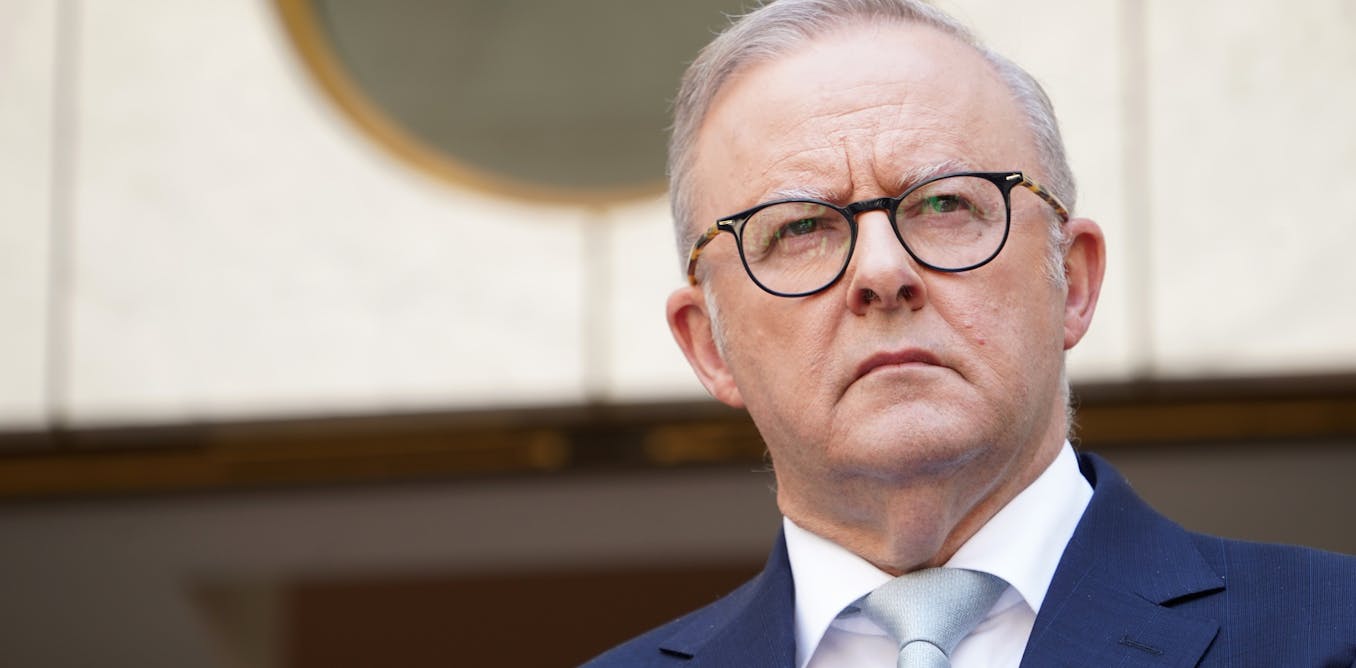
In the wake of the tragic Bondi attacks and amid ongoing scrutiny over a federal expenses scandal, a new national poll has revealed a slight dip in support for Prime Minister Anthony Albanese and the Labor Party, though the government maintains a comfortable lead over the opposition. The Resolve Political Monitor survey, conducted for Nine newspapers from December 17 to 20, showed Labor holding a 54-46 advantage over the Coalition on a two-party preferred basis, a one-point gain for the opposition since early December. This poll, drawn from a sample of 1,010 respondents—smaller than the usual 1,800—comes just days after the Bondi incidents that shocked the nation and raised questions about security and social cohesion.
Primary vote figures in the Resolve poll indicated some shifting sands among voters. Labor's primary support fell to 32 percent, down three points from the previous survey, while the Coalition rose to 28 percent, up two points. One Nation saw a two-point increase to 16 percent, the Greens gained one point to 12 percent, independents held steady at 8 percent, and others dropped two points to 4 percent. Adjusting for preference flows from the 2025 election, Labor's lead narrowed to just under 54-46, representing about a 2.5-point swing toward the Coalition.
Albanese's personal approval ratings took a notable hit in the poll, with his net approval slumping 15 points to minus 9—the lowest since the May election. According to the survey, 49 percent of respondents rated his performance as poor, compared to 40 percent who viewed it positively. Opposition Leader Sussan Ley also saw her net approval decline by seven points to minus 4. Despite the downturn, Albanese maintained an edge as preferred prime minister over Ley, leading 38 percent to 30 percent, though this was narrower than the 41-26 margin from early December.
The timing of the poll, immediately following the Bondi attacks, has fueled speculation about their impact on public sentiment. Stories about the expenses scandal had dominated headlines in the preceding week, involving allegations of misuse of taxpayer funds by federal politicians. It's unclear whether the poll reflects damage from the scandal, the attacks, or a combination of both, as noted in analysis from The Conversation. A separate Morgan poll, covering November 17 to December 14, suggested the expenses issue may have contributed to a Labor slide, with the party's two-party preferred lead dropping to 54.5-45.5 in the final week of that period, from 56-44 earlier.
Public reaction to the federal government's handling of the Bondi attacks was mixed but leaned critical. By a margin of 46 percent to 29 percent, respondents in the Resolve poll described the response as weak rather than strong. On social cohesion, opinions were closer, with 37 percent viewing it as good and 30 percent as poor. The attacks, which occurred in Sydney's iconic beachside suburb, involved gunmen and highlighted vulnerabilities in public safety, prompting widespread calls for tougher measures.
Broader concerns about division in Australian society emerged strongly in the survey. An overwhelming 72 percent of respondents believed there had been a rise in racism linked to the Israel-Gaza conflict, up from 69 percent in a January 2025 poll. Additionally, 55 percent thought antisemitism had been more prevalent than Islamophobia in recent months, compared to 54 percent in the earlier survey. These findings underscore ongoing tensions, with the Bondi events amplifying fears of extremism and hate.
Gun control, a perennial flashpoint, dominated priorities in the aftermath of the attacks. A resounding 76 percent of those polled favored toughening gun laws, with only 10 percent wanting them kept as is and 6 percent advocating relaxation. Four out of five specific proposals for stricter regulations garnered over 80 percent support, including bans on certain weapons and enhanced background checks. The lone exception was restricting gun licenses to Australian citizens only, which still received 72 percent backing.
When asked to select two top priorities for the government, 49 percent chose preventing terrorism, closely followed by 45 percent opting for tackling crime in general. Other key areas included restricting gun access at 35 percent, preventing extremism at 33 percent, addressing antisemitism at 29 percent, and combating hate speech at 26 percent. Support for stronger hate speech laws was near-unanimous, with 66 percent agreeing Australia needs tougher regulations banning speech targeting religion and faith, opposed by just 9 percent.
Proposals to combat antisemitism varied in popularity. The most favored was tougher immigration screening to identify antisemitic views, supported by 76 percent against 7 percent opposition. In contrast, holding a Royal Commission into the issue received 48 percent support, with 17 percent opposed. These responses reflect a public appetite for proactive measures amid heightened sensitivities.
Not all news was grim for Labor. In a subsample of around 300 New South Wales voters, state Premier Chris Minns saw his net likeability jump eight points since November to plus 22, possibly buoyed by his handling of local issues post-Bondi. Nationally, a YouGov poll conducted December 15-22 with 1,509 respondents reinforced the push for gun reform: 44 percent wanted personal guns like those used in the attacks made illegal, 48 percent sought tighter laws overall, and only 8 percent favored no changes. Notably, 81 percent to 19 percent believed Ahmed al Ahmed, who disarmed one of the Bondi gunmen, deserved to be named Australian of the Year.
Contrasting polls painted a varied picture of Labor's standing. The Morgan survey, with a final-week sample of 1,574, showed primary votes shifting to 30.5 percent for Labor (down 2.5 points), 27.5 percent for the Coalition (up 1.5), 17 percent for One Nation (up two), 13 percent for the Greens (down 0.5), and 12 percent for others. All Morgan interviews predated the Bondi attacks, suggesting the expenses scandal alone may have eroded support. By 2025 preference flows, Labor's lead in that poll stood at about 53-47, the narrowest since the last election.
Earlier data from Redbridge Group, covering a four-week period with 4,862 respondents, indicated Labor had weathered the expenses claims relatively unscathed, maintaining a dominant position. The full poll showed Labor leading 55.5-44.5 overall, with breakdowns revealing Coalition gains in Queensland (50.5-49.5 lead) but Labor ahead in the other states. Demographically, Labor dominated among women (58.5-41.5), younger voters aged 18-34 (69.5-30.5), and those 35-49 (58.5-41.5), while the Coalition edged ahead with those 50-64 (50.5-49.5) and over 65 (54.5-45.5). One Nation's support peaked at 20.5 percent among 50-64-year-olds and 22 percent in Queensland.
Aggregate data from three Newspolls between September 29 and November 20, totaling 3,774 respondents and released by The Australian on December 26, had Labor at 57-43 before the scandals broke. State breakdowns showed Labor leading 58-42 in New South Wales (a two-point Coalition gain since the prior quarter), 60-40 in Victoria (two-point Labor gain), 52-48 in Queensland (one-point Labor gain), 56-44 in Western Australia (two-point Labor gain), and 58-42 in South Australia (three-point Labor gain). Among non-tertiary educated voters, One Nation surged to 20 percent, but Labor still led 53-47 overall in that group.
Likeability ratings from an early December Resolve poll, predating both the expenses issue and Bondi, offered insights into public views of politicians. Independent senators David Pocock and Jacqui Lambie topped the list at plus 15 net likeability. Among Labor figures, Foreign Minister Penny Wong led at plus 11, followed by Tanya Plibersek at plus 9, Tony Burke at plus 7, Richard Marles at plus 6, Jim Chalmers at plus 5, Murray Watt at plus 4, and Chris Bowen at zero. Greens leader Larissa Waters was at plus 5, while One Nation's Pauline Hanson rose to plus 3, up 16 points since December 2024 but down five from November.
As Australia grapples with the aftermath of Bondi and political controversies, these polls suggest a resilient but tested Labor government. With elections on the horizon, the focus on security, gun laws, and social harmony could shape the campaign. Officials have yet to outline specific legislative responses, but the strong public support for reforms indicates pressure is mounting for action in the new year.