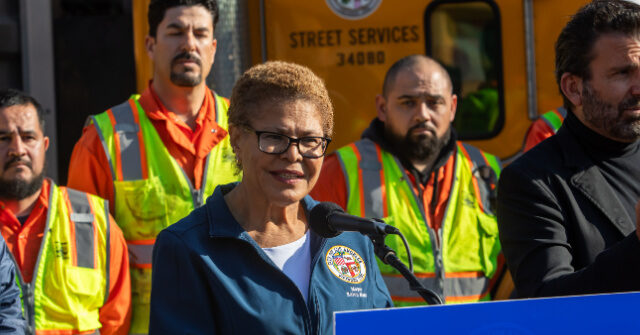
Los Angeles, CA – A confidential memo from the Los Angeles Fire Department has come to light, outlining a strategy to shield Mayor Karen Bass from potential backlash over the city's response to the devastating 2025 wildfires. The 13-page document, titled “LAFD AAR: Strategic Response Plan,” was obtained by the Los Angeles Times through the California Public Records Act and reveals efforts to manage public perception ahead of the release of an after-action review report on the Palisades fire.
According to the Los Angeles Times, the memo's primary objective was clear: “It’s our goal to prepare and protect Mayor Bass, the City, and the LAFD from reputational harm associated with the upcoming public release of its AARR, through a comprehensive strategy that includes risk assessment, proactive and reactive communications, and crisis response.” The plan, labeled “for internal use only” and unsigned, was drafted on LAFD letterhead and included email addresses for department officials, representatives from Bass's office, and public relations consultants tasked with shaping messaging about the fire response.
The wildfires of 2025 ravaged Southern California, with the Palisades fire alone scorching thousands of acres in the hills overlooking Los Angeles. Fueled by dry conditions, high winds, and a prolonged drought, the blazes displaced tens of thousands of residents and caused widespread property damage estimated in the billions. The Palisades fire, which erupted in late summer, was particularly destructive, prompting evacuations in upscale neighborhoods and drawing national attention to the city's preparedness. In the aftermath, city officials faced scrutiny over resource allocation, communication breakdowns, and the effectiveness of emergency measures under Mayor Bass's administration.
The memo, undated but noting an update “as of 10/7,” was prepared just before the after-action report's public release on October 8. It proposed tactics to influence media coverage, such as requesting closed-door briefings with the Fire Commission and City Council to “minimize tough Q&A.” The document aimed to preempt negative narratives by coordinating responses and highlighting positive aspects of the LAFD's performance during the crisis.
“The memo aims to shape news media coverage of the report’s findings,” the Los Angeles Times reported, detailing how the plan involved proactive communications to frame the department's actions favorably.
While the memo does not specify its final distribution, its inclusion of contacts from Bass's office suggests close collaboration between the fire department and city hall. This comes amid broader accusations that the mayor's administration interfered in the wildfire response evaluation. An earlier internal email, also reviewed by the Los Angeles Times, indicated that Bass apparently controlled how media questions were handled post-fire, routing inquiries through her office to ensure consistent messaging.
Critics have gone further, alleging that Bass ordered the “watering down” of the after-action report itself. According to reports from Breitbart News, which covered the memo's disclosure, these claims point to efforts to soften findings on delays in firefighting resources and coordination failures during the Palisades blaze. The fire, which began on August 15, 2025, near Pacific Palisades, spread rapidly due to Santa Ana winds gusting up to 50 miles per hour, overwhelming initial containment efforts.
LAFD Chief Kristin Crowley, who assumed her role in 2022, has not publicly commented on the memo. However, department spokespeople emphasized in statements to the Los Angeles Times that the strategic plan was a standard procedure for high-profile incidents, aimed at transparency rather than concealment. “Our focus remains on learning from the event to improve future responses,” a department official said, without addressing the specific language about protecting the mayor.
Mayor Bass, a former congresswoman who took office in 2022, has defended her administration's handling of the wildfires. In a press conference on October 9, following the report's release, she stated, “We faced an unprecedented challenge, but our teams worked tirelessly to protect lives and property.” Bass highlighted the deployment of over 1,000 firefighters and the use of aerial water drops, though the after-action report noted gaps in mutual aid requests from neighboring jurisdictions, which delayed reinforcements by up to 12 hours.
The Palisades fire was one of several that defined the 2025 season, which saw over 500,000 acres burned statewide and at least 20 fatalities. In Los Angeles, the crisis exposed longstanding issues with urban-wildland interfaces, where residential areas abut fire-prone hillsides. Environmental groups, such as the Sierra Club's Los Angeles chapter, have criticized city planning for inadequate brush clearance mandates, contributing to the fire's intensity.
Political observers note that the memo's emergence could complicate Bass's reelection bid in 2026. With the mayoral race heating up, opponents have seized on the document as evidence of a cover-up. City Councilmember Tim McOsker, a Bass ally, dismissed the concerns, telling local media, “This is routine crisis management, not protectionism. Every administration plans for public scrutiny.” Conversely, Councilmember Monica Rodriguez, who has clashed with Bass on emergency preparedness, called for an independent review, saying, “Transparency is non-negotiable when lives are at stake.”
The Los Angeles Times investigation also uncovered that PR consultants, including a firm specializing in government communications, were retained at a cost of approximately $150,000 to assist with the messaging strategy. Emails in the memo referenced coordination calls scheduled for October 5 and 6, just days before the report's unveiling. While no evidence of illegal activity has surfaced, the plan's emphasis on reputational protection has raised questions about the balance between accountability and image control in public service.
Broader context from the after-action report, now public, paints a mixed picture of the LAFD's performance. It commended the department for rapid evacuations that saved an estimated 5,000 homes but faulted logistical delays, including a 45-minute lag in activating emergency alert systems. The report, spanning 200 pages, was compiled by a team of internal experts and external reviewers over three months.
As investigations continue, the memo has sparked calls from watchdog groups like Californians Aware for fuller disclosure of related documents. “Public records laws exist to ensure accountability, not to enable spin,” said executive director Roger Myers in a statement. The LAFD has committed to releasing additional materials upon request, but as of now, the full scope of the strategic plan's implementation remains unclear.
Looking ahead, the incident underscores ongoing challenges for Los Angeles in preparing for climate-driven disasters. With fire seasons intensifying—2025 marked the hottest year on record for the region—experts warn that without systemic reforms, such controversies could recur. Bass's office has announced a $500 million investment in wildfire mitigation, including expanded vegetation management and upgraded alert systems, set to roll out by mid-2026.
In the end, the memo serves as a window into the high-stakes world of crisis communications in one of America's largest cities. Whether it represents prudent planning or undue interference will likely be debated in coming months, as Los Angeles grapples with the scars of 2025 and braces for what lies ahead.