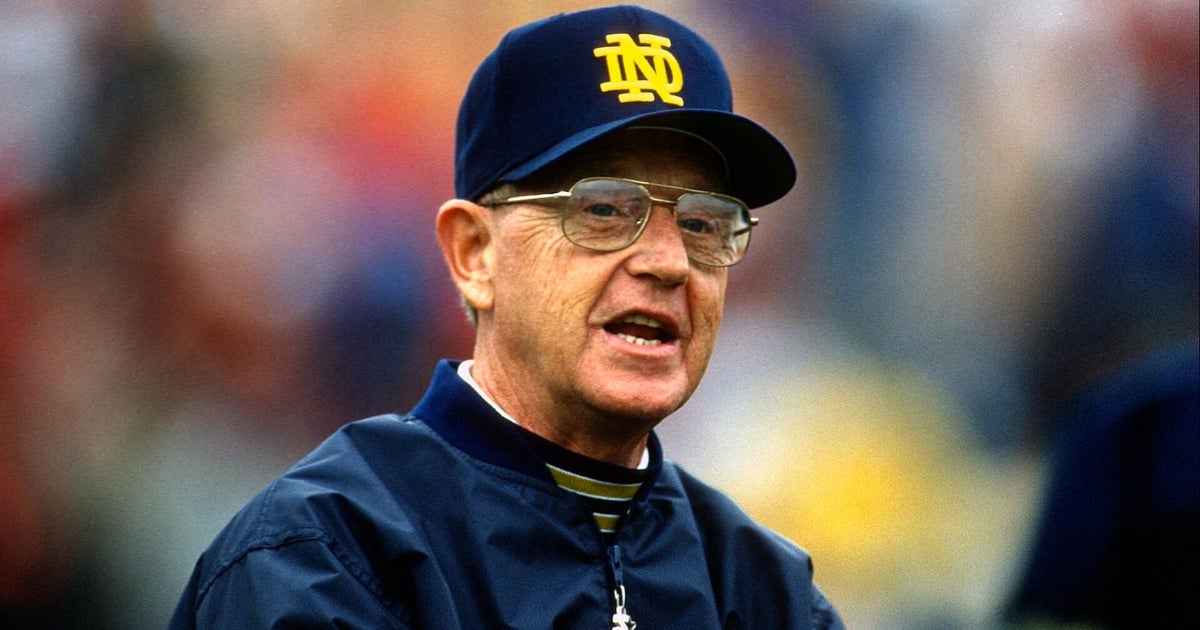
SOUTH BEND, Ind. — Lou Holtz, the fiery and charismatic football coach who guided Notre Dame to its last national championship in 1988 and became one of the most recognizable figures in college sports, died Wednesday at the age of 89. His death was confirmed by family members, who did not immediately disclose the cause or location, according to reports from CBS News. Holtz, known for his motivational speeches, quick wit, and unyielding competitive spirit, leaves behind a legacy that spans decades and multiple institutions.
Holtz's passing marks the end of an era for Notre Dame football, where he coached from 1986 to 1996, compiling a record of 100-30-2. His tenure included that triumphant 1988 season, when the Fighting Irish defeated West Virginia 34-21 in the Fiesta Bowl to claim the national title. "Lou Holtz was a legend in every sense of the word," said Notre Dame athletic director Jack Swarbrick in a statement released Thursday morning. "His impact on our program and the sport as a whole is immeasurable."
Born on January 22, 1937, in Follansbee, West Virginia, Holtz grew up in a working-class family and developed a passion for football early on. He began his coaching career at the high school level in Ohio before moving to the college ranks, where he made stops at institutions like William & Mary, North Carolina State, and Arkansas. His first head coaching job came in 1969 at William & Mary, where he posted a 21-13-1 record over three seasons.
One of Holtz's most notable achievements before Notre Dame was at the University of Minnesota, where he turned around a struggling program in the early 1970s. However, it was his time with the Fighting Irish that cemented his Hall of Fame status. Under Holtz, Notre Dame won 11 games in four straight seasons from 1988 to 1991, a feat that showcased his ability to recruit top talent and instill discipline. "He had this way of making you believe you could achieve anything," recalled former Notre Dame quarterback Tony Rice, who led the team to the 1988 championship. "Coach Holtz wasn't just a tactician; he was a leader who inspired generations."
Holtz's coaching philosophy was rooted in preparation and positivity, often summed up in his famous "do your best" mantra. He frequently drew from personal anecdotes, including his service in the Army and early coaching struggles, to motivate players. At Notre Dame, he navigated the pressures of a storied program with its Catholic traditions and high expectations, leading the team to five top-10 finishes in his decade there. Yet, his era also saw controversies, including NCAA investigations into recruiting practices, though no major sanctions were imposed.
After leaving Notre Dame in 1996 amid speculation of burnout and program fatigue, Holtz took a brief hiatus before returning to coach the University of South Carolina Gamecocks from 1999 to 2004. There, he achieved one of the program's greatest successes, guiding the team to a 10-2 record and a No. 13 national ranking in 2000, along with a victory in the Outback Bowl. "Lou brought energy and success to Columbia that we hadn't seen in years," said South Carolina athletics director Ray Tanner. "His passion was infectious, and we'll always be grateful."
Holtz's overall college coaching record stands at 249-122-7, making him one of the winningest coaches in NCAA history at the time of his retirement. He was inducted into the College Football Hall of Fame in 2005, recognizing his contributions to the game. Beyond the field, Holtz became a media personality, serving as a college football analyst for ESPN and CBS Sports, where his colorful commentary and stories from his career endeared him to fans. Mark Strassmann, a CBS News correspondent, reflected on Holtz's influence in a segment aired Thursday, saying, "Lou Holtz was more than a coach; he was a storyteller who captured the heart of college football."
In his later years, Holtz remained active in public life, authoring books like "The Fighting Spirit" and delivering speeches at corporate events and universities. He often revisited Notre Dame, attending games and mentoring young coaches. His health had reportedly declined in recent months, with family members noting his resilience in private conversations. According to CBS News, Holtz passed away peacefully surrounded by loved ones, though specifics remain private.
The news of Holtz's death prompted an outpouring of tributes from across the sports world. Former President Donald Trump, who once hosted Holtz at the White House, tweeted, "Lou Holtz was a great American and a tremendous coach. His Fighting Irish spirit will live on forever. RIP Coach." Meanwhile, NFL commissioner Roger Goodell issued a statement praising Holtz's role in shaping the sport: "Lou's innovative strategies and unwavering commitment elevated college football to new heights."
Notre Dame University announced plans for a public memorial service on campus next week, with details to follow. The Fighting Irish football team, currently preparing for the upcoming season under coach Marcus Freeman, dedicated their practices this week to Holtz's memory. Freeman, who played under Holtz's influence indirectly through the program's traditions, said, "Coach Holtz built the foundation we stand on today. We're honored to carry his legacy forward."
Holtz's personal life was marked by his 62-year marriage to his wife, Beth, who predeceased him in 2023. The couple raised four children, including daughter Luanne Holtz, who became a prominent figure in sports management. Holtz was also known for his philanthropy, supporting Catholic charities and youth sports programs in South Bend and beyond. Donations in his name are being directed to the Lou Holtz Center for Excellence at Notre Dame, established in 2010 to aid underprivileged student-athletes.
Reflections on Holtz's career inevitably touch on the evolution of college football during his time. He coached in an era before the proliferation of massive conference realignments and NIL deals, yet his emphasis on character and teamwork remains relevant. Critics sometimes pointed to his conservative coaching style in later years, but supporters argue his adaptability kept programs competitive. As one source close to the family noted, "Lou never stopped learning or teaching, right up to the end."
The broader implications of Holtz's death resonate in a time when college athletics faces unprecedented changes, from player compensation to playoff expansions. His 1988 championship team, featuring stars like Tim Brown and Rocket Ismail in subsequent years, symbolized an idealized era of amateurism and tradition. Notre Dame, now an independent in football, continues to honor that heritage, with Holtz's No. 11 jersey symbolically retired in spirit if not officially.
Looking ahead, Holtz's influence will endure through the coaches he mentored, including Pete Carroll and Urban Meyer, both of whom credit him with shaping their approaches. As the sports world mourns, conversations turn to how his lessons in resilience and leadership can guide the next generation. CBS News reported that a documentary on Holtz's life is in production, ensuring his story reaches new audiences.
In the end, Lou Holtz's life was a testament to the power of determination, much like the underdog teams he so often led to victory. From the steel towns of West Virginia to the golden dome of Notre Dame, his journey inspired millions. As the Fighting Irish faithful gather in remembrance, one thing is clear: the echoes of his voice—urging players to "do your best"—will reverberate for years to come.