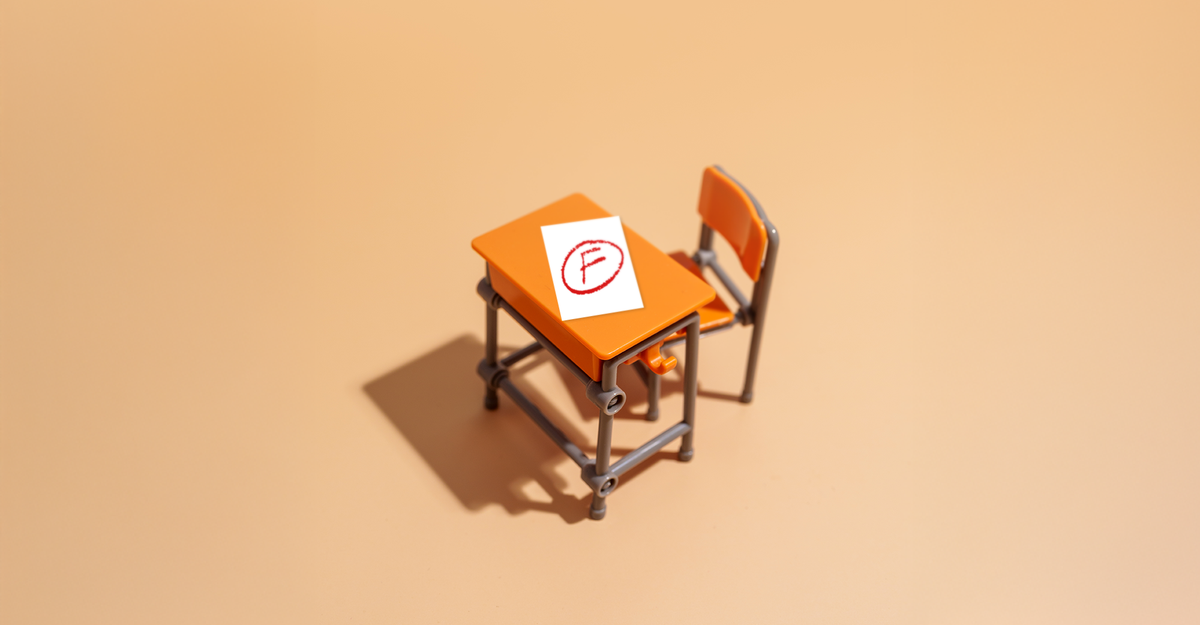
In an era where parental involvement in children's lives has reached new heights, a growing body of psychological insight suggests that shielding kids from failure might be doing more harm than good. Jessica Lahey, a school administrator and author, shared a telling anecdote from her early career in a recent article published in The Atlantic. A mother visited her office, distressed over her daughter's B in calculus, fearing it would tarnish the student's perfect transcript and jeopardize college admissions. "I'm worried about how this will look to colleges," the mother said. "Is there any extra credit she can do?"
Lahey, who has never changed a grade in her role as an administrator, gently explained that earning a B in a challenging subject could be beneficial, offering the student a chance to experience imperfection. The mother's response was one of disbelief: "She's never gotten a B before. I don't know how she'll handle it." This interaction, Lahey wrote, encapsulates a broader paradox in modern parenting, where efforts to protect children from any setback may inadvertently foster fragility rather than resilience.
The article, titled "Let Your Kids Fail" and published on February 1, 2026, on theatlantic.com, delves into how intensive parenting practices—such as grade appeals, curating extracurricular activities for optimal future outcomes, and even hiring consultants for sorority rushes—have intensified amid rising youth anxiety. Lahey argues that these strategies, while well-intentioned, condition children to fear loss, depriving them of essential experiences in recovery and perseverance, which are vital for long-term success and mental health.
To illustrate her point, Lahey draws an analogy from immunology, comparing the development of "failure immunity" to the body's acquired immunity against pathogens. She references the reversal of early 2000s pediatric advice that urged avoiding peanuts in infancy to prevent allergies. That guidance, she notes, coincided with a spike in severe peanut allergies. In 2017, the recommendation changed, encouraging early exposure, and subsequent research showed a meaningful decline in such allergies. Scientists theorize that early, controlled exposure allows the body to recognize allergens as harmless, much like vaccination builds antibodies.
"I've come to believe that failure works in a comparable way—that it is in a child's best interest to be exposed early to manageable setbacks, so they can develop what we might call 'failure immunity,' the psychological antibodies that allow them to face future disappointments without falling apart," Lahey writes. This concept requires practice: children must encounter obstacles and push through them to build perseverance. Without it, they miss out on learning that challenges are surmountable.
Supporting this view is Ann S. Masten, a developmental psychologist at the University of Minnesota, who describes resilience as "ordinary magic," arising from everyday developmental processes rather than innate superhuman traits. According to Masten, these processes depend on "adaptive systems," including the ability to cope with stress. Children consistently protected from routine challenges forgo opportunities to hone this skill, leaving them vulnerable when larger setbacks arise, such as college rejections or breakups.
The mental health ramifications are evident, Lahey reports. Many young people internalize perfectionist pressures, viewing even minor errors as catastrophic. She recounts a recent incident where a student broke down over a poor test score, tearfully declaring, "That's not me. I'm not someone who gets bad grades." This reaction stems from a lack of exposure to failure, Lahey explains, preventing children from realizing that disappointment is survivable, mistakes are educational, and setbacks are temporary.
Lahey's perspective is informed by her own experiences, including her time as a young instructor at Outward Bound, an experiential education program founded over 80 years ago. Inspired partly by the rescue services at Scotland's Gordonstoun boarding school—where students balanced academics with emergency response training like fighting fires and searching for lost hikers—Outward Bound emphasizes real challenges for growth. During her tenure leading backcountry expeditions in Minnesota's Boundary Waters Canoe Area Wilderness, Lahey observed participants learning through trial and error. For instance, failing to properly tuck a tent's groundsheet might result in a soaked sleeping bag during rain, teaching the importance of attention to detail the hard way.
"The program doesn't assign letter grades. But if you aren't paying attention when your instructor demonstrates how to set up a tent, you might leave your groundsheet exposed; when rain soaks your sleeping bag, you quickly learn the importance of tucking the groundsheet under the tent," Lahey describes. "You learn because you have to, typically by messing up first. In other words, the program is a crash course in failure immunity."
Practical advice for parents emerges from Lahey's analysis. The first step is resisting the impulse to intervene in every struggle. When a child grapples with homework, faces a tough teacher, or faces consequences for breaking rules, parental rescue efforts—such as providing answers or emailing administrators—convey doubt in the child's capabilities. Instead, support should allow for stress while offering guidance from the sidelines.
Lahey shares a personal example involving one of her daughters during high school. The teen often lost sleep over English papers, idolizing her teacher and discarding drafts in tears, convinced her ideas fell short. Lahey felt compelled to help rewrite or plead with the teacher but held back. Reflecting later, her daughter noted how that self-imposed rigor made college writing easier, describing the high school process as one where she "tortured" herself—painful yet formative.
Another strategy is normalizing failure through storytelling. Parents can share their own missteps, like job rejections or failed projects, to frame errors as part of a meaningful life. Lahey mentions telling her children about her unsuccessful job applications, school initiatives that flopped, and times she underperformed as a boss. This aligns with social learning theory, pioneered by psychologist Albert Bandura, which posits that children adopt coping mechanisms by observing parental responses to adversity. When parents model resilience—acknowledging setbacks while demonstrating problem-solving and emotional regulation—kids internalize these tools.
Lahey urges parents to reflect on their own fears of failure, which often fuel overprotectiveness. Concerns that a single bad grade could derail college prospects overlook evidence to the contrary. In her experience, students who earn straight A's in high school may falter in college, while those who stumbled early, diagnosed the issue, and persisted often thrive. Overcoming hurdles independently builds enduring confidence in recovery and growth, surpassing the value of flawless records or win streaks.
This discussion resonates amid broader trends in youth mental health. According to the article, perfectionism's vicious cycle in families exacerbates anxiety, with related pieces in The Atlantic exploring helicopter parenting's extension into college life. As teens navigate independence, the absence of failure immunity could amplify vulnerabilities in an already stressful world.
Looking ahead, Lahey's insights suggest a shift toward parenting that embraces controlled risks. By fostering failure immunity, parents may equip children not just for academic or professional success, but for a resilient adulthood. As research on allergies demonstrates early exposure's benefits, so too might psychological parallels encourage a reevaluation of how families approach setbacks. For now, experts like Masten and Bandura's foundational work underscore that resilience is learnable, provided the opportunities to practice are there.