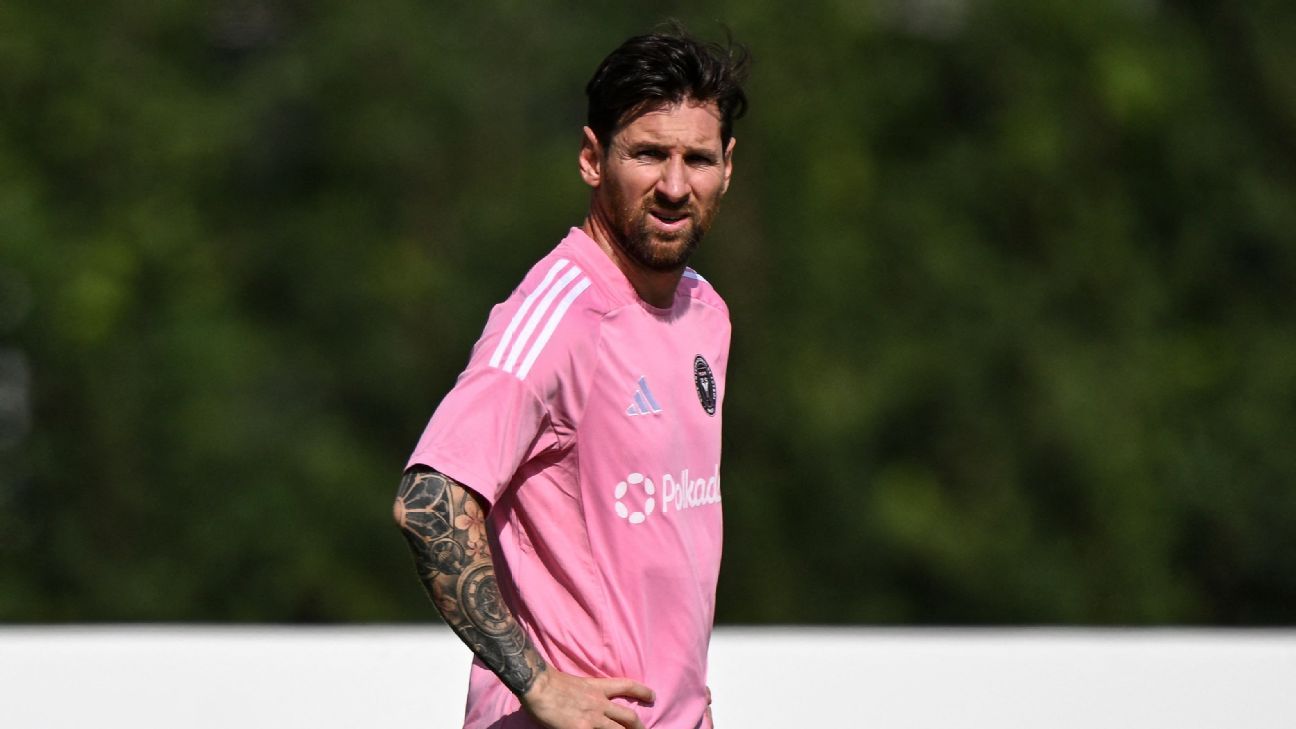
Miami, FL – Lionel Messi, the Argentine soccer icon and captain of Inter Miami CF, has shared his vision for life after his playing days, expressing a strong preference for club ownership over coaching. In a recent interview, Messi revealed that he envisions building and nurturing his own team from the ground up, focusing on youth development and opportunity creation in the sport.
Speaking to Luzu TV, an Argentine streaming channel, during an interview that aired on Tuesday, Messi stated,
'I don't see myself as a coach,' Messi said. 'I like the idea of being a manager, but I'd prefer to be an owner. I'd like to have my own club, start from the bottom, and make it grow. To be able to give the kids the opportunity to develop and achieve something important. If I had to choose, that's what would appeal to me most.'This candid reflection comes as Messi, widely regarded as one of the greatest players in soccer history, continues to dominate on the field at age 37.
Messi's comments highlight a shift in focus toward long-term legacy-building beyond the pitch. The eight-time Ballon d'Or winner has already dipped his toes into ownership waters through a collaborative project with his longtime teammate and fellow Uruguayan star Luis Suárez. The duo launched Deportivo LSM, a fourth-division club in Uruguay, with the initials representing their surnames. According to reports, the team currently employs 80 working professionals and boasts more than 3,000 members, underscoring its rapid growth since inception.
The project, which began as Suárez's initiative in 2018, gained a significant boost when he invited Messi to join. Suárez, who recently reunited with Messi at Inter Miami, described the venture as a personal passion.
'Deportivo LS is a family dream that began in 2018. We have grown a lot with more than 3,000 members,' Suárez said. 'I want to offer Uruguayan soccer, the place I love and where I grew up as a child, opportunities and tools for teenagers and children to grow.'Messi's involvement was announced with enthusiasm, as he expressed his commitment to the club's future.
'I'm proud and happy that you chose me, so I hope to contribute everything I can to continue growing and, above all, to be by your side in this,' Messi said in the announcement.This partnership not only symbolizes the deep bond between the two players, who have shared triumphs at Barcelona and now in Major League Soccer, but also reflects a broader trend among retired stars to invest in grassroots soccer development in their home regions.
Messi's interest in ownership aligns with his recent forays into youth initiatives. In December, he hosted the inaugural Messi Cup, an under-16 tournament held in Miami that brought together eight academy teams from around the world. The event aimed to foster talent and competition among young players, providing a platform for emerging stars. River Plate's youth squad emerged victorious, defeating Atlético Madrid in the final, according to organizers.
These off-field endeavors come at a time when Messi is locked into a professional commitment on the pitch. He signed a contract extension with Inter Miami in late 2023, securing his place with the club through the 2028 MLS season. This deal ensures the forward will remain a key figure for the defending MLS Cup champions for several more years, allowing him to balance playing with his growing involvement in ownership and development projects.
Inter Miami's upcoming schedule keeps Messi focused on current competitions. The team is set to kick off the 2025 campaign – note that reports indicate the season starts on February 21 against LAFC on the road, though official MLS announcements confirm the exact date as part of the league's expanded format. Messi's presence has already transformed Inter Miami, drawing record crowds and elevating the profile of soccer in the United States since his arrival in mid-2023.
To understand Messi's aspirations, it's worth considering his storied career. Born in Rosario, Argentina, in 1987, Messi rose through the ranks at FC Barcelona's famed La Masia academy, debuting for the senior team in 2004. Over nearly two decades with the Catalan club, he scored 672 goals in 778 appearances, winning 10 La Liga titles and four UEFA Champions Leagues. His move to Paris Saint-Germain in 2021 marked a brief European detour before joining Inter Miami, where he has added an MLS Leagues Cup triumph and the 2024 MLS Cup to his trophy cabinet.
Argentina's national team success has further cemented Messi's legacy. As captain, he led the Albiceleste to victory in the 2021 Copa América, the 2022 FIFA World Cup, and the 2024 Copa América, silencing critics who once questioned his international prowess. These achievements, including his World Cup heroics in Qatar where he scored seven goals and provided three assists, have made him a global ambassador for soccer.
Messi's preference for ownership over coaching is not unprecedented in the sport. Many legends, such as David Beckham – who co-owns Inter Miami – have transitioned into executive roles to shape the game's future. Beckham's involvement in bringing Messi to Miami was pivotal, and the Argentine has credited the Englishman for creating an environment conducive to his success. However, Messi's vision emphasizes starting small and building organically, contrasting with high-profile acquisitions in top leagues.
Experts in soccer management view Messi's plans as potentially transformative for youth development in South America. According to analysts at ESPN, initiatives like Deportivo LSM could address gaps in infrastructure and scouting in regions like Uruguay, where talent often migrates early to Europe. Suárez's background, having started at Nacional in Montevideo before moving to Groningen in the Netherlands at 19, adds authenticity to the project's focus on local opportunities.
The Messi Cup, meanwhile, extends this philosophy globally. By hosting the tournament in Miami, Messi leverages Inter Miami's facilities and his U.S. base to connect international academies. Participants included teams from Europe, South America, and beyond, with matches played at the Chase Stadium. River Plate's win, led by promising talents like 15-year-old midfielder Enzo Aguirre, highlighted the event's competitive edge.
Looking ahead, Messi's dual role as player and budding owner raises questions about his post-retirement timeline. With his Inter Miami contract running until 2028, he has at least three more seasons to add to his legacy on the field. Off the pitch, expansions for Deportivo LSM could include promotions through Uruguay's divisions, while the Messi Cup plans annual editions to scout and support young players.
In the broader context of soccer's evolution, Messi's ventures underscore a growing emphasis on sustainability and inclusivity. As the sport grapples with financial disparities between elite clubs and lower tiers, stars like Messi and Suárez are using their influence to bridge those gaps. For fans in Appleton and beyond, who have followed Messi's career through packed stadiums and televised spectacles, this chapter signals a thoughtful evolution from goal-scorer to architect of the next generation.
— Sarah Mitchell, The Appleton Times