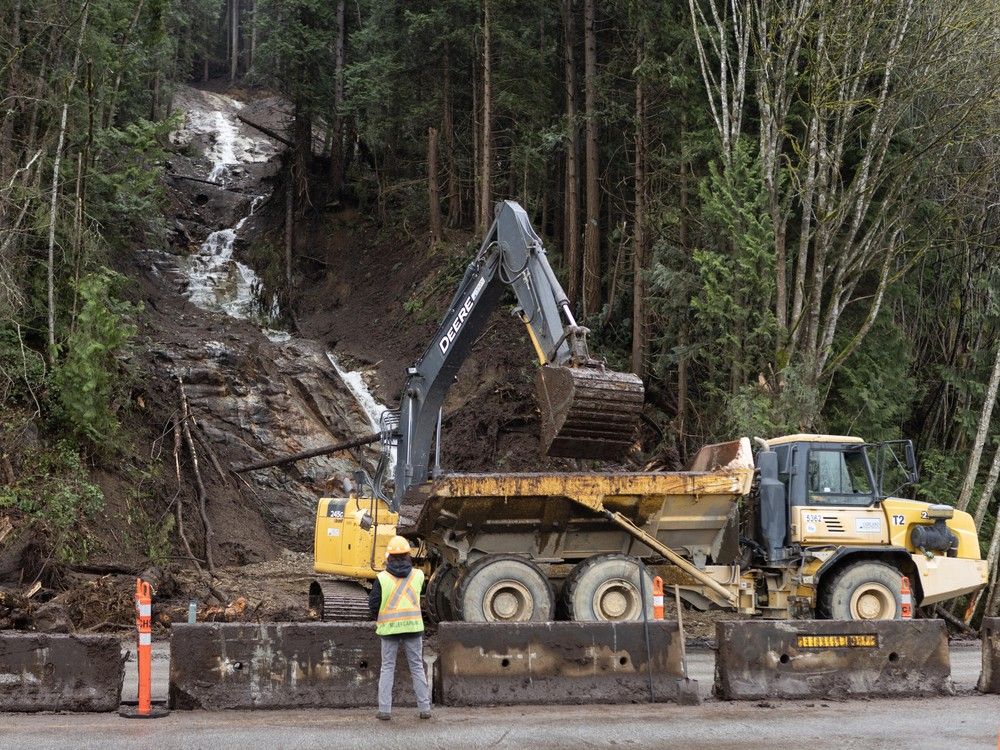
In a significant development for the community of Lions Bay, British Columbia, the Royal Canadian Mounted Police (RCMP) has announced that no criminal charges will be laid in connection with the devastating landslide that killed two residents in December 2024. The incident, which occurred on December 14, 2024, amid a series of heavy storms battering the region, saw a torrent of rocks, trees, and mud cascade down Battani Creek, completely destroying the home of Barbara and David Enns and claiming their lives.
The RCMP's investigation, which spanned several months, concluded that the evidence did not support any criminal wrongdoing. "Our investigation into this tragic incident has been completed," stated RCMP Sgt. Jeff Shore in a recent update. This decision comes as a separate civil lawsuit progresses through the courts, filed by the Enns' children in April 2025 against the Province of British Columbia, the Village of Lions Bay, and local landowner Steven Vestergaard. The suit accuses the defendants of negligence and wrongful death, specifically alleging that construction activities on Vestergaard's property above the Enns' home contributed to the slope's failure.
The landslide originated just below a reservoir on Vestergaard's property, according to details outlined in the lawsuit. Heavy rainfall from the storms unleashed what officials described as a deluge, triggering the natural disaster that reshaped the landscape and left the tight-knit coastal community reeling. Lions Bay, a small village nestled along the Sea to Sky Highway about 30 kilometers north of Vancouver, has long been known for its scenic beauty but is also prone to geological hazards due to its steep terrain and proximity to the ocean.
Family members of the Enns, who were in their home at the time of the slide, have expressed profound grief while seeking accountability through the legal system. The civil action claims that modifications to Vestergaard's land destabilized the slope, potentially exacerbating the risks during the extreme weather event. However, Vestergaard has vehemently denied any liability, pointing to extensive remediation efforts he undertook years earlier.
In response to the allegations, Vestergaard revealed that he invested approximately $400,000 in slope stabilization measures on his property. He provided documentation to media outlets, including Postmedia, showing that work mandated by the province to mitigate risks of slope failure was certified as "satisfactorily completed" by a professional geoscientist in 2015. "I followed all the guidelines," Vestergaard reportedly stated, emphasizing his compliance with regulatory requirements.
Provincial officials have also pushed back against the lawsuit's claims, arguing that the landslide was an unforeseeable "act of God." Engineers from the province reportedly informed Vestergaard that the event stemmed from natural causes, such as the unprecedented rainfall volumes that saturated the soil and overwhelmed the creek's banks. The storms in mid-December 2024 were part of a broader weather pattern affecting British Columbia's South Coast, with rainfall totals exceeding 200 millimeters in some areas over just a few days, according to Environment Canada records.
The Village of Lions Bay, another defendant in the suit, has similarly contested the negligence accusations. Local officials noted that the municipality had no jurisdiction over private land development on Vestergaard's property and that geotechnical assessments prior to the incident indicated the area was stable. The village's emergency response teams were mobilized swiftly after the slide, but the remote location and rugged terrain complicated initial rescue efforts.
Background on the Enns family paints a picture of a couple deeply embedded in the Lions Bay community. Barbara Enns, 68, was a retired teacher who volunteered with local environmental groups, while David Enns, 70, had worked as an engineer before settling in the village. Their home, built in the 1980s on a hillside lot overlooking the creek, was a symbol of their long life together. Neighbors described the couple as pillars of the community, often hosting barbecues and supporting youth sports programs.
The December 14 event unfolded rapidly around 2 p.m., as witnesses later recounted. Roaring waters from Battani Creek swelled dramatically, carrying debris that bulldozed through the Enns' property. Emergency calls flooded in from nearby residents, who reported hearing a thunderous rumble echoing through the forested slopes. By the time first responders arrived, the house was buried under layers of mud and rock, with no signs of life.
Investigators from the RCMP's West Shore detachment, in collaboration with geotechnical experts, combed the site for months, analyzing soil samples, rainfall data, and construction records. Their probe focused on whether any human actions—such as improper land clearing or building—could be deemed criminal. Sgt. Shore's statement underscores that while the loss was heartbreaking, the findings pointed to a confluence of natural forces rather than foul play.
Yet, the civil lawsuit introduces a layer of contention that could drag on for years. Filed in the British Columbia Supreme Court, it seeks unspecified damages for the family's emotional and financial losses. Lawyers for the Enns' children argue that warnings about slope instability were ignored, citing reports from as early as 2010 that flagged potential risks in the Battani Creek watershed. The defendants, through their legal teams, maintain that all due diligence was performed and that the extreme weather was the overriding factor.
This tragedy is not isolated in British Columbia's history of landslides. The province's coastal mountains, shaped by tectonic activity and heavy precipitation, have seen similar disasters, including the 2018 Big Bar landslide that blocked the Fraser River and the 2021 Lytton-area slides following wildfires. Climate experts have linked the increasing frequency of such events to warming temperatures that intensify storm systems, a trend that has prompted calls for updated building codes in vulnerable areas like Lions Bay.
Community leaders in Lions Bay have rallied around the Enns family, organizing fundraisers and memorial events. A vigil held in January 2025 drew hundreds, with residents sharing stories of the couple's kindness. Mayor Karla Kucera expressed condolences, saying the village is committed to supporting recovery efforts while reviewing its disaster preparedness plans.
As the civil case advances, it may shed more light on the interplay between development and environmental risks in British Columbia's wilder regions. For now, the RCMP's closure on criminal aspects offers some measure of finality, though questions of responsibility linger in the courts. The Enns' story serves as a stark reminder of nature's power and the ongoing challenges of living harmoniously with it.
Looking ahead, provincial officials have indicated plans to reassess geohazard mapping in the Sea to Sky corridor, potentially influencing future land-use policies. Meanwhile, Vestergaard continues to maintain his property under strict environmental guidelines, hopeful that the legal proceedings will vindicate his actions. The Lions Bay community, scarred but resilient, presses forward, honoring the memory of Barbara and David Enns amid the healing process.