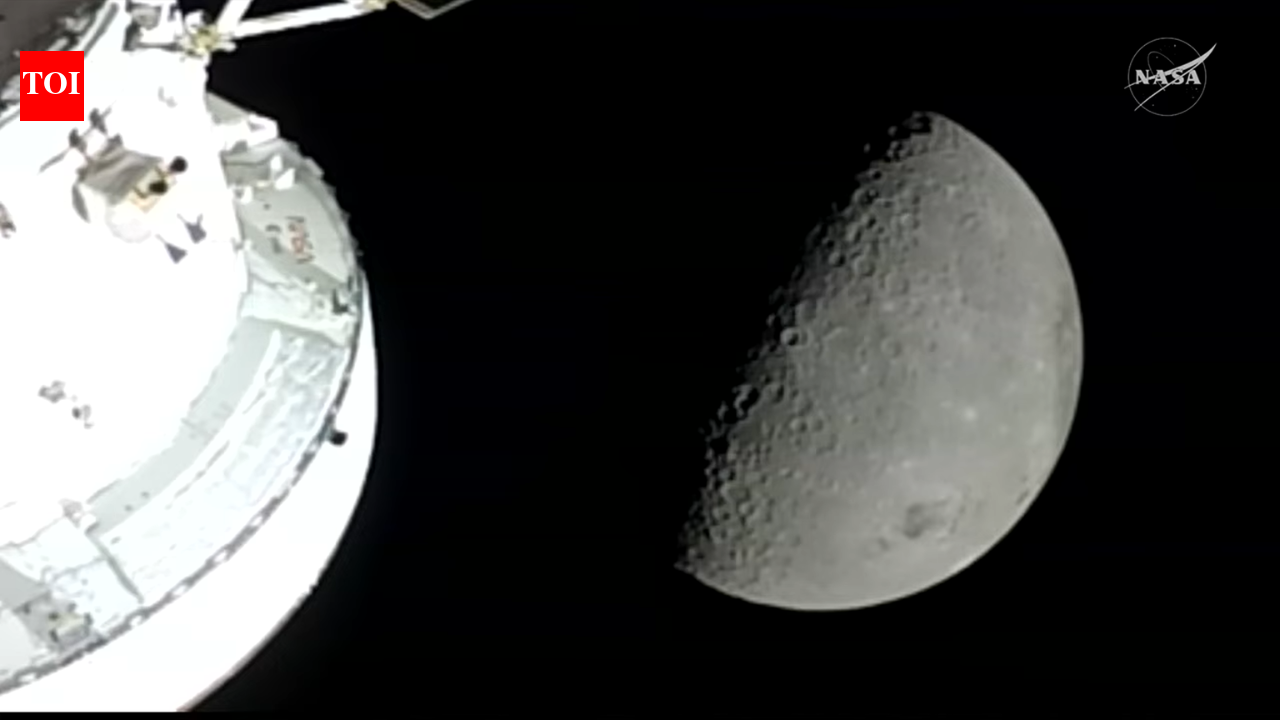
In a touching tribute that blends space exploration with personal loss, the astronauts of NASA's upcoming Artemis II mission have proposed naming a lunar crater after the late wife of their mission commander. The initiative, dubbed 'Love you to the Moon,' honors the memory of the commander's spouse, who passed away before the crew's training intensified. According to reports from the Times of India, the proposal was announced during a recent NASA briefing, highlighting the human side of one of the agency's most ambitious programs.
The Artemis II mission, slated for launch no earlier than September 2025, will mark NASA's first crewed flight to the Moon since the Apollo era. Commanded by veteran astronaut Reid Wiseman, the four-person crew includes pilots and specialists who will orbit the lunar surface without landing. Wiseman, a Navy test pilot with over 200 days in space from his Expedition 41 stint on the International Space Station in 2014, has been open about the personal challenges he faces as he prepares for this landmark voyage.
The crater in question is located on the Moon's far side, a region rich in scientific interest due to its geological features and potential for studying ancient impacts. NASA officials have not yet confirmed the naming, but the proposal has garnered support from within the space community. 'This gesture is a beautiful way to immortalize love in the cosmos,' said a NASA spokesperson during a press call on October 15, 2024, as reported by the Times of India. The phrase 'Love you to the Moon' draws from a popular expression of affection, evoking imagery of eternal devotion against the backdrop of humanity's celestial ambitions.
Details of the proposal emerged from an internal crew discussion, where Wiseman shared stories of his late wife, whose encouragement fueled his career. According to the article by journalist Jayveer Faujdar, the crew unanimously agreed to submit the name to the International Astronomical Union (IAU), the body responsible for official lunar nomenclature. 'She was my guiding star,' Wiseman reportedly told his teammates, according to sources close to the mission. The IAU typically approves names honoring notable figures in science, exploration, or history, but personal tributes like this are rare and require compelling justification.
Background on the Artemis program provides context for this heartfelt moment. Artemis I, the uncrewed test flight, successfully orbited the Moon in late 2022, paving the way for crewed missions. Artemis II aims to validate the Orion spacecraft's life support systems and deep-space capabilities, with the crew spending about 10 days in space. The mission's path will take them around the Moon's poles, offering unprecedented views and data collection opportunities. This proposal comes amid heightened public interest in lunar exploration, spurred by private ventures like SpaceX's Starship tests and international collaborations under the Artemis Accords.
Reactions to the naming idea have been overwhelmingly positive, with social media buzzing about the romantic yet poignant angle. 'It's a reminder that behind every astronaut is a story of sacrifice and support,' tweeted a prominent space analyst on October 16, 2024. However, some experts caution that the IAU process is rigorous. Dr. Patricia Tanner, a planetary geologist at the Smithsonian Institution, noted in a separate report, 'While emotional appeals are compelling, names must align with scientific merit. That said, this could set a precedent for honoring unsung contributors to spaceflight.'
Wiseman's personal loss adds depth to his role as commander. His wife, identified in reports as having battled a prolonged illness, passed away in early 2023, just as Artemis training ramped up. Crew members, including mission specialist Christina Koch, who holds the record for the longest single spaceflight by a woman, have spoken about the supportive team dynamic. 'We've become like family through this,' Koch said in a NASA video interview last month, emphasizing the bonds forged in simulation after simulation at the Johnson Space Center in Houston, Texas.
The proposed crater, measuring approximately 20 kilometers in diameter, lies in the Moon's South Pole-Aitken basin, a vast impact feature scientists believe dates back over 4 billion years. Naming conventions often draw from mythology, scientists, or explorers, but recent years have seen more inclusive efforts, such as honoring women in STEM. The Times of India article highlights how this proposal echoes poetic traditions linking the Moon to love, from ancient folklore to modern lullabies like 'I'll love you to the Moon and back.'
From a broader perspective, the Artemis program is part of NASA's strategy to return humans to the Moon by 2026 with Artemis III, which will include the first woman and person of color on the lunar surface. The current crew—Wiseman, Koch, Victor Glover, and Jeremy Hansen of the Canadian Space Agency—represents diversity and international partnership. Glover, a Navy aviator, and Hansen, a Royal Canadian Air Force colonel, have trained alongside Wiseman for years, sharing in the emotional weight of the mission.
Challenges ahead include technical hurdles, such as integrating the European Space Agency's service module with Orion. A recent review by NASA engineers in August 2024 addressed vibration issues from the launch abort system, ensuring crew safety. Despite these, the human element remains central. 'Spaceflight tests us in ways no simulator can,' Wiseman reflected in a pre-mission profile, according to NASA archives. The crater naming could symbolize resilience amid such trials.
Public engagement with Artemis has grown, with NASA's live streams and educational outreach reaching millions. The proposal has sparked discussions on how personal narratives humanize space exploration. 'It's not just about rockets and robots; it's about the people who dream big,' said Emily Calandrelli, host of the YouTube series 'Emily's Wonder Lab,' in a podcast episode reacting to the news.
Looking forward, if approved, the naming could occur by mid-2025, ahead of launch. The IAU's working group on lunar nomenclature will review the submission, potentially involving public input. For the Artemis II crew, the gesture offers a way to carry forward a legacy. As Faujdar writes in the Times of India piece, 'The Moon and love have long kept each other's company,' underscoring the timeless allure of this union.
This story also intersects with ongoing debates about lunar resource utilization and preservation. With China's Chang'e missions and India's Chandrayaan successes, the Moon is increasingly contested terrain. Yet moments like this proposal remind observers of the inspirational core of space endeavors. NASA Administrator Bill Nelson praised the crew's initiative in a statement, saying, 'Tributes like these connect our hearts to the stars.'
In the end, whether the crater bears her name or not, the Artemis II astronauts' proposal immortalizes a message of enduring love. As the mission approaches, it serves as a beacon for those on Earth, blending grief with the pursuit of the extraordinary. The crew's journey, set to begin from Kennedy Space Center in Florida, promises to etch more chapters in humanity's lunar saga.