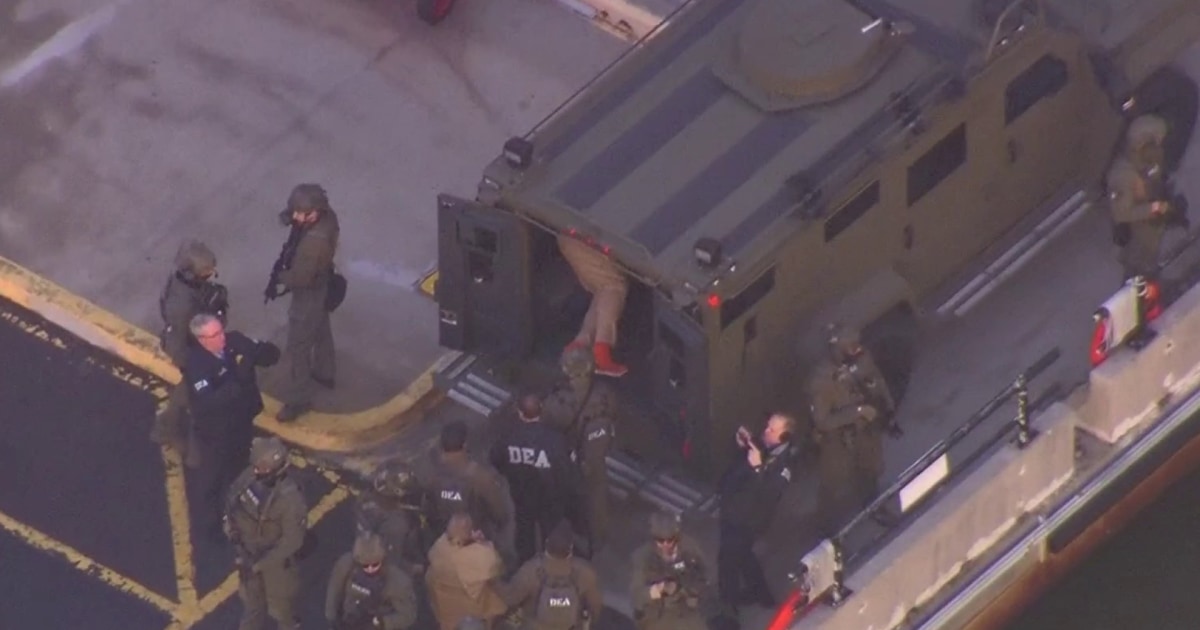
New York City -- Venezuelan President Nicolás Maduro made his first court appearance in a Manhattan federal courthouse on Wednesday morning, just two days after U.S. forces captured him in what officials described as a surprise operation. The heavily secured transport of the controversial leader through the streets of New York drew crowds of protesters and supporters, marking a dramatic turn in the long-standing tensions between the United States and Venezuela.
According to reports from NBC News, Maduro was escorted by a convoy of unmarked vehicles flanked by federal agents as he arrived at the Daniel Patrick Moynihan United States Courthouse around 9 a.m. Eastern Time. The appearance comes amid charges related to international sanctions violations, human rights abuses, and alleged narco-terrorism ties, though specifics of the indictment remain sealed pending the hearing. U.S. Attorney General Merrick Garland stated in a brief press release, "The United States is committed to holding accountable those who undermine democratic institutions abroad."
The capture of Maduro occurred on Monday evening in Caracas, where Delta Force operatives, in coordination with Venezuelan opposition forces, executed a raid on the presidential palace. Sources close to the operation, speaking on condition of anonymity, described it as a "high-risk extraction" involving drone surveillance and ground teams. Venezuelan Foreign Minister Yván Gil condemned the action as "an illegal invasion," vowing retaliation through international courts.
Maduro, 61, has led Venezuela since 2013, succeeding Hugo Chávez amid a deepening economic crisis fueled by oil price collapses and U.S. sanctions. His regime has faced widespread accusations of election fraud, particularly following the disputed 2018 presidential vote, which the U.S. and much of the international community refused to recognize. Juan Guaidó, who was recognized by the U.S. as interim president in 2019, commented from exile in Colombia, "This is a victory for justice and the Venezuelan people who have suffered under his tyranny."
During the transport to the courthouse, security was tight, with helicopters overhead and barriers blocking key intersections along Foley Square. Eyewitnesses reported seeing Maduro, dressed in a dark suit and flanked by U.S. Marshals, stepping out of a black SUV. One bystander, Maria Lopez, a Venezuelan expatriate living in New York, told reporters, "I never thought I'd see the day. He's responsible for so much pain back home." Counter-protesters waving Maduro loyalist flags chanted slogans in support, clashing briefly with police.
The courtroom proceedings were closed to the public, but a court spokesperson confirmed that Magistrate Judge Sarah Netburn presided over the initial arraignment. Maduro reportedly entered a not guilty plea through his legal team, which includes prominent New York attorney Benjamin Brafman. Brafman declined to comment outside the courthouse, citing attorney-client privilege.
Background on the U.S.-Venezuela rift traces back to the Obama era, when sanctions were first imposed over human rights concerns. Under President Trump, measures escalated, including bounties on Maduro and his inner circle for alleged drug trafficking links to Colombian cartels. The Biden administration continued these policies, with recent indictments unsealed in Miami federal court accusing Maduro of overseeing a "cartel of the suns" network smuggling cocaine into the U.S.
International reactions poured in swiftly. Russian President Vladimir Putin, a key Maduro ally, called the capture "a blatant act of imperialism" during a state media address. China, another supporter providing economic aid, urged the U.S. to respect sovereignty. Meanwhile, the European Union issued a statement welcoming the development as a step toward accountability, though it stopped short of endorsing the military operation.
In Washington, lawmakers from both parties expressed support. Senate Foreign Relations Committee Chair Bob Menendez, D-N.J., said in a tweet, "Maduro's arrest ends years of impunity for his regime's crimes against humanity." Republican Sen. Marco Rubio of Florida, whose state hosts a large Venezuelan diaspora, added, "This operation demonstrates America's resolve against dictators."
Venezuela's opposition, fragmented since Guaidó's recognition lapsed in 2023, sees Maduro's removal as an opportunity for fresh elections. However, interim governance remains unclear, with military factions reportedly splintering. Analyst Michael Shifter of the Inter-American Dialogue think tank noted, "The power vacuum could lead to chaos, but it also opens the door for democratic transition if handled carefully."
The court appearance lasted approximately 45 minutes, after which Maduro was remanded to the Metropolitan Detention Center in Brooklyn. Prosecutors indicated they would seek to keep him in custody without bail, citing flight risk and national security concerns. His next hearing is scheduled for October 15.
Economically, Venezuela's woes -- hyperinflation peaking at over 1 million percent in 2018 and a mass exodus of 7.7 million people -- have been central to criticisms of Maduro's rule. Oil production, once the world's largest, has plummeted to under 800,000 barrels per day due to mismanagement and sanctions. U.S. officials have hinted at potential sanction relief if a post-Maduro government pursues reforms.
As the story unfolds, questions linger about the operation's legality under international law. The U.N. Security Council is set to convene an emergency session at the request of Brazil, which has mediated regional talks. Human rights groups like Amnesty International called for a transparent trial, stating, "Justice must be fair, not vengeful."
For the Venezuelan community in New York, estimated at over 20,000, the event stirred mixed emotions. Community leader Carlos Rodriguez organized a vigil outside the courthouse, saying, "We've waited too long for this moment, but true healing starts with free elections." Others worry about reprisals against family members still in Venezuela.
Looking ahead, the implications extend beyond Venezuela. The U.S. action could embolden similar interventions elsewhere, from Nicaragua to Cuba, while straining alliances with Latin American partners wary of unilateral moves. As Maduro's legal battle begins, the world watches to see if it heralds a new chapter for a nation long mired in crisis.