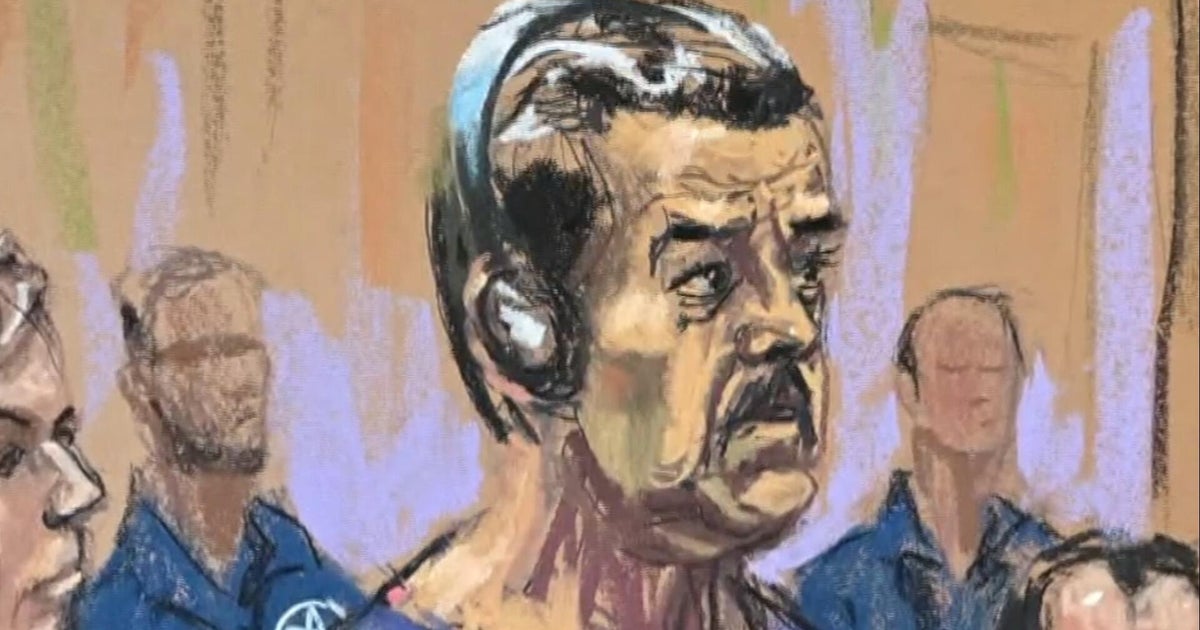
In a dramatic courtroom appearance in Manhattan, former Venezuelan leader Nicolás Maduro pleaded not guilty on Monday to federal charges stemming from a long-standing U.S. indictment. Speaking through a translator, Maduro declared, "I'm a decent man," as he faced accusations of narcoterrorism and other crimes tied to his alleged role in drug trafficking and corruption during his tenure as Venezuela's president.
The proceedings unfolded in the United States District Court for the Southern District of New York, where Maduro, 61, was arraigned before Judge Sarah Netburn. According to court documents, the charges against him include conspiracy to commit murder-for-hire, possession of firearms in furtherance of drug trafficking, and leading a continuing criminal enterprise. Prosecutors from the Southern District of New York have pursued Maduro since 2020, when the U.S. Department of Justice unsealed an indictment accusing him and several associates of flooding the United States with cocaine as part of the so-called Cartel of the Suns.
Maduro, who served as Venezuela's president from 2013 until his ouster in early 2024 amid widespread protests and international pressure, appeared composed in court, dressed in a dark suit and flanked by his legal team led by attorney David Oscar Markus. "This is a political persecution," Maduro's lawyer stated outside the courthouse, echoing claims from Venezuelan officials that the case is an attempt by the United States to undermine the country's sovereignty. Markus added that his client looks forward to presenting evidence of his innocence in a full trial.
The arrest of Maduro, which occurred last month in a joint operation involving U.S. and Colombian authorities near the Venezuelan border, marks a significant escalation in U.S. efforts to hold Latin American leaders accountable for transnational crime. According to a Justice Department spokesperson, Maduro was extradited to New York on Sunday evening after waiving his right to contest the transfer in a brief hearing in Bogotá. The operation involved over 200 agents and was described by U.S. Attorney Damian Williams as "a major blow to the networks that have destabilized our hemisphere for decades."
Inside the courtroom, the atmosphere was tense as family members of victims from Venezuela's ongoing humanitarian crisis watched from the gallery. One spectator, Maria Gonzalez, whose brother was killed during 2019 protests against Maduro's regime, told reporters, "Justice is finally coming for all the suffering he caused." Prosecutors presented a timeline of alleged crimes, noting that between 2014 and 2018, Maduro's inner circle reportedly facilitated the shipment of at least 20 tons of cocaine to the U.S. via maritime routes, generating millions in illicit revenue used to prop up his government.
The indictment, first announced in March 2020 by then-Attorney General William Barr, painted Maduro as the head of a criminal syndicate intertwined with the Revolutionary Armed Forces of Colombia (FARC). It detailed specific incidents, including a 2018 plot to assassinate a U.S. senator and the use of Venezuelan military aircraft to transport drugs. While Maduro has denied all allegations, calling them "fabrications by imperialists," sources close to the prosecution say evidence includes intercepted communications, witness testimonies from defected officials, and financial records traced to Miami-based shell companies.
Venezuela's interim government, led by opposition figure Juan Guaidó since Maduro's removal, welcomed the plea hearing as a step toward accountability. In a statement from Caracas, Foreign Minister Claudia Salerno expressed solidarity with U.S. efforts, saying, "Maduro's crimes not only harmed Venezuelans but also fueled violence across the Americas." However, Maduro's loyalists in Venezuela rallied outside the Venezuelan embassy in Washington, D.C., on Monday, chanting slogans against what they termed "Yankee interference." One protester, Carlos Rivera, a former Maduro aide, insisted, "This is all a show; the true criminals are in the White House."
The case has drawn international attention, with human rights organizations weighing in on both sides. Amnesty International urged a fair trial, noting that while Maduro's government was accused of widespread human rights abuses—including the deaths of over 7,000 protesters since 2014—due process must be upheld. Conversely, the Organization of American States (OAS) praised the U.S. action, with Secretary General Luis Almagro stating in a tweet, "No one is above the law, especially those who weaponize their power for personal gain."
Legal experts predict a lengthy battle ahead. "This is one of the most high-profile extraditions since the capture of Manuel Noriega in 1989," said Columbia Law School professor Kate Stith, who has followed the case. She noted that Maduro's defense may challenge the validity of evidence gathered through foreign intelligence, potentially delaying proceedings for months. The next court date is set for October 15, when prosecutors will outline their discovery process.
Beyond the courtroom, the implications of Maduro's trial ripple through U.S.-Latin America relations. The Biden administration has tied the prosecution to broader sanctions relief efforts, with State Department officials indicating that a conviction could pave the way for normalized ties with a post-Maduro Venezuela. Economists estimate that Maduro's alleged criminal enterprises contributed to Venezuela's economic collapse, where hyperinflation peaked at 1.7 million percent in 2018 and oil production fell from 3 million barrels per day in 1998 to under 500,000 by 2023.
Supporters of Maduro, including allies in Russia and Cuba, have condemned the U.S. move as extraterritorial overreach. Russian Foreign Ministry spokesperson Maria Zakharova remarked during a briefing in Moscow, "This is yet another example of American hegemony disguised as justice." Cuban President Miguel Díaz-Canel echoed similar sentiments, calling for Maduro's immediate release. Meanwhile, European Union diplomats have remained neutral, with a spokesperson from the European External Action Service stating that the bloc will monitor the trial for compliance with international standards.
As the case progresses, questions linger about the fate of Maduro's co-defendants, including his former foreign minister Jorge Rodríguez and military chief Vladimir Padrino López, who remain at large. U.S. officials have offered rewards totaling $25 million for information leading to their arrests. In New York, community leaders from Venezuelan diaspora groups plan vigils outside the courthouse, hoping the trial will bring closure to years of turmoil.
The plea hearing caps a turbulent chapter for Maduro, whose rule was marked by contested elections, mass exoduses—over 7.7 million Venezuelans have fled since 2015—and U.S. sanctions that froze billions in assets. Whether his courtroom declaration of decency sways a jury remains to be seen, but for now, the focus shifts to the mountain of evidence prosecutors must unpack. As one anonymous Justice Department source put it, "This isn't just about one man; it's about dismantling a system that preyed on its people and our streets."
Looking ahead, analysts suggest the outcome could influence regional stability. If convicted, Maduro faces a mandatory minimum of life in prison, potentially reshaping Venezuela's political landscape and encouraging other nations to cooperate on anti-corruption initiatives. For the Venezuelan people, still grappling with food shortages and blackouts, the trial symbolizes a long-overdue reckoning, even as divisions persist on both sides of the border.