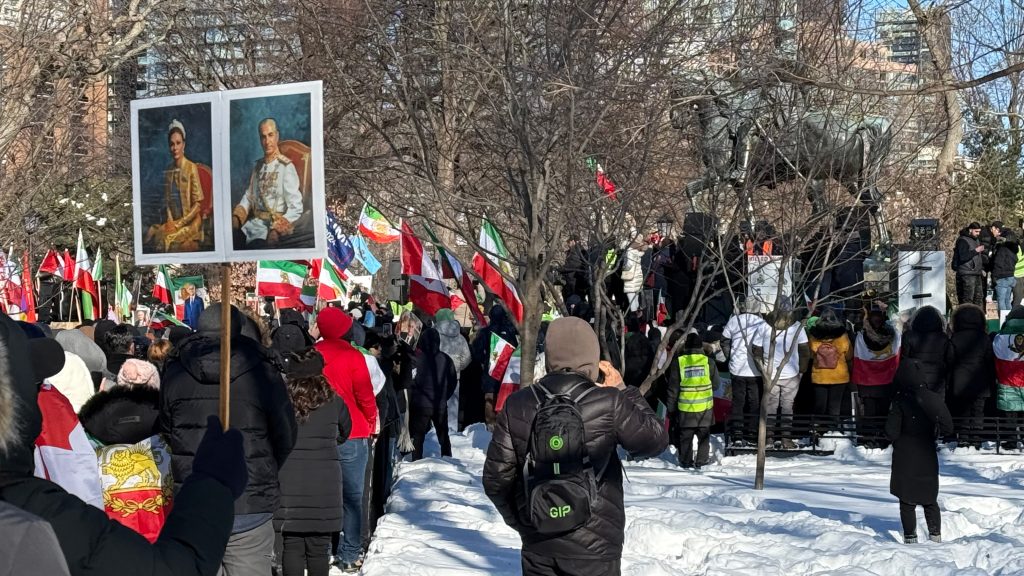
TORONTO — A massive rally in support of anti-government protests in Iran is set to disrupt traffic across North York this Saturday, with Toronto police anticipating crowds of up to 200,000 participants marching along Yonge Street.
The event, organized to show solidarity with demonstrators in Iran facing economic turmoil and demands for political reform, will feature a 3.8-kilometer march starting from Steeles Avenue and heading south to North York Boulevard. Full closure of Yonge Street is expected between 11 a.m. and 5 p.m., while road restrictions in the surrounding area will begin as early as 8 a.m., with major impacts lasting until 6 p.m. Toronto police emphasized the need for planning in a statement released Friday, saying, “If you’re in the neighbourhood, please plan ahead as significant traffic delays are expected.” The force also assured the public that “police will be present to help ensure everyone’s safety,” and a significant presence will be on hand to manage crowds and keep traffic flowing.
The Toronto Transit Commission (TTC) has warned of substantial disruptions to public transportation. The 97 Yonge bus route will be detoured around the affected area starting at 11 a.m., and officials are predicting “extreme traffic and transit delays” persisting until at least 6 p.m. Access to North York Centre Station will be limited due to the high volume of foot traffic, with the TTC stating, “Due to the high volume of foot traffic expected outside North York Centre Station, access to that station will be limited and monitored for safety and security reasons.” To maintain order, “staggered station closures will be implemented as needed to manage crowd levels and maintain safe conditions on subway platforms.” Commuters are advised to check TTC updates for real-time information.
This rally comes on the heels of a similar demonstration earlier this month in downtown Toronto, which reportedly drew hundreds of thousands of participants and proceeded peacefully. Organizers of the North York event have not released official estimates, but police projections of 200,000 attendees suggest it could rival or surpass the scale of the previous gathering. The march is expected to highlight ongoing unrest in Iran, where protests erupted nationwide on December 28 following an economic crisis that plunged the country's currency into free fall.
Initially sparked by soaring living costs, the Iranian demonstrations have evolved into broader calls for political change, according to reports from international observers. The U.S.-based Human Rights Activists News Agency (HRANA) has documented a death toll exceeding 7,000 from the protests, with many more feared dead. In contrast, Iran's government provided its sole official figure on January 21, reporting 3,117 deaths. These conflicting accounts underscore the challenges in verifying casualty numbers amid restricted access to information from the region.
Local Iranian-Canadian community leaders have played a key role in coordinating the Toronto-area events, viewing them as a platform to amplify voices suppressed in Iran. While specific organizers for Saturday's rally were not named in police announcements, past events have involved groups like the Iranian Freedom Committee and diaspora networks. Participants are expected to carry signs, chant slogans, and possibly hold speeches at the rally's endpoint near North York Boulevard, though details on the program remain forthcoming.
Police preparations include traffic diversions and parking restrictions along the route, with Yonge Street southbound lanes fully blocked from Steeles to just north of Finch Avenue during peak hours. Side streets like Bathurst Street and Bayview Avenue may see intermittent closures to prevent congestion spillover. The Toronto Police Service tweeted on Friday evening: “A large rally and march is expected in North York tomorrow, with significant traffic impacts. Road restrictions begin as early as 8 a.m., with major closures between 11 a.m. and 6 p.m. You’ll see a significant police presence to keep everyone safe and traffic moving. Plan ahead…” The post included an image outlining the affected zones.
For residents and businesses in North York, the closures could mean hours of detours. Delivery services and emergency vehicles will have escorted access, but non-essential travel is discouraged. One local shop owner along Yonge Street, speaking on condition of anonymity, expressed mixed feelings: “It's important to support the cause, but a full-day shutdown hurts small businesses like mine. We'll close early to avoid the chaos.” Similar sentiments have surfaced in community forums, where some residents worry about access to nearby hospitals like North York General.
The broader context of these solidarity rallies ties into a global wave of support for Iran's protesters. Since the demonstrations began last December, cities across Europe, North America, and Australia have hosted events drawing attention to human rights concerns. In Toronto, the Iranian community—estimated at over 100,000 strong in the Greater Toronto Area—has been particularly vocal, leveraging the city's multicultural fabric to build momentum. A previous rally on February 5 in downtown Toronto, for instance, saw marchers from Union Station to Queen's Park, with organizers claiming turnout in the hundreds of thousands, though police did not confirm exact figures.
Security measures for Saturday's event will be heightened, given the rally's pro-democracy theme and potential for counter-demonstrations, though none have been announced. Toronto police have a track record of managing large peaceful assemblies, as seen during recent climate marches and Pride events. However, with crowds potentially swelling to 200,000, logistics will be tested. Experts in crowd management suggest that the linear route along Yonge Street, a major arterial road, could help contain the flow but risks bottlenecks at intersections like Sheppard Avenue.
Economically, the protests in Iran stem from decades of sanctions, mismanagement, and inflation rates exceeding 40 percent, according to World Bank data. The rial's devaluation has made basic goods unaffordable for many, fueling initial outrage that morphed into anti-regime fervor. Iran's response has included internet blackouts and arrests of prominent activists, further galvanizing international sympathy. Canadian officials, including Foreign Affairs Minister Mélanie Joly, have condemned the violence, calling for restraint in a statement last month.
As the rally approaches, organizers are urging participants to arrive via public transit or carpooling to minimize additional traffic strain. Social media buzz has been building, with hashtags like #IranProtests and #FreeIran trending locally. One diaspora activist posted online: “This march is our voice for those who can't speak in Tehran. Join us to demand justice.” While the event is permitted and expected to remain peaceful, authorities are monitoring for any escalations.
Looking ahead, the North York rally could inspire further actions in the coming weeks, especially if Iran's situation deteriorates. With spring approaching, warmer weather might draw even larger crowds to outdoor demonstrations. For now, the focus remains on Saturday's logistics, as Toronto balances its commitment to free expression with the practicalities of urban life. Officials from both police and TTC continue to update their websites with maps and advisories, encouraging the public to stay informed.
In the end, this event underscores Toronto's role as a hub for global causes, where local streets become stages for international struggles. Whether it matches the projected scale or not, the rally promises to be a significant show of solidarity, reminding residents of the human cost behind the headlines from halfway around the world.