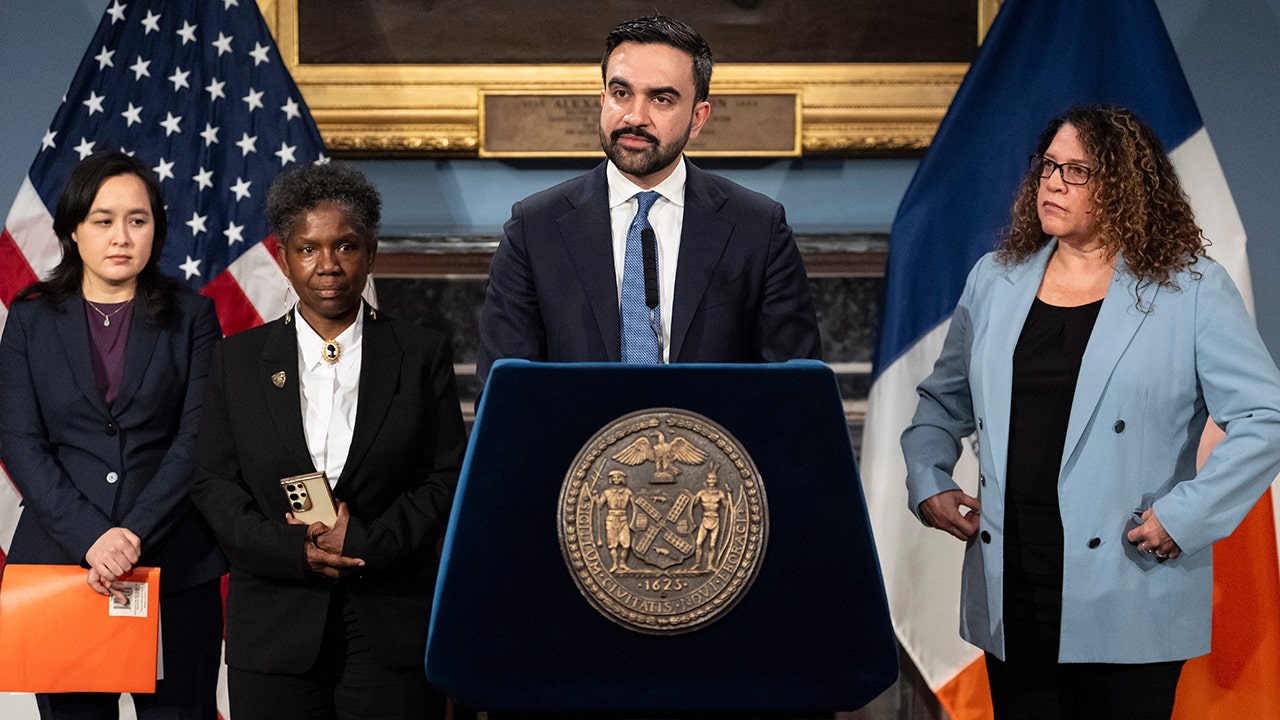
New York City Mayor-elect Zohran Mamdani's incoming administration faced fresh scrutiny this week after reports emerged that staffers in the Department of Health and Mental Hygiene held their inaugural meeting of a new working group focused on the effects of 'global oppression' on public health. The gathering, which took place on Tuesday at the department's headquarters, featured a presentation lasting more than an hour, where participants discussed the group's objectives and cited the ongoing conflict in Gaza as a prime example of such oppression.
According to audio obtained by the New York Post, the presenter explained the origins of the Global Oppression and Public Health Working Group, stating, "We really developed in response to the ongoing genocide in Palestine." The speaker went on to describe the group's aim as addressing "the growing interests among the health department staff to learn about current and ongoing global oppression in its many forms and how it influences the advancement of health equity."
The meeting's agenda, as reported by the New York Post, centered on examining how global oppression impacts "the health and well-being of priority communities in NYC vis-a-vis trauma, violence and discrimination." Organizers also expressed intentions to support colleagues who might be negatively affected by these issues. The session marked the first official convening of the group, signaling an early priority for the department under Mamdani's leadership.
This development comes just days after Mamdani announced Dr. Alister Martin as the new commissioner of the Department of Health and Mental Hygiene. Martin, a physician and founder of Vot-ER—a nonprofit organization that facilitates voter registration in healthcare settings—brings a background in integrating civic engagement with medical care. Prior to his appointment, Martin had been involved in efforts to boost voter turnout among underserved populations, though details on his stance regarding the working group's focus remain unclear.
The New York City Department of Health and City Hall did not immediately respond to requests for comment from multiple outlets, including Fox News Digital. As Mamdani prepares to take office, the lack of official clarification has fueled speculation about the direction of public health initiatives in the nation's largest city.
The formation of the working group arrives amid broader concerns about the composition of Mamdani's transition team and appointees. In December, the Anti-Defamation League (ADL) issued a report highlighting that more than 80 individuals—approximately 20% of Mamdani's appointees at the time—had ties to anti-Zionist organizations or movements. The ADL's analysis pointed to statements and affiliations that raised alarms about potential antisemitism within the administration.
One notable figure is Hassaan Chaudhary, a transition aide, who previously described Israel as "barbaric" and reportedly used the term "Jew" as a slur, according to the ADL. The organization also flagged several other appointees for comments that appeared to support or justify violence against Israel, including references to the October 7, 2023, attacks by Hamas that killed over 1,200 people and took more than 250 hostages.
ADL CEO Jonathan Greenblatt has been vocal about the risks, warning in a recent statement that Mamdani's choices pose a "clear and present danger" to New York City's Jewish community, which numbers around 1.1 million residents. Greenblatt emphasized the need for vigilance, noting that inflammatory rhetoric could exacerbate tensions in a city already grappling with rising hate crimes.
These revelations have drawn mixed reactions from media outlets. A recent Washington Post editorial characterized Mamdani's team as a blend of "normal bureaucrats" and "left-wing zealots," suggesting a tension between pragmatic governance and ideological activism. The piece argued that while diverse viewpoints are essential, extreme positions could hinder effective policy-making on issues like public health and community safety.
Separately, a New York Times report highlighted another challenge in Mamdani's cabinet: the absence of Black deputy mayors, which some critics described as a "problem" given the city's demographics. New York City's population is about 24% Black, and advocates have called for greater representation in leadership roles to address inequities in areas such as housing, education, and healthcare.
Mamdani, a democratic socialist who won the mayoral election in November 2025, has positioned himself as a champion for progressive causes, including affordable housing, climate justice, and racial equity. His campaign emphasized tackling systemic inequalities, which aligns with the health department's new working group's focus on oppression's health impacts. However, supporters argue that examining global issues like the Gaza conflict is crucial for understanding local trauma, particularly among immigrant and minority communities in neighborhoods such as Queens and Brooklyn.
Critics, including Jewish advocacy groups and some political opponents, contend that framing the Israel-Hamas war as a "genocide"—a term contested by Israel and its allies—could alienate key constituencies and politicize public health. The U.S. State Department has repeatedly affirmed Israel's right to self-defense while urging restraint in Gaza, where Palestinian health authorities report over 43,000 deaths since October 2023. Mamdani's office has not publicly addressed these specific allegations, but in his victory speech, he pledged to unite the city around shared values of justice and inclusion.
The timing of the working group's launch is notable, occurring just weeks before Mamdani's inauguration on Thursday, January 1, 2026, outside City Hall. During the ceremony, the mayor-elect is expected to outline his vision for the city, potentially touching on health equity amid ongoing debates. Security measures will be heightened given the polarized atmosphere, with interfaith leaders invited to promote dialogue.
Beyond the immediate controversy, the initiative reflects a growing trend in public health to incorporate social determinants, including international conflicts' ripple effects on diaspora communities. Similar programs exist in cities like San Francisco and Los Angeles, where departments study migration-related trauma. Experts, such as those from the World Health Organization, have long linked geopolitical events to mental health outcomes, citing increased rates of anxiety and PTSD among affected populations.
As Mamdani's team assembles, questions linger about how the working group will translate its discussions into policy. Will it influence budgeting for mental health services, or shape responses to discrimination complaints? Observers from across the political spectrum await further details, with some calling for transparency to ensure initiatives serve all New Yorkers without favoritism.
In the coming months, the administration's approach to these sensitive topics could define its early tenure. With a city budget exceeding $100 billion and challenges from post-pandemic recovery to housing shortages, balancing ideological goals with practical governance will be paramount. For now, the 'Global Oppression and Public Health Working Group' stands as a microcosm of the debates shaping New York under Mamdani's leadership.