New York City Mayor Zohran Mamdani has publicly voiced strong opposition to the U.S. military's capture of Venezuelan leader Nicolás Maduro, describing the operation as a violation of international law. The dramatic events unfolded on Saturday, January 3, 2026, when President Donald Trump announced that U.S. forces had conducted a large-scale strike in Venezuela, resulting in the apprehension of Maduro and his wife, Cilia Flores. The pair was reportedly flown out of the country and landed at Stewart Airport in Orange County, New York, setting the stage for their processing by federal authorities.
Trump shared the news via a post on Truth Social, stating, “The United States of America has successfully carried out a large scale strike against Venezuela and its leader, President Nicolas Maduro, who has been, along with his wife, captured and flown out of the Country. This operation was done in conjunction with U.S. Law Enforcement.” The announcement came amid longstanding U.S. accusations that Maduro has clung to power through fraudulent elections and is implicated in narco-terrorism activities. Federal authorities have placed a $50 million bounty on information leading to Maduro's arrest or conviction, highlighting charges related to drug trafficking and terrorism.
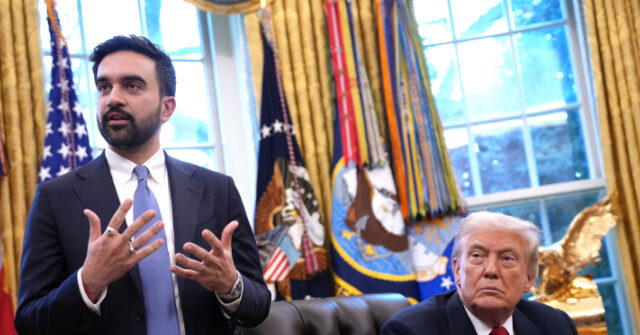
Mamdani, speaking to a crowd in New York City, detailed how he learned of the capture. “I was briefed by my first deputy mayor, my chief of staff, my chief counsel, the police commissioner, as well as other members of my team,” he said. Following the briefing, Mamdani said he directly contacted the White House. “I called the President and spoke with him directly to register my opposition to this act, and to make clear that it was an opposition based on being opposed to a pursuit of regime change, to the violation of federal international law, and a desire to see that be consistent each and every day.”
The mayor had previously condemned the action in sharper terms, calling it “unilaterally attacking a sovereign nation is an act of war and a violation of federal and international law.” His stance reflects a broader debate within U.S. political circles about the legality and implications of such military interventions. While the Trump administration has framed the operation as a necessary step against a corrupt regime, critics like Mamdani argue it undermines diplomatic norms and risks escalating tensions in Latin America.
According to sources familiar with the matter who spoke to ABC News, the aircraft carrying Maduro touched down at Stewart Airport on Saturday afternoon. From there, Maduro is expected to be transported by helicopter to New York City, accompanied by officials from the Drug Enforcement Administration (DEA). Upon arrival, he will proceed by motorcade to a processing location before being held in jail. These details underscore the rapid pace of the operation, which transitioned from a foreign military action to domestic legal proceedings within hours.
Maduro's tenure as Venezuela's president has been marked by profound economic turmoil, hyperinflation, and widespread humanitarian crises since he assumed power in 2013 following the death of Hugo Chávez. The U.S. government has repeatedly challenged the legitimacy of Maduro's elections, including the 2018 vote that secured his re-election, which international observers widely regarded as flawed. Sanctions imposed by the U.S. and other nations aimed to pressure Maduro's administration, but they have also exacerbated Venezuela's challenges, leading to mass migrations and shortages of basic goods.
The narco-terrorism charges against Maduro stem from indictments unsealed in 2020 by the Southern District of New York, accusing him and several associates of leading the Cártel de los Soles, a supposed network within Venezuela's military that facilitates cocaine smuggling to the United States. U.S. officials have alleged that this cartel has ties to Colombian rebel groups, blending drug trafficking with political violence. Maduro has consistently denied these claims, portraying them as part of a U.S.-led campaign to destabilize his socialist government.
Trump's announcement also touched on future plans for Venezuela. He indicated that the United States would administer the country “until such time” that a “safe, proper, and judicious transition” could occur. This suggests an interim role for U.S. involvement, potentially involving support for opposition figures or international oversight. However, details on the scope of this administration remain unclear, and it has already drawn scrutiny from allies and adversaries alike.
Mamdani's intervention adds a local dimension to the international story, given New York City's large Venezuelan diaspora and its role as a hub for U.S. legal actions against foreign leaders. The city has processed high-profile extraditions before, but the direct arrival of a sitting—or recently ousted—head of state is unprecedented. Community leaders in Queens and Brooklyn, home to many Venezuelan immigrants, have expressed mixed reactions, with some celebrating the potential end to Maduro's rule and others worrying about reprisals against family members still in Venezuela.
Federal law enforcement's involvement, particularly the DEA, points to the operation's dual military and judicial nature. The Justice Department has not yet released an official statement on charges or arraignment timelines, but sources indicate processing could begin as early as Sunday. Maduro's wife, Cilia Flores, a prominent figure in Venezuela's United Socialist Party and former National Assembly president, is also expected to face scrutiny, though specific allegations against her were not detailed in initial reports.
The capture occurs against a backdrop of renewed U.S. focus on Latin American security under Trump's second term. Earlier in 2025, the administration ramped up border enforcement and anti-drug initiatives, citing Venezuela as a key transit point for narcotics. Diplomatic efforts, including talks mediated by Brazil and Colombia, had stalled, leaving military options on the table despite warnings from the United Nations about potential human rights violations.
Internationally, reactions have been swift. The Venezuelan opposition, led by figures like María Corina Machado, welcomed the development as a breakthrough, while allies such as Russia and Cuba condemned it as an act of aggression. European Union officials called for a peaceful resolution, emphasizing the need for free elections in Venezuela. In Washington, congressional Democrats echoed Mamdani's concerns, with Senate Foreign Relations Committee members questioning the operation's authorization under the War Powers Resolution.
As Maduro awaits processing in New York, the implications for U.S.-Venezuela relations—and broader hemispheric stability—loom large. The $50 million bounty, long a symbol of U.S. determination, now appears to have been realized through direct action rather than tips. Whether this leads to a genuine democratic transition or further polarization remains to be seen, but the events of January 3 have undeniably shifted the geopolitical landscape.
Trump's Truth Social post also highlighted Maduro's reliance on “sham presidential elections,” a characterization supported by reports from the Organization of American States, which refused to recognize the 2018 results. This context frames the U.S. action as an enforcement of democratic principles, though Mamdani and others counter that such interventions set dangerous precedents. Legal experts are already debating the operation's compliance with treaties like the Vienna Convention on Diplomatic Relations.
Looking ahead, the processing of Maduro in New York could extend into weeks or months, involving pretrial hearings and potential extradition challenges if other nations claim jurisdiction. For New Yorkers, the presence of a controversial foreign leader in their midst raises security concerns, with the NYPD reportedly increasing patrols around federal facilities. Mamdani's outspoken role positions him as a vocal critic in what promises to be a contentious chapter in U.S. foreign policy.