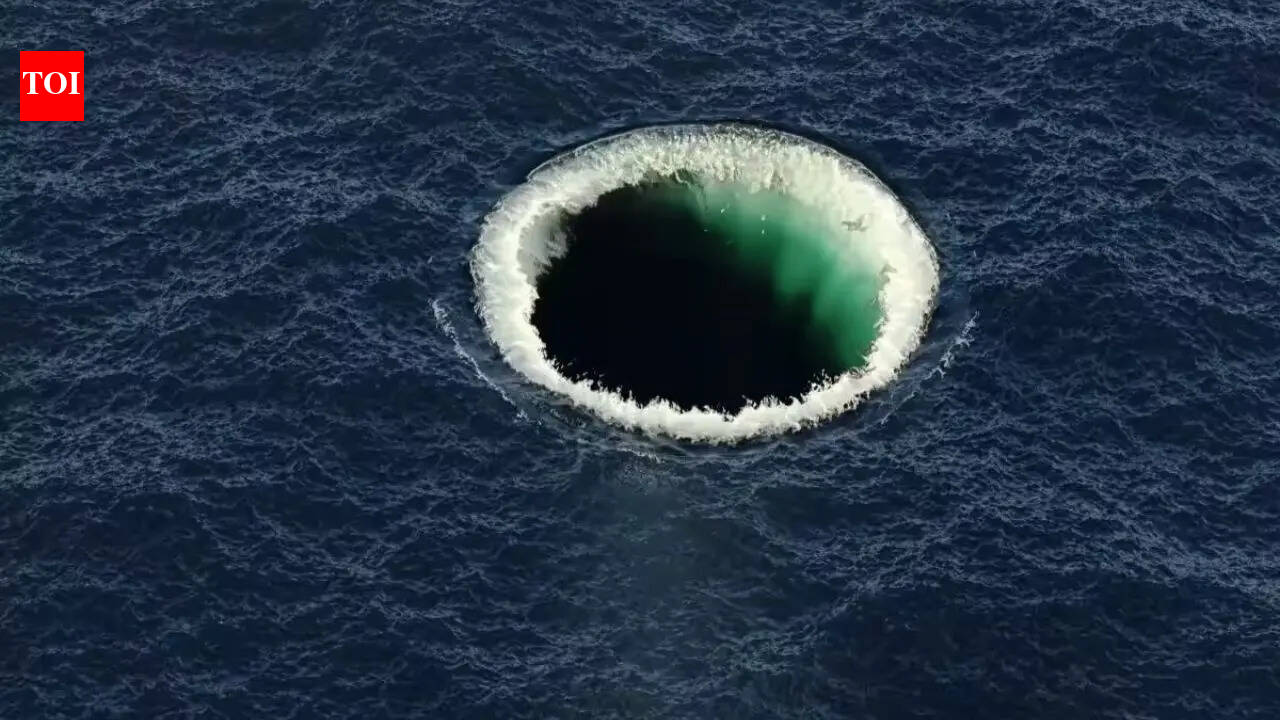
A vast region of unusually low gravity beneath the Indian Ocean has puzzled researchers for decades, but new research may finally offer an explanation for the anomaly first detected by satellite measurements. The feature, located south of India, has been known since the 1940s yet lacked a clear cause until recent modeling suggested connections to ancient mantle processes.
According to reporting from the Times of India, satellites mapping Earth’s shape repeatedly highlighted the same unsettling pattern in the area. The so-called gravity hole sits in a zone where the ocean surface dips noticeably lower than surrounding waters due to weaker gravitational pull from below.
Researchers have long sought to understand why this particular stretch of seafloor deviates from expected gravity readings. The Times of India Science Desk described the region as one that “quietly refused to make sense” in repeated observations over the years.
While the precise mechanism remains under discussion, the new study points to remnants of an ancient ocean floor that sank deep into the mantle millions of years ago. These dense materials are thought to influence the flow of hotter mantle rock, creating the observed low-gravity signature.
Officials and scientists involved in the project noted that the findings rely on advanced computer simulations rather than direct sampling of the deep Earth. “The models align with satellite data in ways earlier attempts did not,” one researcher was quoted as saying in the coverage.
Background on the discovery traces to early gravity surveys conducted after World War II, when naval and scientific vessels began taking precise measurements across the world’s oceans. The Indian Ocean anomaly stood out immediately because of its size and persistence in later satellite missions such as those from NASA and the European Space Agency.
Multiple research teams have examined the feature over the decades, with some attributing it to mantle plumes or crustal thinning. The latest proposal differs by emphasizing the role of subducted tectonic plates from the long-vanished Tethys Ocean.
Experts caution that confirmation would require additional seismic imaging or future satellite missions with higher resolution. “Further data collection is essential before the hypothesis can be considered settled,” according to statements reported by the Times of India.
The anomaly covers an area roughly the size of several U.S. states combined, though exact boundaries vary slightly depending on the measurement technique used. Its depth extends hundreds of kilometers into the mantle, far beyond the reach of current drilling technology.
Local implications for navigation or sea-level monitoring appear minimal, as the gravitational difference is measured in milligals and affects satellite orbits more than surface activities. Shipping routes through the region have operated normally for generations without adjustment.
Broader scientific interest centers on what the feature reveals about Earth’s internal dynamics and the history of plate tectonics. Similar gravity lows exist elsewhere, but none match the Indian Ocean example in scale or longevity.
Funding for the modeling work came from Indian research institutions and international collaborators focused on geophysics. Publication details were not immediately available, though the Times of India indicated the study is slated for peer review in a major journal.
Future missions, including proposed gravity-mapping satellites, could test the new explanation within the next five to ten years. Until then, the gravity hole remains one of Earth’s more intriguing unsolved features, now with at least one plausible account attached.