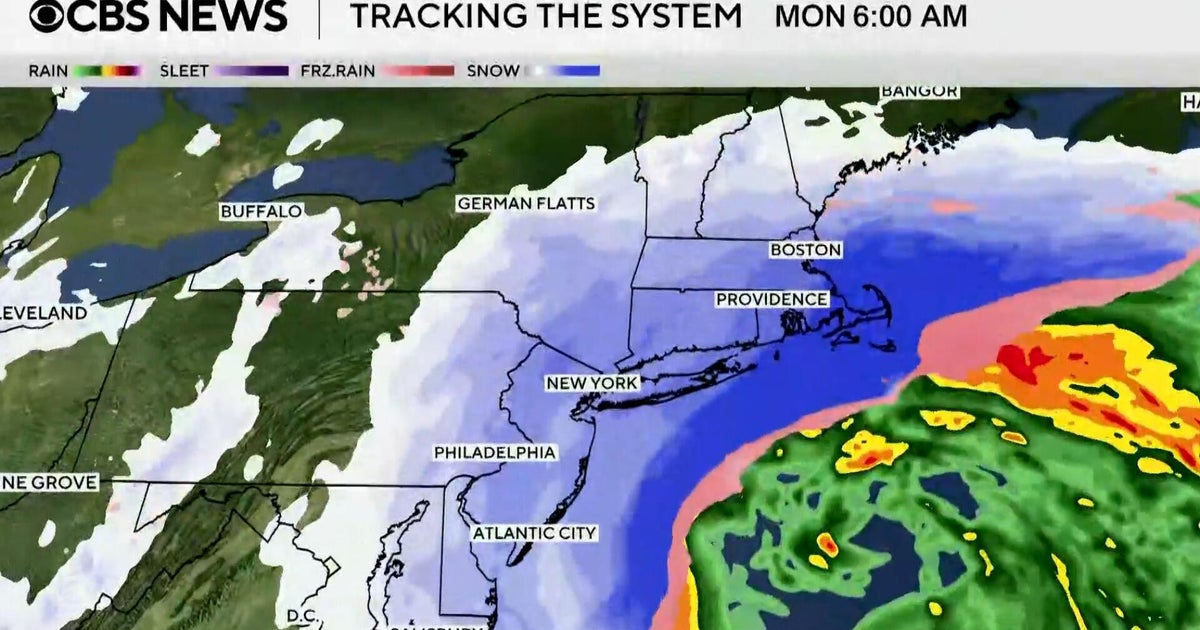
NEW YORK — A powerful winter storm swept across the East Coast on Wednesday, unleashing heavy snowfall, fierce winds and the threat of coastal flooding in multiple states from Virginia to Maine. According to CBS News, the storm, described as massive in scale, began impacting the region early in the day, prompting widespread travel disruptions, school closures and emergency declarations in several areas.
The National Weather Service issued blizzard warnings for parts of the Northeast, forecasting up to 12 inches of snow in urban centers like Boston and New York City, with gusts exceeding 50 miles per hour along the coast. Officials in Massachusetts reported that the storm's rapid intensification caught some residents off guard, leading to power outages affecting more than 100,000 households by midday. "This is one of the most intense early-season storms we've seen in years," said Shanelle Kaul, a meteorologist with CBS News, in a broadcast update.
In Philadelphia, where snow accumulation reached 8 inches by evening, city officials urged residents to stay indoors as plows struggled to keep major arteries clear. Pennsylvania Governor Josh Shapiro activated the state's emergency operations center, deploying National Guard units to assist with snow removal in rural counties. "We're preparing for the worst while hoping for the best," Shapiro said during a press briefing. "Flooding remains a significant concern along the Delaware River due to the combination of snowmelt and high tides."
The storm's effects extended southward to Washington, D.C., where federal offices closed and flights at Reagan National Airport were grounded for hours. Reports from the Federal Aviation Administration indicated over 1,200 delays and cancellations across the region by 3 p.m. Eastern Time. Eyewitnesses in the capital described chaotic scenes at grocery stores, with long lines forming for essentials like bread and milk as panic buying set in.
Further north, in Connecticut and Rhode Island, coastal flooding emerged as a primary hazard, with waves crashing over seawalls and inundating low-lying neighborhoods. The Rhode Island Emergency Management Agency reported minor inundation in Narragansett by late afternoon, evacuating about 50 homes. "The wind is pushing water right into our streets," said local resident Maria Gonzalez, whose family home near the shore was surrounded by seawater. "We've lived here 20 years, but this feels different—more violent."
CBS News correspondent Andres Gutierrez, reporting from Boston, highlighted the storm's broader meteorological context. "This system developed quickly off the Atlantic, drawing moisture from a warm Gulf Stream," he explained. "It's a classic nor'easter, but amplified by climate patterns that are making these events more frequent and severe." Gutierrez noted that similar storms in recent years, such as the 2022 nor'easter that dumped 20 inches on the region, have strained infrastructure and heightened vulnerabilities in aging urban grids.
Environmental experts weighed in on the storm's implications amid ongoing discussions about climate change. Dr. Elena Ramirez, a climatologist at Columbia University, told CBS News that while individual weather events cannot be directly attributed to global warming, the trend toward wetter, windier winters aligns with rising sea levels and warmer ocean temperatures. "We're seeing more energy in these systems," Ramirez said. "Coastal communities need to invest in resilient infrastructure now, before the next big one hits."
In New York State, Governor Kathy Hochul declared a state of emergency for the New York City metro area, mobilizing 2,000 additional plow trucks and salt spreaders. The move came after forecasts predicted whiteout conditions on the Thruway, potentially stranding motorists. "Safety is our top priority," Hochul stated in an address to residents. "Do not travel unless absolutely necessary." By evening, the New York City Department of Transportation reported treating over 5,000 lane miles, though secondary roads in Queens and Brooklyn remained treacherous.
The economic toll began to mount as businesses shuttered and shipping delays rippled through ports like Baltimore and Newark. The Port Authority of New York and New Jersey halted operations temporarily, affecting cargo bound for the Midwest. Analysts estimated potential losses in the tens of millions for the retail sector alone, especially with the holiday shopping season approaching. "This couldn't come at a worse time," said Tom Reilly, owner of a logistics firm in New Jersey. "Delays like these cascade through the supply chain for weeks."
Health officials issued warnings about the risks of carbon monoxide poisoning from improper generator use, a common issue in past storms. The Centers for Disease Control and Prevention recommended ventilating spaces and avoiding indoor fuel burning, citing over 400 annual deaths nationwide from such incidents. In Vermont, where snow totals topped 15 inches in mountainous areas, search-and-rescue teams were placed on standby for stranded hikers and drivers.
As the storm progressed into Thursday, forecasters anticipated a shift eastward, sparing the immediate Southeast but lingering over New England. The Storm Prediction Center outlined a moderate risk of additional flooding in river basins swollen by prior rains. "Lingering effects could last through the weekend," Kaul reported. "Residents should monitor updates closely."
Community responses varied, with some neighborhoods organizing mutual aid networks to check on elderly residents. In Baltimore, a city still recovering from summer floods, volunteers distributed hot meals at community centers. "We've been through this before, but it brings us together," said organizer Jamal Washington. Such grassroots efforts underscored the human element amid the chaos, as families hunkered down with board games and candles.
Looking ahead, transportation authorities planned phased reopenings of rail lines, including Amtrak's Northeast Corridor, which saw all service suspended. The U.S. Department of Transportation allocated federal aid for recovery, focusing on bridges and roadways battered by wind and ice. "Rebuilding smarter is key," said Secretary Pete Buttigieg in a statement. "These storms are a wake-up call for national resilience."
The storm's arrival coincided with a broader pattern of extreme weather this season, following a mild fall that lulled some into complacency. Historical data from the National Oceanic and Atmospheric Administration shows the East Coast averaging three major winter storms annually, but recent decades have seen an uptick in intensity. As cleanup begins, questions linger about long-term preparedness in a region densely packed with 60 million people.
In the end, while the storm spared no mercy on its path, it also highlighted the interconnectedness of East Coast communities—from the bustling streets of Manhattan to the quiet shores of Cape Cod. As skies cleared in some areas, the focus turned to recovery, with officials urging vigilance against secondary hazards like hypothermia and roof collapses under snow weight. The event, though disruptive, served as a stark reminder of nature's power in an era of unpredictable winters.