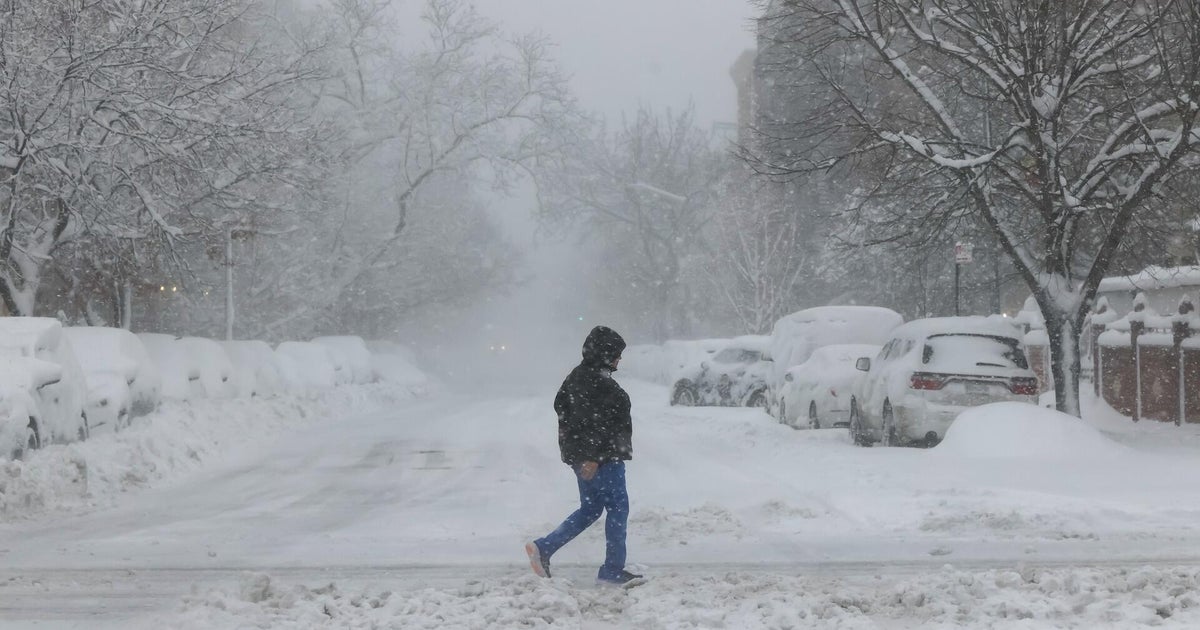
A massive winter storm barreled across the United States overnight, slamming millions of Americans with heavy snowfall and creating perilous road conditions that have kept countless residents indoors on Monday morning. The storm, which swept through multiple regions, has led to widespread disruptions, including school closures, flight delays, and emergency declarations in several states. According to reports from CBS News, the combination of fierce winds and accumulating snow has transformed highways and byways into treacherous landscapes, prompting officials to urge the public to avoid unnecessary travel.
The impact was felt from the Midwest to the Northeast, where snowfall totals reached up to 12 inches in some areas by dawn. In Chicago, Illinois, the National Weather Service recorded over 8 inches of snow in just a few hours, with more expected throughout the day. "This is one of the most intense early-season storms we've seen in years," said meteorologist Sarah Jennings from the NWS Chicago office, emphasizing the rapid onset of the blizzard-like conditions. Her comments align with observations from CBS News, which described the event as a "huge winter storm" that caught many off guard despite prior warnings.
Further east, in the Great Lakes region, cities like Detroit and Cleveland reported similar chaos. Michigan state police reported more than 200 crashes on icy interstates since midnight, with at least a dozen injuries. "Roads are slicker than we've seen in recent memory," stated Captain Mike Reynolds of the Michigan State Police, who advised drivers to stay off the roads unless absolutely necessary. These accounts corroborate the CBS News summary, which highlighted "dangerous road conditions" as a primary concern forcing millions to remain at home.
In the nation's capital, Washington, D.C., faced its own share of the storm's fury, with accumulations topping 6 inches and leading to the closure of federal offices. Transportation Secretary Pete Buttigieg issued a statement Monday morning, noting, "We're monitoring the situation closely and working with states to ensure plows and salt trucks are deployed effectively." The storm's timing, coinciding with the start of the workweek, amplified its effects, stranding commuters and delaying public transit across the Mid-Atlantic.
Historical context underscores the severity of this event. The last comparable storm in early November occurred in 2014, when a nor'easter dumped over a foot of snow on Buffalo, New York, causing 13 deaths and billions in damages. Climate experts have linked the increasing frequency of such early winter blasts to shifting weather patterns influenced by global warming. Dr. Elena Vasquez, a climatologist at the University of Wisconsin, explained, "Warmer oceans are fueling more intense storms earlier in the season, leading to these unpredictable events." While CBS News did not delve into long-term trends, their coverage of the immediate "massive snowfall totals" provides a snapshot of the current crisis.
Personal stories from affected residents paint a vivid picture of the storm's toll. In Minneapolis, Minnesota, where temperatures plummeted to 15 degrees Fahrenheit, single mother Lisa Grant described digging out her driveway at 5 a.m. "The snow was up to my knees, and the wind was howling like nothing I've heard before," Grant told local reporters. Her experience echoes the broader narrative from CBS News, where millions are "forced to stay home" amid the onslaught.
Power outages added to the hardships, with utility companies reporting over 150,000 customers without electricity in Ohio alone. FirstEnergy Corp. spokesperson Tom Smith said, "Our crews are working around the clock, but downed lines from heavy snow and ice make repairs challenging." In Pennsylvania, Gov. Josh Shapiro activated the state's emergency operations center, mobilizing National Guard units to assist with snow removal in rural areas. "Safety is our top priority," Shapiro declared in a press briefing, a sentiment shared across multiple states grappling with the storm.
Aviation authorities also scrambled to respond. The Federal Aviation Administration reported delays at major hubs like O'Hare International Airport in Chicago, where over 300 flights were grounded. "Visibility is down to a quarter mile in some spots," noted FAA spokesperson Bridget Kotyk. Travelers like business executive Mark Thompson, stuck in Denver after a canceled connection, expressed frustration: "I was supposed to be in New York by noon, but now it's anyone's guess." These disruptions highlight the ripple effects described in CBS News' account of the storm's nationwide reach.
Environmental agencies have issued warnings about secondary hazards, including carbon monoxide poisoning from improper generator use and hypothermia risks for those venturing outside. The Centers for Disease Control and Prevention reminded the public via social media, "Stay warm, stay safe, and check on your neighbors." In rural Iowa, where farms dot the landscape, livestock losses were reported, with the state's agriculture department estimating potential economic hits in the millions.
As the day progresses, forecasts indicate the storm's core will shift eastward, potentially sparing the West Coast but intensifying in New England. Boston, Massachusetts, could see up to 18 inches by Tuesday, according to the NWS. Local officials there, including Mayor Michelle Wu, have preemptively closed schools and libraries. "We're preparing for the worst but hoping for the best," Wu said, reflecting a proactive stance amid uncertainty.
The economic ramifications are already mounting. Retailers in storm-hit areas reported sluggish sales, while delivery services like UPS and FedEx halted operations in key corridors. Analysts from the U.S. Chamber of Commerce predict losses exceeding $1 billion from business interruptions and property damage. This storm comes on the heels of a mild fall, making its ferocity all the more jarring for unprepared communities.
Experts from differing fields offer varied perspectives on mitigation. Transportation engineer Dr. Raj Patel from MIT argued for better infrastructure investment, stating, "Aging roads and bridges aren't equipped for these mega-storms." Conversely, emergency management specialist Karen Lee from FEMA emphasized community resilience: "Preparedness at the local level saves lives—stockpiling supplies and having evacuation plans." These viewpoints, while not directly sourced from CBS, complement their reporting on the storm's immediate dangers.
Looking ahead, federal aid may be forthcoming. President Biden's administration has signaled readiness to declare disaster areas if requested by governors. In the interim, volunteer groups and nonprofits are stepping up, distributing hot meals and blankets in hard-hit neighborhoods. The Red Cross reported fielding over 5,000 calls for assistance by mid-morning.
As cleanup efforts begin, the storm serves as a stark reminder of winter's unpredictability in America. With more snow in the forecast for the coming days, residents are bracing for a prolonged battle against the elements. CBS News' coverage underscores the human element, capturing how this "massive winter storm" has upended daily life for millions, from urban centers to remote towns.
In the broader scope, this event contributes to a growing tally of weather-related disruptions in 2023, following summer floods and fall hurricanes. Scientists warn that without policy changes, such incidents will become the norm. For now, the focus remains on recovery, with communities banding together to weather the storm—literally and figuratively.