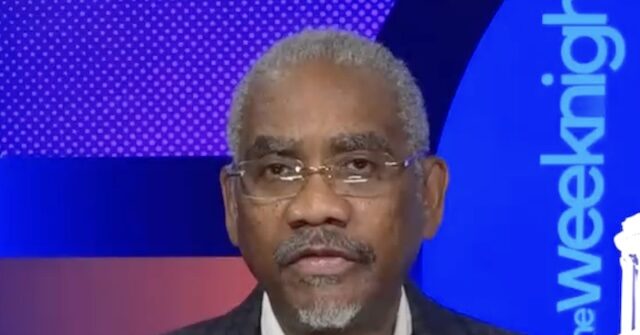
In a pointed exchange on CNN's "News Central" on Monday, Rep. Gregory Meeks, a Democrat from New York, expressed strong opposition to the presence of Immigration and Customs Enforcement (ICE) agents at U.S. airports, even if their involvement helps shorten lengthy passenger wait times. Meeks, a senior member of the House Foreign Affairs Committee, argued that ICE's role extends beyond airport security and raises serious concerns about civil liberties and potential abuses of power.
The discussion arose amid ongoing debates over airport operations, where ICE agents have reportedly been deployed to assist Transportation Security Administration (TSA) screeners overwhelmed by staffing shortages and increased travel volumes. According to reports from various outlets, these agents have been helping with tasks like identity verification and processing, which has led to reductions in wait times at major hubs like John F. Kennedy International Airport in New York and Los Angeles International Airport in California. However, critics like Meeks contend that this blurring of lines between immigration enforcement and routine travel screening undermines public trust.
Co-host Kate Bolduan directly questioned Meeks on the matter, asking, "If ICE agents at airports are helping alleviate some of these hours-long wait times, are you okay with them sticking around?" Meeks responded unequivocally, "No. What are they doing there? That’s not their job. They are not trained to do what the TSA workers do, and that’s part of the crux of it."
Meeks went further, highlighting fears of overreach by ICE personnel. He questioned, "Are they going to walk around with masks and names and still have warrantless arrests or going into [people’s] homes?" His comments reflect broader Democratic concerns about the Trump-era expansion of ICE's authority, which some lawmakers argue has led to aggressive enforcement tactics without sufficient oversight.
The congressman's remarks come at a time when airport congestion has been a persistent issue. Data from the TSA indicates that wait times at security checkpoints averaged over 30 minutes during peak holiday periods in late 2023, prompting temporary measures like federal employee redeployments. ICE's involvement, which began as a pilot program in select airports last year, was intended to leverage the agency's expertise in border security to ease bottlenecks. Officials from the Department of Homeland Security have defended the initiative, stating in a March 2024 press release that it has "successfully reduced average wait times by 15-20% at participating locations without compromising safety."
Yet, Meeks painted a starkly different picture, emphasizing the agency's controversial track record. "That’s what the American people do not want," he said. "They’ve seen them arrest American citizens, kill two American citizens, and also those who are here, who are immigrants, who have not committed any crimes or anything of that nature." Meeks was referring to high-profile incidents, including the 2018 death of a Guatemalan migrant in ICE custody and mistaken arrests of U.S. citizens, such as the case of Francisco Erwin Galicia, a Texas teenager detained in 2019 despite being born in the United States.
These events have fueled ongoing congressional scrutiny of ICE operations. In a February 2024 hearing before the House Judiciary Committee, witnesses testified about the agency's use of warrantless detentions, with one expert from the American Civil Liberties Union (ACLU) reporting that over 1,000 U.S. citizens were erroneously detained between 2012 and 2022. Meeks, who has long advocated for immigration reform, called for intervention at the highest levels, stating, "So, that’s what part of the problem is. And this should be fixed, again, by the president and by the super-MAGA Republicans who refuse to do anything in regards to that."
Republican lawmakers have offered a contrasting perspective. Rep. Mark Green, chairman of the House Homeland Security Committee, praised ICE's airport assistance in a statement last week, saying, "In an era of record migrant encounters at our borders, every federal resource must be utilized to secure our nation and facilitate safe travel." Green's comments underscore a partisan divide, where conservatives view ICE's expanded role as essential for national security, while Democrats like Meeks see it as an escalation of enforcement that disproportionately affects vulnerable communities.
The backdrop to this debate includes the broader immigration landscape. U.S. Customs and Border Protection reported over 2.4 million encounters at the southern border in fiscal year 2023, straining resources across agencies. This surge has led to cross-agency collaborations, but not without controversy. For instance, a 2023 Government Accountability Office report criticized the lack of clear protocols for ICE agents in non-traditional settings like airports, recommending better training to prevent mission creep.
Airport operators have weighed in cautiously. The Airports Council International-North America, representing major U.S. hubs, issued a statement in January 2024 welcoming any federal help to address staffing gaps but urged that "immigration enforcement activities remain separate from passenger screening to maintain traveler confidence." At New York's JFK Airport, where Meeks represents surrounding districts, local officials reported that ICE's presence has sparked protests from immigrant advocacy groups, with demonstrations drawing hundreds in March.
Meeks' appearance on CNN highlights the political stakes as the 2024 election cycle intensifies. With immigration remaining a top voter concern—polls from Pew Research Center show 68% of Americans favoring stronger border security measures—statements like his could influence Democratic messaging. Meanwhile, the White House has signaled plans to propose comprehensive immigration legislation, though prospects for bipartisan support remain dim given Republican demands for stricter enforcement.
Experts monitoring the situation suggest that without legislative action, ad hoc solutions like ICE at airports may persist. Dr. Elena Ramirez, a policy analyst at the Migration Policy Institute, noted in a recent interview, "These temporary fixes address symptoms but not the root causes of underfunding and outdated systems in our immigration infrastructure." Ramirez's observation aligns with calls from both parties for increased funding, though disagreements persist on how to allocate it.
As the debate unfolds, travelers continue to navigate the practical impacts. At Chicago's O'Hare International Airport, where ICE assistance was trialed in February, wait times dropped from an average of 45 minutes to 25 minutes, according to TSA logs. However, passenger surveys conducted by the airport authority revealed mixed reactions, with 40% expressing unease about ICE's visibility.
Looking ahead, Meeks and his colleagues on the Foreign Affairs Committee plan to introduce a resolution next month urging the separation of ICE duties from TSA operations. Whether this gains traction depends on the evolving political climate. For now, the congressman's firm stance serves as a reminder of the tensions at the intersection of security, immigration, and civil rights in America's airports.
In the end, the controversy underscores a larger challenge: balancing efficient travel with protections against overreach. As Rep. Meeks put it during the CNN broadcast, the solution lies in targeted reforms rather than expanding an agency's footprint into unfamiliar territory. With summer travel season approaching, all eyes will be on how federal agencies adapt—and whether Meeks' warnings prompt real change.