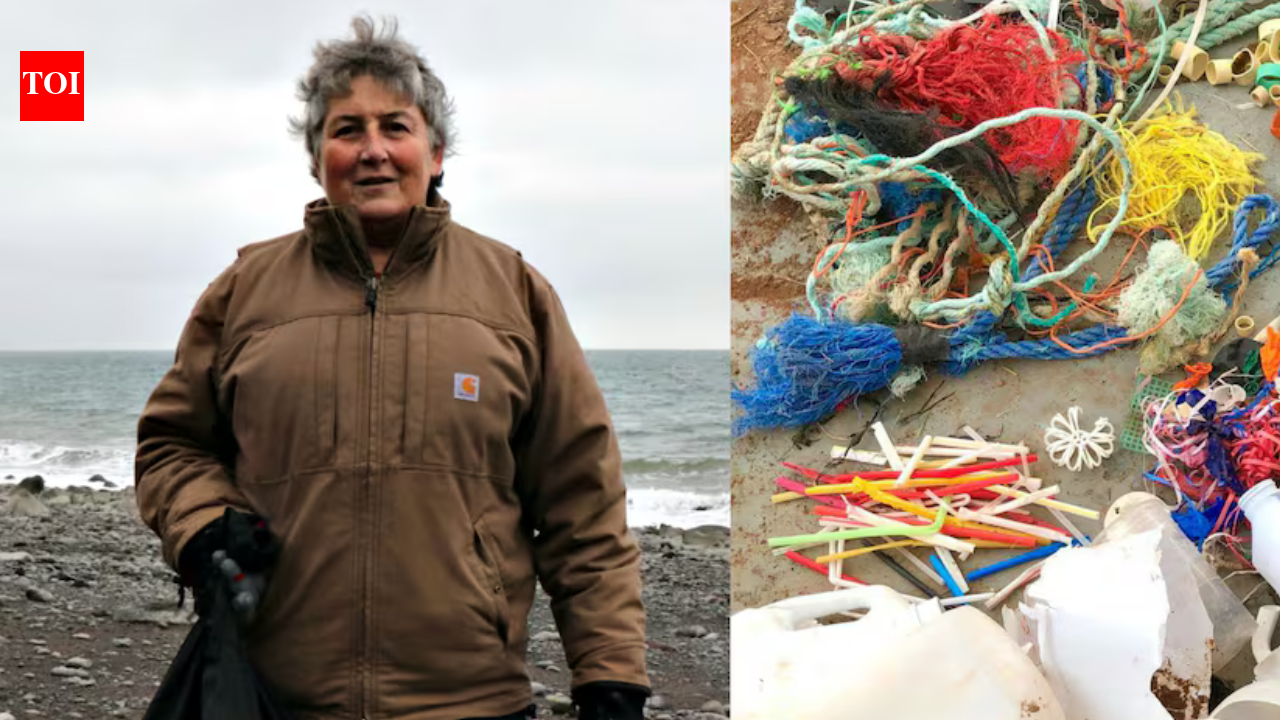
Along the rugged shores of Canada's wild coastline, one woman's relentless efforts have made a significant dent in the battle against ocean pollution. Karen Jenner, a dedicated environmentalist, has removed over 31,000 pounds of waste from the waters and beaches of the Bay of Fundy region, according to a recent report from the Times of India Science Desk. Her work, spanning more than a decade, highlights the growing crisis of marine debris in some of the world's most pristine environments.
Jenner, a resident of Nova Scotia, began her cleanup initiatives in 2010 after witnessing the devastating impact of plastic waste on local wildlife during a routine hike along the coastline. 'I couldn't stand by and watch seabirds and marine mammals choking on our trash,' Jenner said in an interview with the Times of India. Her efforts started small, with weekend cleanups involving friends and family, but quickly expanded into organized events that drew volunteers from across the province.
The Bay of Fundy, known for its extreme tides and diverse ecosystem, has long been a hotspot for ocean waste accumulation. Currents from the Atlantic carry debris from as far away as the United States and Europe, depositing it on the rocky shores. According to environmental experts cited in the report, Jenner's removals represent a substantial portion of the estimated 50,000 pounds of waste collected annually in the area by various groups. 'Karen's dedication has inspired a new generation of conservationists,' said Dr. Emily Hargrove, a marine biologist with the Canadian Ocean Conservation Society.
Over the years, Jenner has documented her finds meticulously, cataloging items ranging from fishing nets and buoys to everyday plastics like bottles and bags. In 2022 alone, she reported pulling 5,000 pounds of debris from a single beach stretch near Digby, Nova Scotia. These efforts are part of a broader push against the global plastic pollution problem, which the United Nations estimates contributes to the deaths of over one million seabirds and 100,000 marine mammals each year.
Jenner's approach emphasizes community involvement and education. She has partnered with local schools to host cleanup workshops, teaching children about the lifecycle of plastics and the importance of reducing single-use items. 'It's not just about picking up trash; it's about changing behaviors,' Jenner explained. Her initiatives have received support from provincial grants, totaling around $50,000 over the past five years, which have funded equipment like boats and sorting stations.
Despite her successes, challenges abound. Harsh weather conditions along the coastline often make cleanups dangerous, with high winds and treacherous tides posing risks to volunteers. Additionally, the sheer volume of waste continues to overwhelm individual efforts. Officials from Fisheries and Oceans Canada have noted that while Jenner's work is commendable, systemic changes like international bans on certain plastics are needed for long-term impact. 'Local heroes like Karen are vital, but we need policy at the highest levels,' said spokesperson Mark Thompson in a statement to the press.
The Times of India report highlights how Jenner's story resonates beyond Canada. Similar cleanup warriors exist worldwide, from beach patrols in Indonesia to river sweeps in India. In a global context, the ocean waste problem is exacerbated by the fact that only about 9% of plastic ever produced has been recycled, according to a 2017 study by the University of Georgia. Jenner's 31,000 pounds—equivalent to the weight of about 15 adult elephants—serves as a stark reminder of the scale involved.
Volunteers who have joined Jenner's cleanups praise her leadership. 'She's out there rain or shine, and her passion is contagious,' said local fisherman Tom Reilly, who has participated in over 20 events. Reilly recounted a particularly memorable day in 2019 when the group discovered a derelict lobster trap entangled with ropes that had likely trapped seals for months. Such discoveries underscore the hidden dangers of abandoned fishing gear, which accounts for roughly 46% of large plastic debris in the ocean, per a report from the Ocean Cleanup Foundation.
Background on the Bay of Fundy adds depth to Jenner's achievements. Designated a UNESCO Biosphere Reserve in 2009, the area supports over 5,000 species, including endangered right whales. Pollution threatens this biodiversity, with microplastics now found in the tissues of local fish populations. Jenner's data has been shared with researchers at Dalhousie University, contributing to studies on debris pathways and informing policy recommendations for the Atlantic Canada Marine Strategy.
As her total nears 32,000 pounds, Jenner shows no signs of slowing down. She plans to launch a mobile app next year to track cleanups and connect volunteers in real-time. 'Technology can amplify our reach,' she told reporters. Funding for this project comes from a crowdfunding campaign that has already raised $10,000, demonstrating widespread public support.
Broader implications of Jenner's work extend to climate change discussions. Ocean waste contributes to carbon emissions through decomposition and transport, while cleanups promote sustainable practices that mitigate environmental degradation. Experts like Hargrove argue that stories like Jenner's can influence consumer habits, potentially reducing the 8 million metric tons of plastic entering oceans annually, as estimated by the Ellen MacArthur Foundation.
Critics, however, point out limitations in volunteer-driven efforts. Some environmental groups, such as Greenpeace Canada, have called for more government intervention, noting that corporate polluters bear primary responsibility. 'While individuals like Jenner are heroes, we can't rely on goodwill alone,' said activist Lena Torres in a recent op-ed. This perspective contrasts with Jenner's optimism, highlighting a divide between grassroots action and institutional reform.
Looking ahead, Jenner's next major event is scheduled for July 2024, coinciding with International Coastal Cleanup Day. She aims to surpass 35,000 pounds by year's end, enlisting 200 volunteers for a multi-site operation along the Fundy shores. Officials expect this to yield valuable data on seasonal waste patterns, aiding future prevention strategies.
In a world grappling with environmental crises, Karen Jenner's story offers a beacon of hope. Her unwavering commitment along Canada's wild coastline not only cleans the waters but also rallies communities toward a cleaner future. As she continues her mission, the impact of her 31,000 pounds of removed waste serves as a testament to the power of individual action in the face of overwhelming odds.
The Appleton Times will continue to monitor developments in ocean conservation efforts, including updates on Jenner's initiatives and related policy changes in Canada.