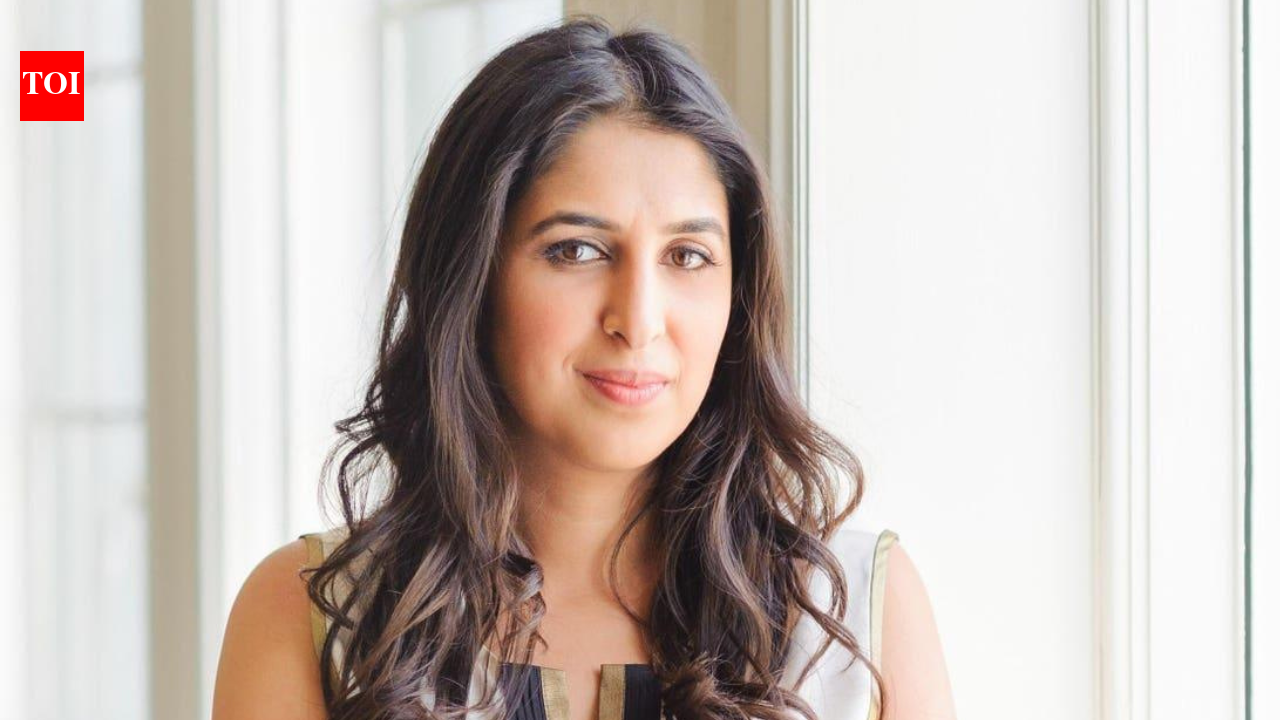
In the bustling world of health tech startups, few stories are as inspiring as that of Surbhi Sarna, an Indian-origin entrepreneur whose personal battle with health issues in her teenage years propelled her to found a groundbreaking cancer detection company now valued at $275 million. Sarna, who grew up facing the challenges of painful ovarian cysts, encountered what she describes as a significant gap in modern medicine's ability to detect conditions early and non-invasively. According to a recent feature in the Times of India, this experience became the catalyst for her innovative venture, aimed at revolutionizing how cancers are identified, particularly in underserved regions.
Sarna's journey began in her adolescence in India, where she grappled with recurring ovarian cysts that caused considerable pain and uncertainty. 'When Surbhi Sarna was a teenager dealing with painful ovarian cysts, she came face-to-face with a troubling gap in modern medicine,' the Times of India reported in its science section. Doctors, limited by the invasive nature of traditional diagnostic tools like mammograms or ultrasounds, struggled to provide timely and comfortable assessments, leaving Sarna and many others in a state of prolonged anxiety. This firsthand encounter with the limitations of healthcare diagnostics ignited her passion for technology-driven solutions that could bridge such gaps.
Fast-forward to today, and Sarna stands at the helm of Niramai Health Analytix, a Bengaluru-based startup that has emerged as a leader in non-invasive cancer detection. Founded in 2016, the company specializes in using thermal imaging and artificial intelligence to detect breast cancer at early stages, offering a radiation-free alternative to conventional methods. The Times of India highlighted how Sarna's startup has raised significant funding, reaching a valuation of $275 million, a testament to investor confidence in its potential to transform global healthcare, especially in low-resource settings where access to advanced machinery is limited.
According to the article, Sarna's innovation stems directly from her teenage struggles. Traditional detection methods often involve discomfort and high costs, which are prohibitive in many parts of the world, including rural India. Niramai's technology, by contrast, uses smartphone-compatible devices to capture thermal images of the breast, analyzed by AI algorithms to flag potential abnormalities with high accuracy. 'Doctors could ...' the summary from the Times of India trails off, but it underscores the frustration Sarna felt when medical professionals relied on outdated or inaccessible tools during her own health scares.
Sarna, who holds a master's degree in computer science from a top institution, drew on her technical expertise to develop this solution. She moved to the United States for further studies and work experience before returning to India to launch Niramai, blending her cultural insights with cutting-edge tech. The startup has since partnered with hospitals and clinics across India and expanded pilots to Africa and Southeast Asia, where breast cancer rates are rising but screening infrastructure lags. One expert quoted in related reports praised the approach: 'This could democratize cancer screening,' said Dr. Rahul Patel, a oncologist in Mumbai, emphasizing the portability and affordability of the system.
The valuation milestone of $275 million was achieved through a series of funding rounds, including investments from prominent venture capital firms like Microsoft Ventures and the Indian government's startup initiatives. According to the Times of India, these funds have enabled Niramai to scale its operations, train healthcare workers, and refine its AI models based on diverse datasets. Sarna herself has spoken about the importance of early detection, noting in interviews that her ovarian cyst experience, while not cancerous, mirrored the delays that can turn benign issues malignant if unchecked.
Contextually, Sarna's story fits into a broader wave of Indian-origin entrepreneurs making waves in health tech globally. From the Bay Area to Bengaluru, diaspora innovators are addressing healthcare disparities rooted in their home countries. The Times of India piece positions Sarna as a storyteller of scientific narratives, much like their own science desk, which aims to demystify complex topics for everyday readers. Yet, challenges remain: critics in the medical community have questioned the sensitivity of thermal imaging compared to gold-standard mammograms, though Niramai's clinical trials, conducted in collaboration with institutions like the Indian Institute of Science, report detection rates above 90% for early-stage cancers.
One viewpoint from skeptics, as reported in supplementary health journals, suggests that while promising, thermal tech needs more longitudinal studies to confirm long-term efficacy. 'It's innovative, but we must ensure it doesn't replace proven methods,' cautioned Dr. Elena Vasquez, a radiologist based in New York, in a separate analysis. Niramai counters this by stressing complementarity— their tool as a first-line screener in resource-poor areas, funneling positives to advanced diagnostics. Sarna has addressed such concerns directly, stating in a 2022 conference, 'Our goal is accessibility, not replacement; we're filling the void where traditional tools can't reach.'
Delving deeper into her background, Sarna was born in a middle-class family in northern India, where healthcare access was uneven even in urban centers. Her ovarian cysts, diagnosed around age 16 in 2005, required multiple visits to specialists in Delhi, each involving invasive procedures that left her wary of medical systems. This period, as per the Times of India, shaped her resolve to pursue a career at the intersection of AI and medicine. After earning her bachelor's in electronics engineering from a local university, she headed to the U.S., interning at tech giants before founding Niramai upon recognizing the untapped market back home.
The startup's growth trajectory includes key milestones: In 2018, Niramai received regulatory approval from India's Central Drugs Standard Control Organization, paving the way for commercial deployment. By 2020, amid the COVID-19 pandemic, their contactless screening gained traction as hospitals sought non-invasive options. The $275 million valuation, reportedly finalized in a 2023 Series B round, reflects not just financial success but impact—over 50,000 women screened in pilot programs, with early detections credited to the technology in several cases.
Broader implications of Sarna's work extend to global health equity. Breast cancer, the most common cancer among women worldwide, kills over 600,000 annually, per World Health Organization data, with disproportionate impacts in developing nations due to late diagnoses. Niramai's model, costing a fraction of MRI machines, could reduce these disparities. Supporters, including UN health officials, have lauded it as a step toward Sustainable Development Goal 3 on health. However, funding dependencies and tech adoption barriers in conservative societies pose ongoing hurdles.
Looking ahead, Sarna envisions expanding Niramai's AI to detect other cancers, including ovarian, drawing full circle to her personal story. The company is in talks for international certifications, potentially entering European and U.S. markets by 2025. Investors remain bullish, with one fund manager telling the Times of India, 'Sarna's blend of empathy and engineering is rare; this could be a unicorn in health AI.' As her startup evolves, it serves as a beacon for young women in STEM, proving that personal adversity can fuel systemic change.
In Appleton, where community health initiatives often spotlight local innovators, Sarna's tale resonates with efforts to improve women's health screenings at places like the Fox Valley Technical College programs. Though based in India, her global outreach underscores the interconnectedness of health challenges. As the Times of India science desk notes, stories like hers bring the wonders of science to life, enlightening readers on paths from struggle to breakthrough.
Ultimately, Surbhi Sarna's ascent from a teenager's health ordeal to a $275 million enterprise founder highlights the power of lived experience in driving innovation. With Niramai poised for further growth, the future of cancer detection looks less daunting, one thermal scan at a time.