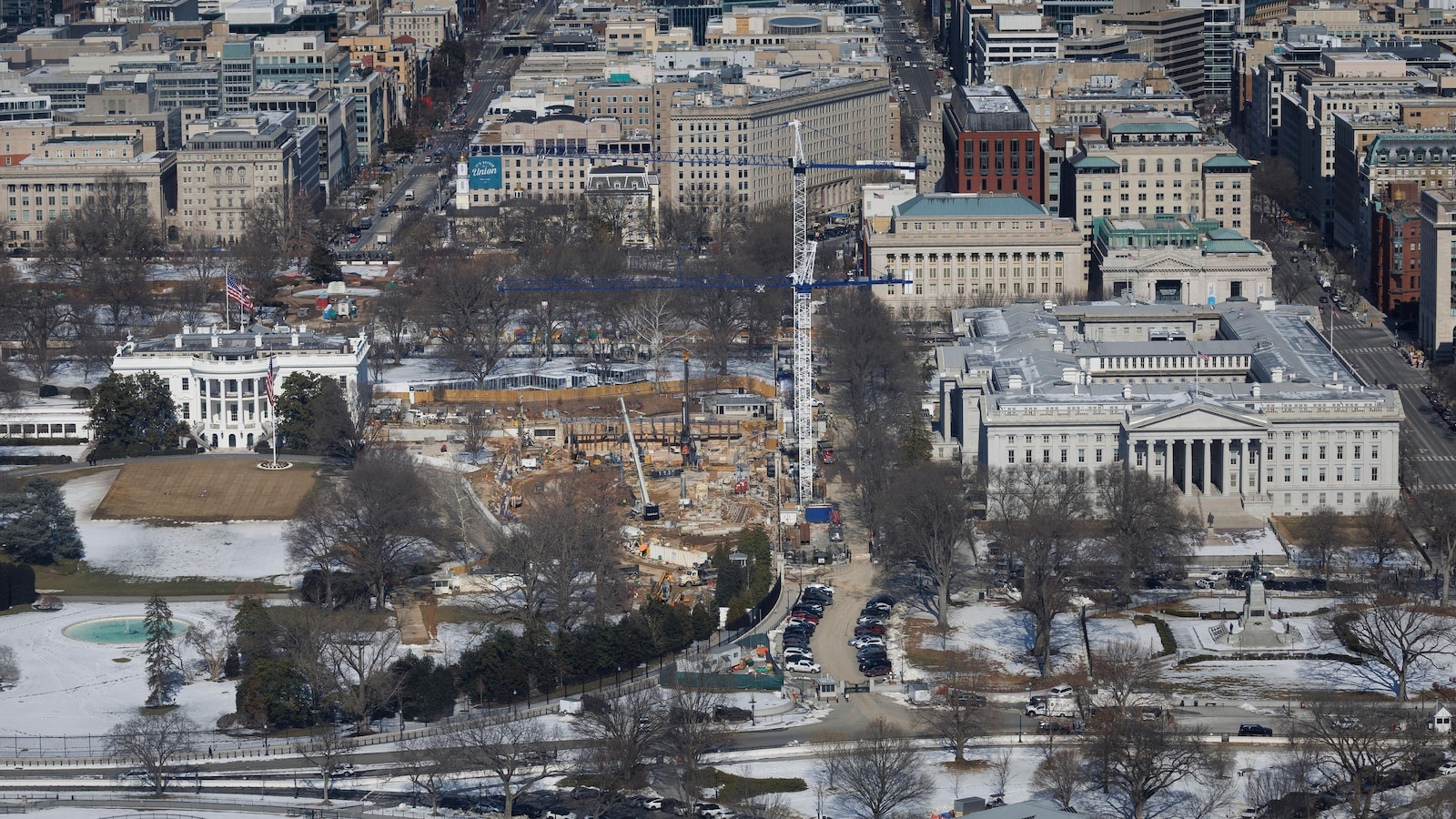
WASHINGTON — A newly released White House memo asserts that the historic residence was 'excellently preserved' during the controversial demolition of the East Wing, paving the way for President Donald Trump's ambitious plans to build a grand ballroom on the site.
The memo, penned by Joshua Fisher, director of the White House Office of Administration, was submitted to the National Capital Planning Commission on Friday. It details the precautions taken by contractors last fall when they began tearing down the East Wing, a structure with roots tracing back to Thomas Jefferson's presidency in the early 1800s. According to Fisher, crews maintained a safe distance with heavy equipment, removed certain sections by hand, and stabilized parts of the building in advance. Vibration levels and crack movements were closely monitored throughout the process to safeguard the integrity of the adjacent White House mansion.
The demolition, which started with minimal public notice, has sparked significant backlash from preservationists and lawmakers. Typically, major alterations to Washington landmarks require independent reviews, congressional approval, and periods for public comment. The National Trust for Historic Preservation filed a lawsuit last month to stop the ballroom project, arguing that it threatens the architectural heritage of the nation's most iconic building. 'This rushed process undermines decades of precedent for protecting our shared history,' said a spokesperson for the trust, who declined further comment pending the litigation.
Fisher's memo addresses these concerns head-on, emphasizing the White House's rationale for the full demolition. He wrote that preserving the existing East Wing 'was not feasible' while achieving Trump's vision for a modernized space that includes an enhanced visitors center for security screening. The new ballroom, once completed, is expected to reduce the frequency of road closures around the White House during large events, improving traffic flow in the capital. Renderings included in the submission depict a sprawling structure that significantly exceeds the footprint of the original East Wing and rises to match the height of the main residence, featuring elegant colonnades and expansive event spaces.
Historical artifacts from the demolished wing were meticulously documented and salvaged, the memo states. Among the items preserved are the East Wing cornerstone and plaque, furniture from the on-site movie theater, columns from the East Colonnade and Porte-cochere, interior wood paneling, chandeliers, historic windows and doors, and various hardware and fixtures. Artwork and other culturally significant pieces were also cataloged by White House curators. 'Our goal is to ensure that some of these items will be integrated into the new structure,' Fisher added, highlighting an effort to blend the past with the proposed future.
The National Capital Planning Commission, which oversees major construction projects in the Washington area, requested the additional details after the demolition's abrupt launch drew scrutiny. The commission is chaired by a senior Trump administration official, adding a layer of internal alignment to the review process. Commission members have scheduled a discussion on the ballroom plans for their March 5 meeting, where they will evaluate the memo's assurances and the accompanying architectural drawings—the most comprehensive visuals released to date.
Trump first floated the idea of expanding White House event capabilities during his 2016 campaign, citing the need for larger spaces to host international dignitaries and national celebrations without disrupting public access. The East Wing, originally constructed in 1942 as office space for the first lady and staff, had undergone renovations over the decades but was deemed inadequate for the president's expansive hosting ambitions. Critics, including some historians, contend that the wing's mid-20th-century design elements, influenced by the neoclassical style of the main building, deserved gentler treatment.
Engineers are now assessing the feasibility of modifications to the West Colonnade, the iconic pathway linking the residence to the West Wing offices. The memo notes that adding a second story could create visual symmetry with an enlarged East Colonnade tied to the new ballroom, though no final decisions have been reached. Such changes would require further approvals and could extend the project's timeline, which remains on track for completion in the coming years, according to White House estimates.
The controversy echoes past White House renovation debates, such as the Truman-era reconstruction in the 1940s that gutted the interior while preserving the exterior shell. Preservation experts have pointed to that project as a model for adaptive reuse, suggesting the East Wing could have been retrofitted rather than razed. 'Demolition should always be a last resort for structures of this caliber,' said Dr. Elena Ramirez, a historian at the Smithsonian Institution, in a recent interview. Ramirez emphasized the wing's role in hosting key events, including first lady initiatives and family gatherings.
Public reaction has been mixed, with supporters praising the modernization as a forward-looking investment in the presidency's ceremonial functions. A poll conducted by a Washington think tank last week found 52 percent of respondents favored the ballroom if it enhanced security without altering the mansion's facade. Opponents, however, rallied outside the White House gates in December, chanting slogans like 'Save Our History' and delivering petitions to congressional offices.
Congressional Democrats have called for hearings into the approval process, questioning whether executive overreach bypassed necessary checks. 'The American people deserve transparency on how taxpayer dollars are funding these changes,' Rep. Elena Torres (D-Calif.) said in a statement. Republicans, meanwhile, have defended the administration's efficiency, arguing that delays in bureaucracy could hinder national security enhancements tied to the project.
The memo's release comes amid broader discussions on federal property management in the capital. The General Services Administration, which coordinates many government building projects, has not yet commented on the White House initiative but is monitoring the commission's review. If approved, the ballroom could set a precedent for future expansions at other historic sites, balancing preservation with contemporary needs.
As the March 5 meeting approaches, stakeholders on all sides are preparing their arguments. The National Trust's lawsuit remains active in federal court, with a hearing slated for late February. Fisher concluded his memo by reaffirming the administration's commitment to the White House's legacy: 'This project honors the past while serving the demands of the present.'
For now, the site of the former East Wing stands cleared, a blank canvas for what could become one of the most significant alterations to 1600 Pennsylvania Avenue in modern times. The outcome will likely influence not just the physical landscape of Washington but also the ongoing dialogue between progress and patrimony in American governance.