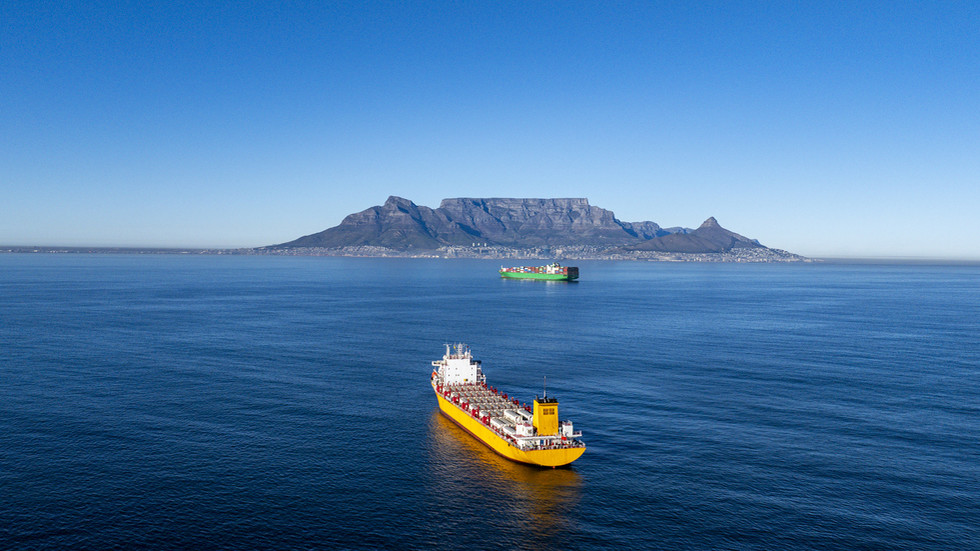
CAPE TOWN, South Africa — Merchant ship traffic along the southern coasts of Africa has surged dramatically in recent weeks, as global shipping companies reroute vessels to avoid the volatile Strait of Hormuz amid escalating tensions in the Middle East. According to data from the maritime tracking platform MarineTraffic, the number of vessels passing the Cape of Good Hope has jumped by approximately 35 percent, reaching around 94 ships per day. This shift comes in the wake of U.S. and Israeli airstrikes on Iran that began on February 28, prompting a sharp decline in maritime activity through the strait, a critical chokepoint for global oil and trade.
The Strait of Hormuz, located between Iran and Oman, has long been one of the world's most vital waterways, facilitating the passage of roughly 20 percent of the global oil supply and serving as a key artery for commerce in and out of the Persian Gulf region. However, the ongoing conflict has led to a near-total halt in shipping there. MarineTraffic data indicates that only four ships transited the strait on March 3, a stark contrast to the typical daily average of about 138 vessels. Oil tanker traffic, in particular, has plummeted by roughly 90 percent compared to previous levels.
Major international carriers have responded swiftly to the dangers. Companies such as Hapag-Lloyd, CMA CGM, and Maersk have suspended certain routes through the strait and redirected their fleets around the African continent. This rerouting adds thousands of miles and days to voyages, particularly for shipments bound for Europe and North America from Asia and the Gulf. On Monday, tanker traffic through the strait came to a complete stop following the initial airstrikes, according to a senior official from Iran's Revolutionary Guards.
Ebrahim Jabari, a senior adviser to the Guards' commander-in-chief, issued a stark warning about the risks of attempting passage. “If anyone tries to pass, the heroes of the Revolutionary Guards and the regular navy will set those ships ablaze,” Jabari stated, underscoring Iran's determination to enforce a de facto blockade amid the hostilities. Iranian officials have cited the U.S. and Israeli actions as provocative, while Western governments have defended the strikes as necessary responses to alleged Iranian aggression in the region.
The conflict's roots trace back to a series of escalations over the past months, including proxy clashes involving Iranian-backed groups and direct confrontations between Israel and Iranian forces. The February 28 airstrikes marked a significant intensification, targeting Iranian military sites and reportedly causing disruptions to regional infrastructure. While details of the strikes remain classified by the involved parties, Iranian state media has described them as unprovoked attacks, whereas U.S. officials have portrayed them as precision operations to neutralize threats.
For shipping companies, the detour around Africa is not without its challenges. The longer routes expose vessels to rough weather in the South Atlantic and Indian Oceans, and ports along the African coast are seeing increased congestion. In South Africa, where the Cape of Good Hope serves as a natural gateway for this redirected traffic, local traders are already feeling the ripple effects. Exporters in the Western Cape province, a hub for agricultural goods, are grappling with higher fuel costs and delays that threaten shipments to Gulf markets.
Terry Gale, chair of Exporters Western Cape, a prominent trade organization, highlighted the uncertainties facing the sector. “The Strait of Hormuz – one of the world’s most critical maritime chokepoints – handles roughly 20% of global oil supply and is a key route for trade moving in and out of the Gulf region,” Gale said. He added that suspended shipping services and related airspace restrictions are driving up freight costs and complicating supply chains, particularly for perishable items like fresh produce that rely on timely maritime corridors connected to the strait.
The broader economic implications extend far beyond South Africa. With oil prices already volatile due to the disruptions, analysts predict potential spikes in global energy costs if the strait remains closed for an extended period. The International Energy Agency has warned that prolonged interruptions could strain supplies to Europe and Asia, where dependence on Gulf oil remains high. European refineries, for instance, process a significant portion of their crude from the region, and alternative sources like those from the Americas may not fully compensate in the short term.
In the Gulf states, the situation has prompted emergency measures. Saudi Arabia and the United Arab Emirates, major oil exporters, have reportedly increased security around their ports and explored overland pipelines to bypass the strait. However, these alternatives have limited capacity; the East-West Pipeline in Saudi Arabia, for example, can handle only about 5 million barrels per day, far short of the strait's normal throughput of around 21 million barrels.
Environmental concerns are also emerging from the traffic surge off Africa's coasts. Conservation groups in South Africa have noted a rise in vessel sightings near sensitive marine areas, including whale migration routes around the Cape. The increased presence of large tankers raises the risk of spills or collisions, though authorities say monitoring efforts have been ramped up. The South African Maritime Safety Authority reported no major incidents as of March 4, but emphasized the need for international cooperation to manage the influx.
From a geopolitical perspective, the crisis highlights the fragility of global trade networks. The Strait of Hormuz's closure, even if temporary, underscores how regional conflicts can cascade into worldwide disruptions. U.S. Navy officials have deployed additional assets to the area to protect commercial shipping, while Iran has mobilized its naval forces. Diplomatic efforts, led by the United Nations and European mediators, aim to de-escalate, but progress remains elusive as of early March.
Traders and economists are bracing for longer-term fallout. In addition to elevated shipping rates, insurance premiums for vessels in the region have soared, with some policies now excluding coverage for the strait entirely. For consumers, this could translate to higher prices for everything from gasoline to imported goods. In the U.S., where Midwest ports like those in Appleton, Wisconsin, handle rerouted cargo, logistics experts anticipate delays in supply chains for electronics and automobiles.
Looking ahead, the trajectory of the Middle East conflict will dictate the duration of these maritime shifts. If tensions ease, traffic through the strait could resume gradually, allowing routes to normalize. However, should the standoff persist, the African coastal detour may become the new standard, reshaping global logistics for months or even years. International carriers continue to monitor the situation closely, with contingency plans in place for further escalations.
As the world watches the unfolding drama, the human element cannot be overlooked. Crews on rerouted ships face extended voyages away from home, while families in conflict zones endure the brunt of the violence. For now, the surge in African maritime traffic serves as a tangible reminder of how distant wars can alter the rhythms of global commerce.