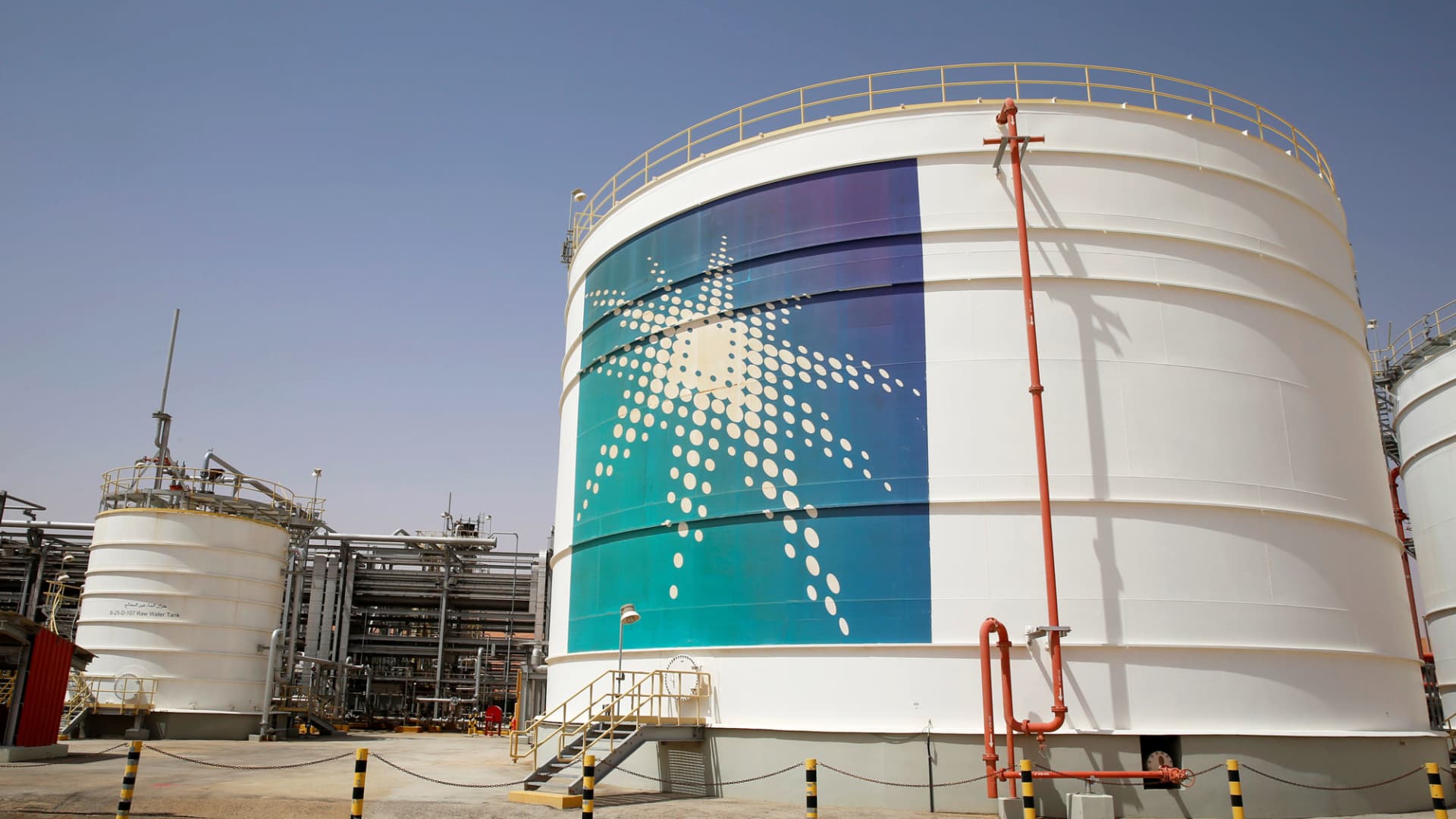
HOUSTON — Crude oil production across major Gulf Arab exporters plummeted in March amid escalating conflict in the Iran war, according to the latest data from the Organization of the Petroleum Exporting Countries. The sharp declines, driven by disruptions in key export routes, have sent global oil prices surging back above $100 per barrel and raised fears of prolonged supply shortages in international energy markets.
OPEC's monthly report, released on Monday, revealed that overall production among member countries fell 27% from 28.7 million barrels per day in February to 20.8 million barrels per day in March. Iraq suffered the most severe drop, with output collapsing 61% to 1.6 million barrels per day from 4.2 million the previous month. Kuwait saw a 53% decline, while the United Arab Emirates experienced a 44% reduction, the data indicated.
Saudi Arabia, the world's largest OPEC producer, reported a 23% decrease, bringing its output down to 7.8 million barrels per day from 10.1 million. The kingdom has been forced to reroute exports via its critical East-West pipeline, which spans from the Persian Gulf to the Red Sea. However, that infrastructure faced direct threats when it came under attack by Iranian forces recently, reducing its capacity by 700,000 barrels per day, according to the state-owned Saudi Press Agency.
The root cause of these production cuts lies in the inability of Gulf Arab states to ship oil through the Strait of Hormuz, a narrow waterway that serves as the primary gateway connecting the Persian Gulf to global markets. Tanker traffic through the strait has dropped dramatically due to repeated attacks by Iran amid the ongoing war, which began intensifying late last year with cross-border strikes and naval skirmishes.
"The Gulf Arab states have cut production because they are unable to export through the Strait of Hormuz due to the war," the OPEC report summarized, highlighting how the conflict has choked off what was once a bustling corridor for roughly 20% of the world's oil supply.
Recovery efforts are underway, but experts warn it could take several months to restore full capacity. Sheikh Nawaf al-Sabah, CEO of Kuwait Petroleum Corp., addressed the challenges at the CERAWeek by S&P Global conference on March 24. "We have resilient reservoirs that bring out quite a bit of production immediately — within a few days," he said. "The bulk of it will come within a few weeks, and then the full production will come within three or four months."
Al-Sabah's comments underscore the technical hurdles facing producers, including the need to repair damaged infrastructure and secure alternative export paths. Saudi Arabia's reliance on the East-West pipeline, operational since 1981 and upgraded in recent years to handle up to 7 million barrels per day, has become a lifeline, but the Iranian attack has exposed vulnerabilities in even these backup systems.
Meanwhile, Iran itself has not been entirely insulated from the war's impacts. The Islamic Republic's oil production dipped about 5% to 3.06 million barrels per day from 3.24 million in February, per OPEC figures. Unlike its Gulf neighbors, Iran has managed to maintain exports through the strait during the conflict, leveraging its naval presence to deter some threats.
That situation changed dramatically over the weekend, however, as peace negotiations between Iran and the United States collapsed without agreement. President Donald Trump, speaking from the White House on Sunday evening, announced that the U.S. Navy would impose a full blockade on Iranian ports effective 10 a.m. ET on Monday. "This is a necessary step to protect global energy security and respond to Iran's aggression," Trump stated in a brief address, according to White House transcripts.
The blockade order marks a significant escalation in U.S. involvement in the Iran war, which has already drawn in regional powers and international shipping firms. U.S. officials said the measure aims to curb Iran's ability to export oil and resupply its forces, though it risks further inflaming tensions in the already volatile Middle East.
Market reactions were swift and severe. U.S. crude oil futures for May delivery climbed above $100 per barrel following the OPEC data release and the blockade announcement, while the June contract traded at $94 per barrel. The global benchmark Brent crude hovered around $100 for June delivery, with the July contract at $93.93 per barrel, reflecting trader anxieties over potential supply disruptions extending into the summer.
The Iran war, which erupted in October 2025 after a series of proxy clashes escalated into direct confrontations, has reshaped global energy dynamics. Initial strikes targeted Iranian nuclear facilities, prompting retaliatory attacks on Gulf shipping lanes. By early 2026, the conflict had disrupted not only oil exports but also broader trade routes, contributing to inflation spikes in fuel-dependent economies worldwide.
Analysts point to the Strait of Hormuz's strategic importance: At its narrowest, the waterway is just 21 miles wide, making it a chokepoint vulnerable to mines, missiles, and drone strikes. Iranian forces have claimed responsibility for several incidents, including the pipeline attack, which they described as a defensive measure against Saudi support for U.S.-led coalitions.
Broader implications extend beyond energy prices. With OPEC's output slashed, non-OPEC producers like the United States and Russia may ramp up drilling to fill the gap, though that process could take time. Consumer nations, including major importers in Europe and Asia, are bracing for higher gasoline and heating costs, potentially fueling economic slowdowns.
Looking ahead, the path to stabilization remains uncertain. Diplomatic channels, including backchannel talks mediated by Oman and Qatar, have yielded little progress. As Sheikh al-Sabah noted, while reservoirs can rebound quickly, the geopolitical barriers — from the U.S. blockade to ongoing Iranian threats — pose the greatest obstacles. For now, the world watches as the cradle of global oil supply grapples with war's heavy toll.