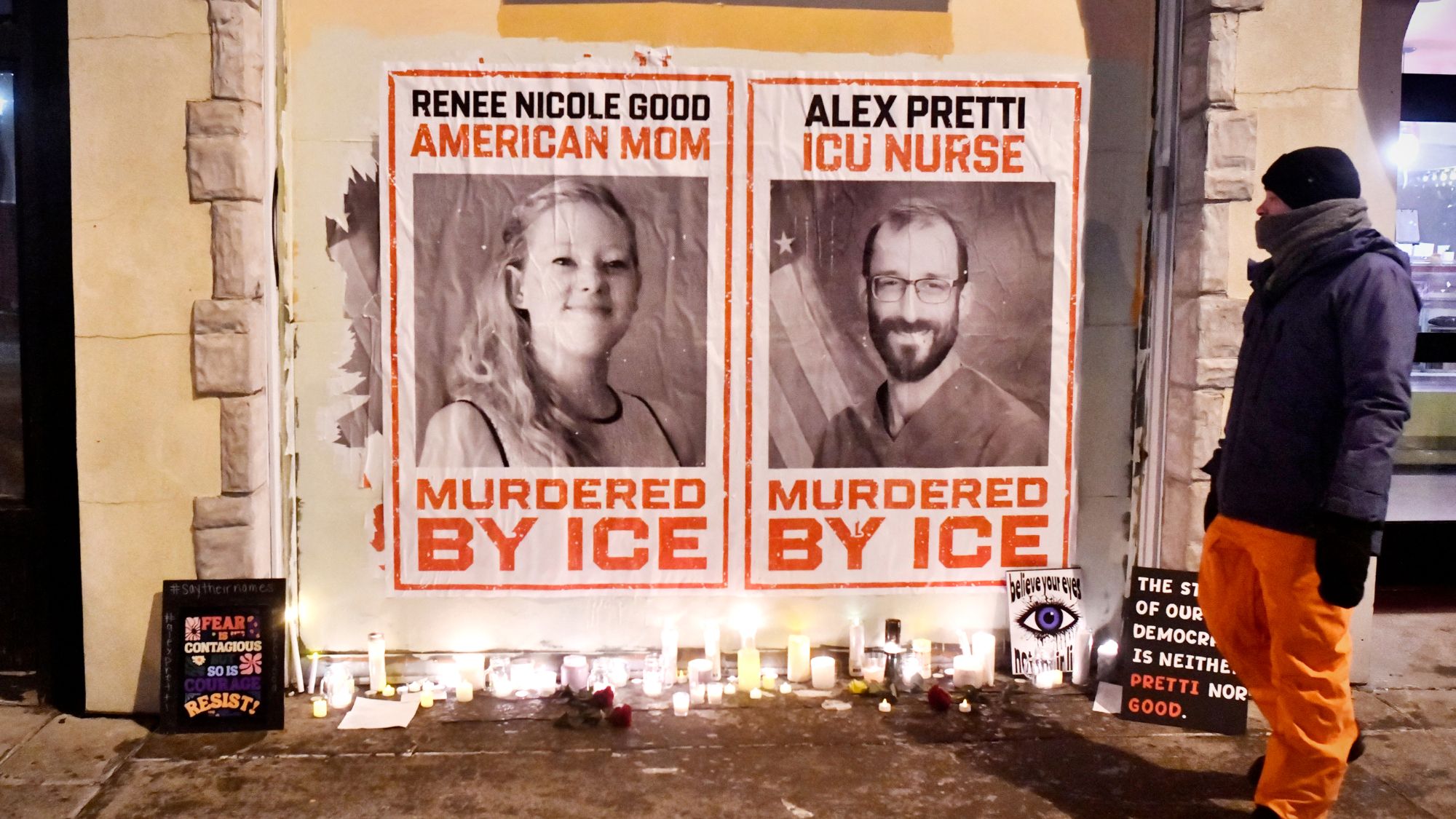
MINNEAPOLIS — Minnesota officials filed a lawsuit against the Trump administration on Tuesday, seeking access to evidence related to three fatal or injurious shootings involving U.S. Immigration and Customs Enforcement agents during the agency's Operation Metro Surge. The suit targets what state leaders describe as an unjustified refusal by federal authorities to share investigative materials, a move they argue impedes the state's ability to pursue potential criminal charges under its own laws.
The lawsuit, lodged in federal court, centers on the killings of Renee Good, an unarmed mother of three, and Alex Pretti, a 19-year-old bystander, as well as the wounding of Venezuelan immigrant Julio Sosa-Celis. All incidents occurred amid heightened ICE enforcement actions in the Minneapolis area last summer as part of Operation Metro Surge, a targeted crackdown on undocumented immigrants announced by the administration in July 2023. According to the complaint, leaders at the Justice Department and the Department of Homeland Security have stonewalled state investigators, providing no documents, videos, or witness statements despite repeated requests.
"We are prepared to fight for transparency and accountability that the federal government is desperate to avoid," Hennepin County Attorney Mary Moriarty told reporters outside the courthouse. Moriarty, whose office is leading the push for state-level probes, emphasized that the lack of cooperation has left local authorities unable to assess whether the agents' actions warrant prosecution under Minnesota statutes, including those related to excessive force and manslaughter.
Minnesota Attorney General Keith Ellison echoed that sentiment during a press conference, describing the federal stance as a barrier to justice. "How absolutely extraordinary it is, how rare and unprecedented it is, how completely unnecessary it is, if justice is our goal, for us to have to file this lawsuit," Ellison said. He argued that the suit invokes the state's 10th Amendment rights to enforce its laws independently and accuses the federal government of violating the Administrative Procedures Act through its "arbitrary and capricious" withholding of evidence.
The incidents in question unfolded over a tense two-week period in August 2023. On August 12, ICE agents fatally shot Renee Good, 38, during a traffic stop in Brooklyn Park, a suburb north of Minneapolis. Federal officials initially claimed Good had "weaponized her vehicle" against an agent, justifying the shooting as self-defense. However, video evidence obtained by The New York Times appeared to contradict that narrative, showing Good's car moving slowly and not posing an imminent threat. Trump administration spokespeople later asserted that the Good killing "was not under investigation," according to reporting by The Minnesota Star Tribune.
Just days later, on August 18, Alex Pretti was killed in a separate encounter in nearby Plymouth when ICE agents opened fire during what was described as a routine surveillance operation. Pretti, who was not the target of the raid, was struck by stray bullets while walking his dog. The FBI is leading the federal investigation into Pretti's death, as confirmed in a statement from the Department of Homeland Security.
The third case involves Julio Sosa-Celis, a 25-year-old Venezuelan national, who was shot in the leg by ICE agents on August 20 during an arrest attempt in St. Paul. Federal prosecutors are examining whether two agents made false statements about the circumstances of the arrest, though the shooting itself is not part of that probe. Sosa-Celis, who had no prior criminal record in the U.S., was reportedly cooperating with authorities at the time of the incident.
In its statement, DHS maintained that all three shootings remain under active federal review. "The federal government is investigating all three shootings," the department said, without providing further details on timelines or outcomes. The agency defended its position on evidence-sharing, noting that internal probes must proceed without interference to ensure impartiality. However, Minnesota officials, including Moriarty, countered that such secrecy undermines public trust and local oversight, particularly in cases involving potential civil rights violations.
According to Minnesota Public Radio, state investigators are seeking a court order that would compel federal agencies to disclose body camera footage, autopsy reports, ballistic analyses, and interview transcripts. Without this material, Moriarty's office said it cannot proceed with grand jury presentations or file charges. The lawsuit also highlights broader tensions between sanctuary-state policies in Minnesota and the Trump administration's aggressive immigration enforcement, which has led to over 1,200 arrests in the Twin Cities metro area since Operation Metro Surge began.
Background on Operation Metro Surge reveals it as one of several intensified ICE operations launched in Democratic-leaning urban centers following the 2020 election. The program aimed to dismantle what federal officials called "sanctuary jurisdictions" by deploying additional agents and resources. Critics, including immigrant rights groups like the Minnesota Immigrant Rights Action Committee, have long argued that such surges escalate risks to bystanders and non-criminals, pointing to Good and Pretti as tragic examples. "These operations turn neighborhoods into war zones," said Maria Gonzalez, executive director of the group, in a statement released Wednesday.
Federal responses to the lawsuit have been measured but firm. A Justice Department spokesperson declined to comment on pending litigation but reiterated the administration's commitment to officer safety and border security. Meanwhile, some Republican lawmakers in Congress have praised ICE's actions, with House Judiciary Committee member Jim Jordan, R-Ohio, tweeting last month that "states like Minnesota are obstructing federal law enforcement at every turn."
The conflicting accounts of the investigations underscore the friction. While DHS insists the Good shooting is "still under investigation," earlier statements from Trump officials suggested otherwise, creating confusion among families and advocates. The Pretti family, through their attorney, has called for an independent review, alleging in a civil suit filed last fall that agents failed to follow protocol by not identifying themselves before firing.
As the lawsuit progresses, legal experts anticipate a drawn-out battle over jurisdiction and executive privilege. University of Minnesota law professor Rachel Stern noted that similar cases, such as those involving FBI evidence in state trials, often hinge on federal supremacy arguments. "This could set a precedent for how much states can demand from federal agencies in overlapping enforcement areas," Stern said in an interview.
Beyond the courtroom, the suit amplifies national debates on immigration policy and police accountability. In Minnesota, where Latino and immigrant communities make up about 10% of the population, the incidents have fueled protests and calls for defunding ICE operations. Governor Tim Walz, a Democrat, expressed support for the lawsuit in a statement, saying it "upholds our values of justice and transparency."
Looking ahead, a federal judge is expected to schedule a hearing within weeks, potentially forcing early disclosures. If successful, Minnesota's case could embolden other states facing similar federal roadblocks. For the families of Good, Pretti, and Sosa-Celis, the fight represents a quest for answers in the wake of profound loss. "We just want the truth," said Good's sister, Elena Rodriguez, during a vigil last month. As winter sets in over the Twin Cities, the legal chill between state and federal powers shows no signs of thawing.