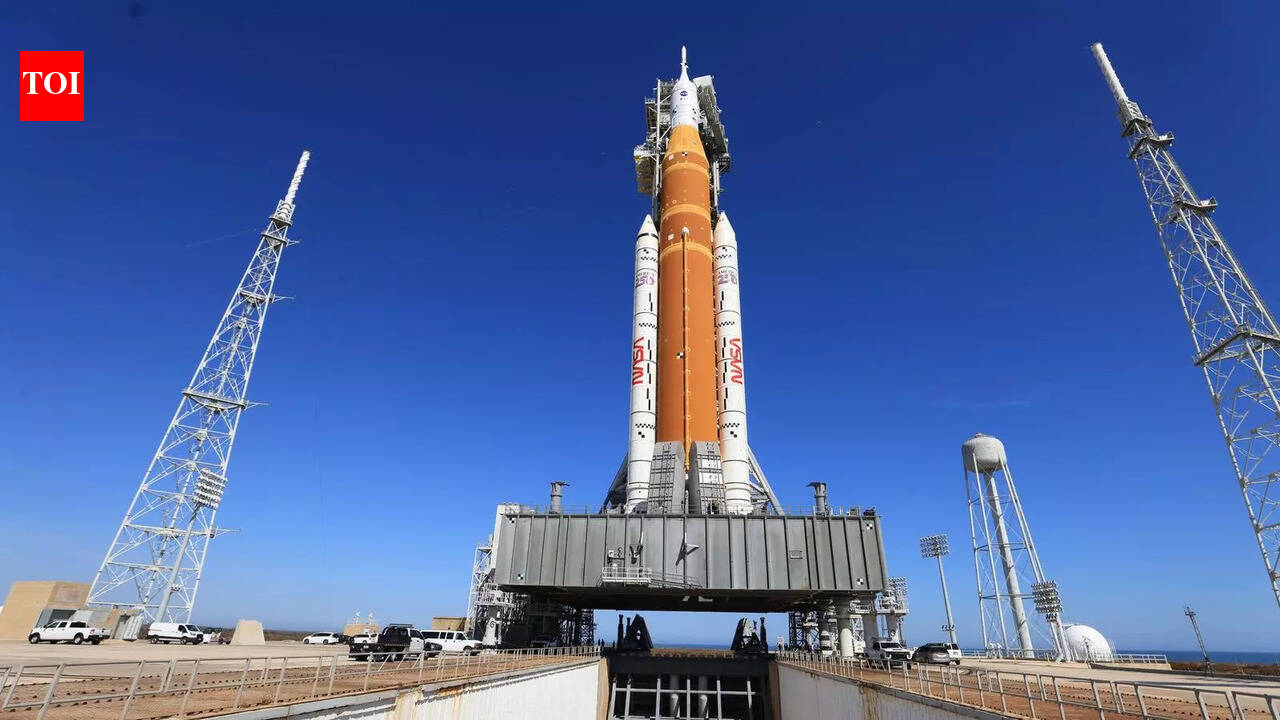
FLORIDA — NASA's ambitious Artemis II mission, poised to send astronauts around the moon for the first time since the Apollo era, has encountered yet another setback, with officials announcing a fresh delay due to technical troubles with the rocket at Kennedy Space Center. The mission, originally slated for a 2025 launch, now faces an uncertain timeline as engineers grapple with issues affecting the Space Launch System (SLS) and the Orion spacecraft. According to reports from the Times of India, NASA is working diligently to resolve these complications, marking the latest in a series of postponements for the program aimed at returning humans to the lunar surface.
The Artemis II flight, which will carry NASA astronauts Reid Wiseman, Victor Glover, Christina Koch, and Canadian Space Agency astronaut Jeremy Hansen, was intended to be a pivotal test of the SLS rocket and Orion capsule in deep space. This crewed mission follows the uncrewed Artemis I, which successfully launched in November 2022 after its own delays. However, the current hurdles emerged during pre-launch preparations at the Kennedy Space Center in Florida, where the rocket stack is undergoing rigorous testing. The Times of India reported that the technical issue involves components of the SLS and Orion, though specifics remain under wraps as NASA conducts internal reviews.
"We are committed to ensuring the safety of our astronauts and the reliability of our systems," NASA Administrator Bill Nelson said in a statement released earlier this week. "These challenges are part of the complex process of space exploration, and our teams are addressing them methodically." Nelson's comments underscore the agency's approach to the delay, emphasizing caution over haste in the high-stakes environment of human spaceflight.
Background on the Artemis program reveals a history of iterative delays. Artemis I, the foundational uncrewed test, slipped from its initial 2020 target due to software glitches, hardware failures, and the impacts of the COVID-19 pandemic. When it finally lifted off from Launch Pad 39B at Kennedy Space Center on November 16, 2022, it splashed down successfully after 25 days in orbit, validating the SLS's 322-foot-tall structure and the Orion's life support systems. Yet, even that success came after multiple scrubbed attempts and fuel leaks during dress rehearsals.
For Artemis II, the stakes are higher as it marks the first crewed Orion flight. The mission profile includes a 10-day journey, looping around the moon without landing, to test the spacecraft's capabilities in lunar orbit. Engineers at Kennedy Space Center identified the latest issue during integration and testing phases, where the SLS core stage—powered by four RS-25 engines—and the Orion service module are mated to the crew module. According to the Times of India, the problem surfaced in recent weeks, prompting NASA to halt progress until resolved.
Experts familiar with the program, speaking on condition of anonymity, described the technical trouble as related to "interface compatibility between the SLS and Orion," though NASA has not officially confirmed the details. This echoes past concerns, such as battery anomalies in Orion during Artemis I preparations and vibration issues in the SLS boosters. "It's not unusual for such programs to encounter gremlins this close to launch," said Lori Garver, former NASA deputy administrator, in an interview with space industry outlets. "The key is transparency and rigorous problem-solving."
The delay has ripple effects across NASA's lunar ambitions. Artemis III, planned to land the first woman and person of color on the moon as early as 2026, relies on lessons from Artemis II. With the new postponement, whispers in the space community suggest Artemis III could slip into 2027 or beyond. Boeing, the prime contractor for SLS and Orion, has faced scrutiny for cost overruns—the program has ballooned to over $20 billion—drawing criticism from congressional oversight committees.
"This is a reminder of the challenges in rebuilding America's space capabilities after decades away," Rep. Brian Babin (R-Texas), a member of the House Science Committee, stated in a recent briefing. Babin, a staunch supporter of NASA, urged the agency to accelerate resolutions without compromising safety. On the other side, some Democrats have called for diversified partnerships, pointing to SpaceX's Starship as a potential alternative for future lunar landings under the Artemis accords.
At Kennedy Space Center, where over 13,000 workers contribute to the effort, the delay means extended stays for the rocket on the launch pad. The SLS, standing taller than the Statue of Liberty, arrived at the Vehicle Assembly Building in stages: the core stage via barge from Michoud Assembly Facility in Louisiana in February 2024, followed by solid rocket boosters from Northrop Grumman. Technicians have been troubleshooting around the clock, with NASA estimating a resolution within months, though no firm date has been set.
Public reaction has been mixed. Space enthusiasts on social media express frustration over the repeated delays, with hashtags like #ArtemisDelayed trending. "We've waited 50 years to go back to the moon—patience is wearing thin," tweeted one user. Yet, others praise NASA's methodical approach, citing the Apollo 1 tragedy in 1967 as a cautionary tale. The agency's focus on safety aligns with international partners, including the European Space Agency, which provides the Orion service module, and JAXA, contributing to lunar landing technologies.
Broader context places Artemis II within the global space race. China aims to land taikonauts on the moon by 2030, while private ventures like Blue Origin and SpaceX push boundaries. NASA's Artemis program, budgeted at $93 billion through 2025, seeks to establish a sustainable lunar presence via the Gateway space station. Delays here could impact U.S. leadership in that endeavor, as noted by White House officials in budget justifications.
Looking ahead, NASA plans a review board to dissect the technical issue, with findings expected to inform not just Artemis II but future missions. "We're building the highway to Mars through the moon," Nelson reiterated, referencing the program's ultimate goal of Mars exploration in the 2030s. Engineers anticipate resuming integrated testing by late summer, potentially eyeing a September 2026 launch window, though that's speculative.
The Kennedy Space Center remains a hub of activity despite the pause. Visitors to the center's visitor complex can view mockups of Orion and SLS, while live streams from NASA TV offer glimpses into the work. Local economy in Brevard County, Florida, benefits immensely, with the space industry supporting 24,000 jobs and generating $5.3 billion annually.
As NASA navigates this latest obstacle, the Artemis II crew continues training at the Johnson Space Center in Houston. Wiseman, the mission commander, recently shared in a press conference: "Our team is ready whenever the hardware is. Spaceflight is about perseverance." This sentiment captures the resilience required in pushing humanity's frontiers.
In the end, while the delay frustrates timelines, it reinforces the meticulous engineering behind Artemis. With the moon mission on hold at Kennedy Space Center, all eyes turn to NASA's problem-solvers, whose success will pave the way for the next giant leap.