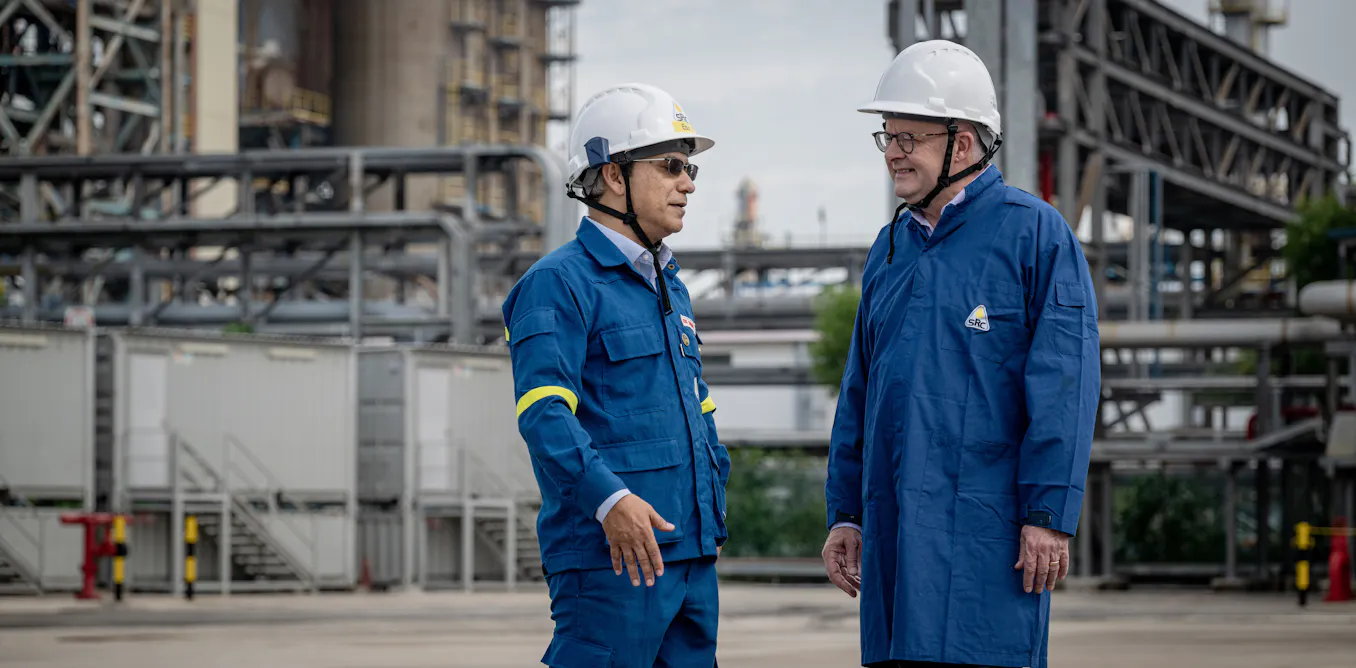
SINGAPORE — Australian Prime Minister Anthony Albanese's recent visit to Singapore has opened the door to increased exports of liquefied natural gas (LNG) from Australia to the city-state, as the two leaders seek to bolster their intertwined energy supply chains amid global uncertainties.
During talks on Friday, Albanese met with his Singaporean counterpart, Lawrence Wong, to discuss enhancing energy security. The meeting, held in Singapore, focused on ensuring the steady flow of essential energy products between the nations. Singapore, a major refining hub, supplies more than a quarter of Australia's refined fuel imports, including diesel, while Australia provides about one-third of Singapore's LNG needs.
At a joint news conference following the discussions, Prime Minister Wong expressed optimism about deepening energy ties. "Singapore would look to access more Australian LNG on a commercial basis 'and hopefully more long-term gas as well,'" Wong said, according to reports from the meeting.
Albanese echoed the sentiment, emphasizing Australia's capacity to meet growing demand. "If Singapore required more LNG, over a period 'additional fields are going to come online,'" the Australian leader stated, highlighting upcoming developments in the country's gas sector.
The leaders' pledge comes at a time when global energy markets are strained by ongoing crises, including the fallout from geopolitical tensions and supply disruptions. Australia, as one of the world's top LNG exporters, has been under domestic pressure to manage its gas resources effectively. Albanese has faced calls from across the political spectrum for measures like a super profits tax on increased gas exports, but he has prioritized maintaining Australia's image as a dependable supplier.
When pressed on the tax treatment for new exports during the news conference, Albanese avoided a direct response. However, he reiterated Australia's commitment to reliability, a stance he has taken previously amid debates in Canberra. This approach underscores the government's focus on long-term international partnerships over short-term fiscal adjustments.
The flying visit by Albanese was specifically geared toward energy security, with the two nations vowing to keep trade in energy products unimpeded. Wong assured that essential goods, including LNG from Australia and refined petroleum products from Singapore, would continue to move freely. "Essential goods will continue to move between Australia and Singapore. That includes liquefied natural gas, or LNG, which Australia supplies to Singapore, as well as refined petroleum products like diesel which Singapore supplies to Australia," Wong remarked.
Singapore's role as a key supplier to Australia cannot be overstated. The city-state's refineries process crude oil into usable fuels, filling a critical gap in Australia's domestic refining capacity, which has diminished in recent years due to closures and shifts toward renewables. In return, Australia's vast natural gas reserves, particularly from fields in Western Australia and Queensland, power much of Singapore's energy needs in a region where alternatives are limited.
Addressing concerns about potential export restrictions, Wong dismissed the idea outright. When asked if Australia would receive priority in any rationing scenario, he responded, "We do not plan to restrict. We didn’t have to do so even in the darkest days of COVID. And we will not do so during this energy crisis. It’s hypothetical. It won’t happen." This reassurance comes as global energy prices fluctuate wildly, influenced by events like the Russia-Ukraine conflict and Red Sea shipping disruptions.
Beyond immediate assurances, the leaders announced progress on formalizing their cooperation. The two countries are negotiating a legally binding Protocol to the Singapore-Australia Free Trade Agreement on Economic Resilience and Essential Supplies. This protocol aims to safeguard critical trade flows during emergencies.
Additionally, they plan to ramp up coordination on energy issues, including enhanced border and port processes. In a joint statement released after the talks, the leaders outlined their shared priorities. They "recognised the importance of the role of our countries in each other’s energy security – Singapore is one of Australia’s top suppliers of refined petroleum products, and Australia is one of Singapore’s top suppliers of liquefied natural gas."
The statement further detailed their resolve: "We stated our determination to make maximum efforts to meet each other’s energy security needs in the context of the acute energy crisis currently affecting global markets." It also reaffirmed commitments to support the flow of essentials like diesel and LNG through measures such as transparency, early consultation, and efficient logistics.
This emphasis on coordination reflects broader regional dynamics in Southeast Asia and the Indo-Pacific, where energy interdependence is growing. Australia, transitioning toward net-zero emissions by 2050, must balance export ambitions with domestic supply guarantees. Singapore, lacking natural resources, relies heavily on imports and has invested in storage and refining to act as a regional stabilizer.
The meeting builds on existing ties under the Comprehensive Strategic Partnership established in 2021, which has already facilitated defense, trade, and climate collaborations. Yet, challenges persist. Australia's gas industry has been criticized for exporting too much, leading to higher domestic prices, while Singapore grapples with diversifying its energy mix beyond fossil fuels.
Experts note that increased Australian LNG flows could help Singapore meet rising demand from its industrial sector and data centers, which are booming amid the digital economy's expansion. However, commercial negotiations will determine the pace, as Wong specified that any additional supplies would be on a market basis.
Looking ahead, the protocol's finalization could set a precedent for other bilateral energy pacts in the region. As global markets remain volatile, with oil prices hovering around $80 per barrel and LNG spot prices varying, such agreements provide a buffer against shocks. For Australia, fulfilling Singapore's needs could open doors to similar deals elsewhere, reinforcing its position in Asia's energy landscape.
Albanese's visit, though brief, signals a proactive stance on supply chain resilience. As the leaders intensify cooperation, both nations aim to navigate the energy transition while ensuring stability for their economies and beyond.