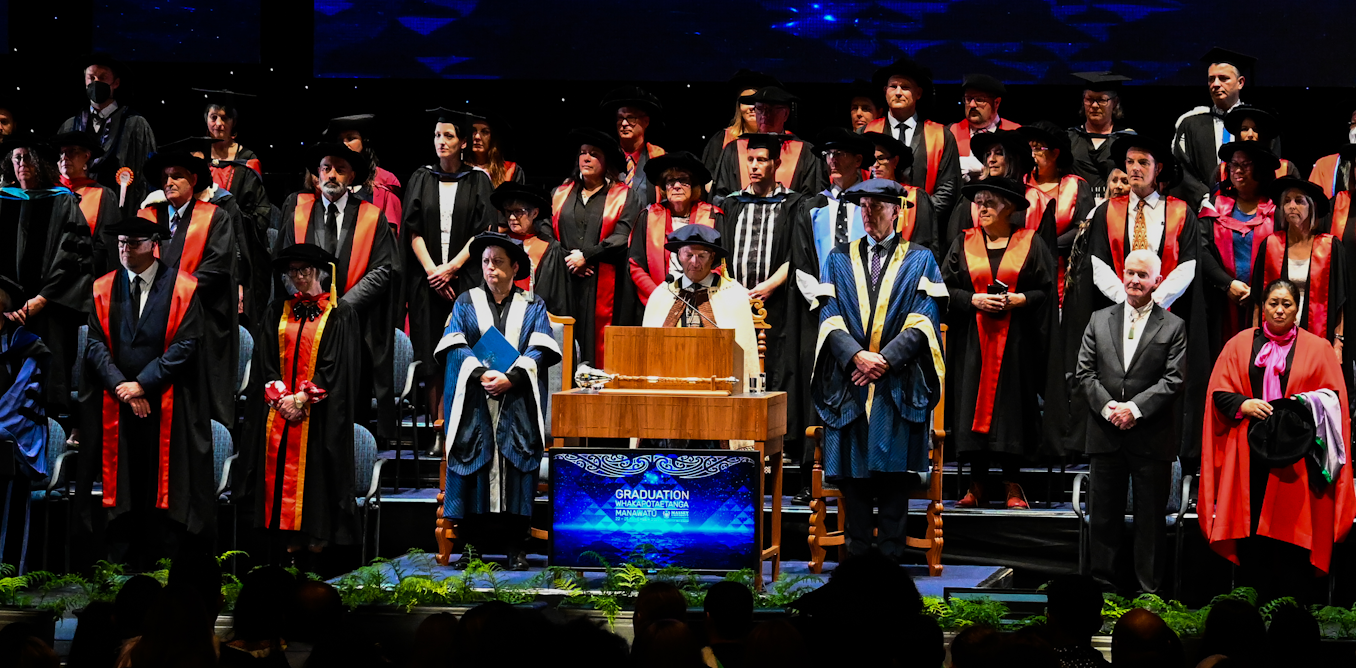
In the hallowed halls of New Zealand's universities, progress toward gender equality in academia is evident but uneven, with women making strides in professorial ranks yet facing persistent gaps in pay, leadership, and research funding. A recent analysis by a group of female academics from five institutions reveals that while the proportion of female professors has risen from 25% in 2019 to 34% in 2024 at the University of Waikato, men continue to dominate the highest salary brackets and senior roles. This comes as the nation grapples with broader economic shifts, including a 2025 budget emphasizing science and innovation with a focus on economically impactful research.
The study, published on The Conversation, draws on publicly available data from New Zealand's eight universities, highlighting improvements since a 2020 report that estimated a lifetime gender pay gap of NZ$400,000 for women in academia. Back then, between 2002 and 2017, women had less than half the odds of reaching senior ranks like associate or full professor compared to men. Only 37% of heads of department and 25% of deans were women during that period. 'Universities play a crucial role in achieving gender equality, but persistent disparities in leadership, pay and research opportunities continue to shape women’s careers in academia,' the authors wrote.
Efforts to address these imbalances have led to the adoption of equity frameworks across all institutions. As of February 2026, only three universities—Otago, Auckland University of Technology (AUT), and the University of Auckland—have released recent pay gap reports. According to these, the median pay gap in 2024 ranged from 9.8% to 11.9% overall. However, when focusing on academic staff, the disparities are starker: 14.1% at Auckland, up to 18% at Otago, and widening to 20% at Otago in 2025.
Historical trends show a slow narrowing of the academic pay gap, from more than 25% in 2017 to around 20% in 2025 at Otago, the only institution with comparable long-term data. Despite this, men remain overrepresented at the top end. At one unnamed university, there were three to six times more men than women earning above $210,000 annually. Unequal pay favoring men persists among professors, and several institutions report more men holding associate professor or professor positions.
The authors, who analyzed data from their respective workplaces including the universities of Auckland, Waikato, and others, point to visible signs of advancement. At Waikato, the increase in female professors underscores a shift, though they caution that broader systemic barriers remain. 'We found universities are closing the pay gap, slowly. But men are still more likely to fill senior leadership roles in the highest pay brackets,' the group stated in their analysis.
Beyond pay, leadership roles present a mixed picture. Women now hold 56.3% of positions on senior leadership teams, including vice chancellors, deputy vice chancellors, provosts, pro vice chancellors, and executive deans—a promising reversal. Women are overrepresented in academic leadership at 83.3%, Māori-focused roles at 71.4%, and health portfolios at 66.7%. Yet, only 37.5% of vice chancellors are women, and none of the heads of science divisions currently hold the position.
Parental support emerges as a key factor hindering women's progression. New Zealand universities offer just six to 12 weeks of paid parental leave at full pay, falling short of the World Health Organization's recommended minimum of 14 weeks—or ideally 18—and the International Labour Organization's mandate. In contrast, Australia's Group of Eight universities provide at least 26 weeks of full-pay equivalent, often with additional return-to-work funding. The academics note that women are less likely to pursue leadership after motherhood, internalizing barriers that sacrifice career goals. 'A review of research reinforces that women are less likely to take up leadership positions after becoming mothers,' they observed.
Research funding priorities add another layer of concern. In 2024, women led 47.8% of projects funded by the Marsden Fund, which supports fundamental research. But following government reforms, this dropped to 34.2% in 2025. The authors speculate this ties to the disestablishment of funding for social sciences and humanities—fields with higher female representation, such as education, anthropology, sociology, and criminology, which already face lower success rates for both genders.
The 2025 budget's emphasis on science and innovation with direct economic impact could exacerbate these issues. 'We are concerned the shift in government research priorities will disproportionately affect women’s opportunities for leading research in New Zealand, their chance for research career awards and their academic progression,' the authors warned. Securing major grants is crucial for professorial appointments, yet the playing field remains uneven, potentially sidelining women in disciplines less aligned with economic priorities.
Globally, the context is similar: only 36% of senior academics worldwide are women. In New Zealand, the national median pay gap across all sectors has narrowed from 9.4% in 2017 to 8.2% in 2024 and 5.2% in 2025, though the latest dip may stem from recession-driven job losses among low-paid women. Universities' progress mirrors this but lags in academia-specific metrics.
The authors, comprising women from diverse fields at institutions like the University of Otago and Victoria University of Wellington, emphasize the value of diverse leadership. 'Diversity in leadership is critical for institutional success. Women often show high levels of organisation, resilience, relationship building, boundary setting, flexible approaches and conflict resolution with equitable outcomes for all parties,' they wrote. They speculate that women may be growing bolder, less risk-averse, though evidence suggests ongoing discouragement from applying for promotions.
While the analysis praises universities' positive steps, it calls for more action to level the field. Equity frameworks are in place, but implementation varies. For instance, pay gap reports are not yet universal, limiting comprehensive tracking. The authors' work, based on data up to 2025 and early 2026 releases, underscores the need for sustained efforts amid evolving funding landscapes.
Broader implications extend to New Zealand's innovation ecosystem. With science divisions lacking female heads and funding tilting toward male-dominated fields like STEM, the country risks underutilizing women's expertise. Officials at the universities involved have not yet responded publicly to the analysis, but past commitments to equity suggest ongoing dialogues. As one academic put it in the report, 'We welcome the positive steps universities in Aotearoa New Zealand are taking, but more needs to happen to create an equitable playing field.'
Looking ahead, advocates hope for policy tweaks, such as extended parental leave and diversified funding, to accelerate change. The Marsden Fund's shift serves as a cautionary tale, potentially influencing international perceptions of New Zealand's academic inclusivity. For now, the slow but steady rise in female professors offers hope, even as gaps in pay and power persist in the nation's leading institutions.