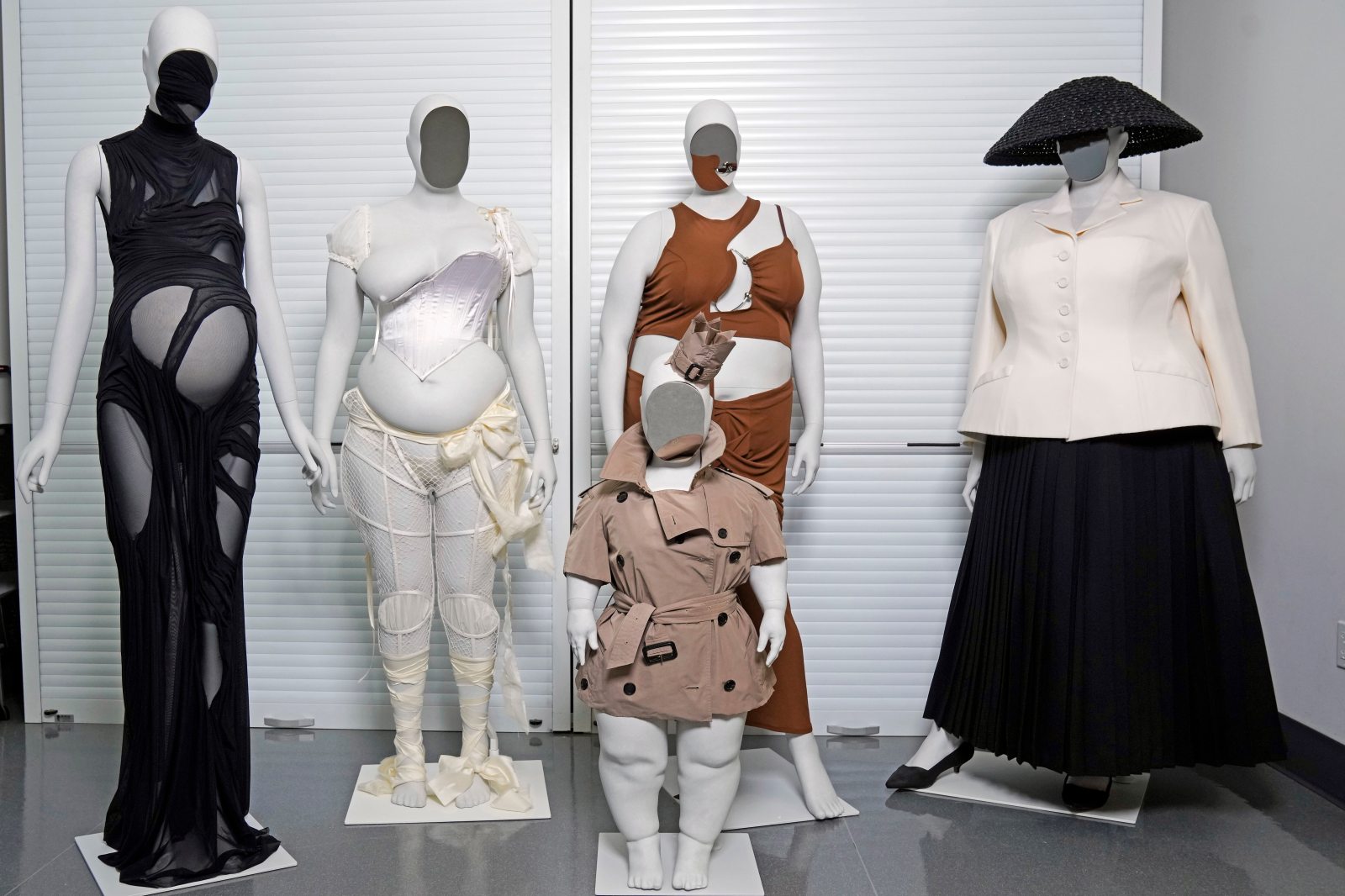
NEW YORK — In a sweltering Brooklyn studio last summer, artist and couture designer Michaela Stark stepped into a circle of 175 cameras, clad only in her signature corsetry. The photoshoot was unlike any she had experienced, capturing every angle of her body through a process called photogrammetry. The result: three custom mannequins destined for the Metropolitan Museum of Art's upcoming exhibit, "Costume Art," which will debut at the star-studded Met Gala on May 4, 2026.
"It was definitely a bit nerve-wracking," Stark recalled of the intimate and vulnerable experience. But she added with a quip, "something about being naked on a 40-degree (Celsius) day in a corset that isn’t hiding anything kind of takes the awkwardness away from the situation, actually." These mannequins, along with others modeled after real people with diverse body types, represent a deliberate shift in how the museum displays fashion and art, aiming to include bodies long overlooked in traditional exhibits.
The exhibit, organized by the Met's Costume Institute, explores the dressed body in art across centuries, featuring about 400 items — half art objects and half garments from the museum's collection, displayed in thematic pairs. Curator Andrew Bolton explained that the show seeks to add body positivity to this historical narrative. "The aim was to challenge a history of museum mannequin display that’s very much characterized by thin, abled and standardized bodies," Bolton said. Classic fashion mannequins, he noted, are typically around a women's size 2, excluding representations of corpulent, disabled, or aging bodies.
To address this, curators created 25 new mannequins based on scans of nine real-life models, including Stark, whose figures will appear in sections on the Reclaimed Body and Corpulent Body. Other models include Sinéad Burke, an Irish disability activist born with dwarfism; Aimee Mullins, the athlete, actor, model, and activist who uses prosthetic lower legs; and Aariana Rose Philip, a musician and model who uses a wheelchair. Seven additional mannequins depict shapes like the pregnant body and thin male body without being based on specific individuals.
Stark, who has designed looks for Beyoncé and runs her own body-positive lingerie line called Panty, will see her mannequins dressed in her corsetry designs. She uses traditional corset techniques innovatively, she said, "to actually emphasize those parts of the body that we’ve been conditioned to hide. It’s using the corsets to bring back power to the female form." Her participation feels timely, Stark added, amid what she described as a decline in the fashion industry's inclusivity efforts.
"It’s a really interesting moment in time for the Met to be doing this show because obviously we’ve seen the complete rapid decline of the body positivity industry," Stark said. "Designers left, right, and center are just starting more and more to refuse to work with plus-size models." This observation aligns with findings from the recent Vogue Business Size Inclusivity Report, which documented a drop in plus-size representations on runways during the Fall/Winter 2026 Fashion Weeks in four major cities: New York, London, Milan, and Paris.
Sinéad Burke echoed Stark's concerns, calling the industry's retreat "shameful and embarrassing." Through her organization, Tilting the Lens, Burke works to elevate disabled individuals into leadership roles in fashion, such as creative directors, CEOs, and chief marketing officers. She modeled for two mannequins in the Disabled Body section: one wearing a custom Burberry trench coat and the other in a dress by Vivienne Westwood and Malcolm McLaren. Burke, who serves on the Met Gala's host committee, described the scanning process as "deeply uncomfortable and really vulnerable," noting, "You stood in this cage of cameras … your body is photographed, observed, recorded from every angle, angles which you yourself may not even be familiar with."
Despite the discomfort, Burke welcomed the opportunity to consult on the exhibit's presentation of disabled bodies, including the language used. "There’s so many ways in which we could have called the disabled body something else, using euphemisms that create a distance from being disabled," she said. She is also training museum guides and volunteers to foster inclusive conversations about embodiment, fashion, and art, helping visitors "make people feel seen, challenge people gently, and have a broader conversation."
The creation process began with scans at New York Capture in Brooklyn, where models like Stark and Burke posed. Artist Frank Benson then refined the digital models like clay to better showcase garments. The data was sent to Bonaveri in Italy for fabrication into physical mannequins. A distinctive feature of all over 200 mannequins in the exhibit is their polished steel surface, resembling a mirror, allowing visitors to see themselves reflected alongside the figures.
"The idea is that you’re looking not only at the person the mannequin is meant to embody, but also yourself," Bolton said. About a third of the mannequins are elevated on pedestals, with the rest at ground level. Burke's mannequin, placed on a pedestal, holds special significance. "Andrew, my entire life, I’ve been looked down on, both literally and metaphorically," she told Bolton, expressing humility at the reversal where visitors will now look up to her representation.
While the exhibit incorporates these diverse forms, Bolton emphasized it does not reject classical body ideals. "We’re using it as an opportunity to add new voices and new silhouettes and new presences," he said. "The figures don’t deny the past, but in a way, I suppose they complete the picture." The show opens to the public on May 10, 2026, and runs through January 2027, after which the new mannequins will join the museum's permanent collection for future displays — a permanence that excites participants like Stark.
This initiative comes as the fashion world grapples with inclusivity. The Met Gala, an annual fundraiser drawing celebrities, designers, and influencers, has long spotlighted evolving trends. Last year's event, themed around historical costumes, raised millions for the Costume Institute. For 2026, the focus on diverse bodies could influence broader discussions, especially given the Vogue report's evidence of waning progress in runway diversity.
Burke's involvement extends beyond modeling; her advocacy highlights systemic barriers. Tilting the Lens has partnered with brands to promote accessibility, but she noted persistent challenges in an industry slow to change. Stark, meanwhile, continues her work through Panty, challenging norms with designs that celebrate varied forms. As the exhibit prepares to launch, it positions the Met as a leader in reframing fashion history.
Visitors to the exhibit will encounter paired displays that juxtapose art and clothing, underscoring how garments have shaped perceptions of the body over time. From Renaissance paintings to modern couture, the show traces this evolution while introducing contemporary inclusivity. Bolton's curation draws from the museum's vast holdings, ensuring a comprehensive view that now includes marginalized narratives.
Looking ahead, the Met Gala on May 4 promises to amplify these themes, with attendees like Burke potentially wearing outfits that echo the exhibit's message. As fashion weeks conclude their seasons with less diverse casts, according to the Vogue analysis, the museum's effort could serve as a counterpoint, encouraging the industry to recommit to representation. For models like Stark and Burke, it's a step toward visibility that extends beyond the gala's glamour into lasting cultural impact.